
Last night’s curry should still taste like a proper treat, not a rushed leftovers meal. If you are wondering how to reheat Indian food without drying it out, splitting the sauce, or turning the rice rubbery, the good news is that a few simple choices make all the difference.
Indian food reheats well because many dishes are built on slow-cooked sauces, layered spices and ingredients that develop even more flavour overnight. The trick is using the right heat for the right dish. A creamy curry needs gentler treatment than a dry starter, and naan needs just enough warmth to soften without going tough.
How to reheat Indian food without losing flavour
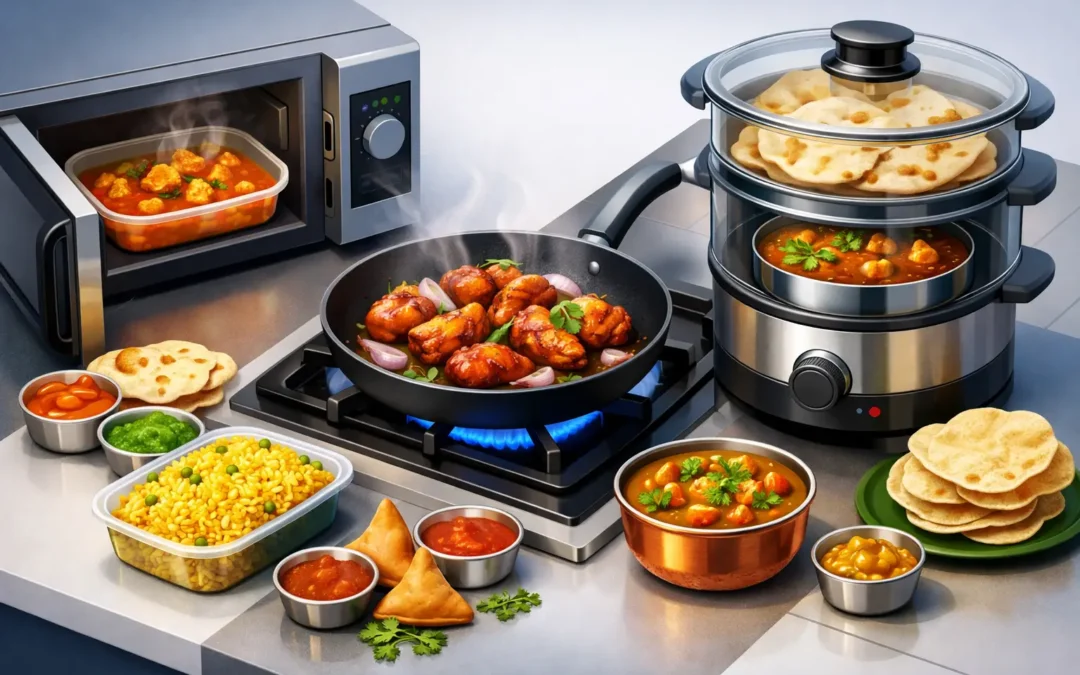
The biggest mistake is reheating everything in the same way. A microwave can be quick and perfectly fine for some dishes, but it is not always the best option for texture. A hob works brilliantly for saucy dishes, the oven is better for drier items, and rice needs special care so it heats through evenly and safely.
Before you start, make sure the food has been chilled promptly after the original meal and kept in the fridge. Leftovers should be reheated until piping hot all the way through. If you are reheating more than one item, it is usually better to warm them separately rather than piling everything onto one plate and hoping for the best.
Reheating curry on the hob
For most curries, the hob gives the best result. Chicken tikka masala, jalfrezi, rogan josh, madras, korma and similar dishes all benefit from slow, even heat. Tip the curry into a saucepan or frying pan and warm it over a low to medium heat, stirring now and then.
If the sauce looks too thick, add a small splash of water. You do not need much – just enough to loosen it and help it heat evenly. This is especially useful for tomato-based curries or dishes that have thickened overnight in the fridge. Creamier curries also reheat well this way, but keep the heat gentle so the sauce stays smooth.
The benefit of the hob is control. You can stop the curry catching at the bottom, check the consistency as it warms, and keep the meat or vegetables tender rather than overcooked.
Reheating curry in the microwave
If time is short, the microwave is absolutely fine. Put the curry in a microwave-safe bowl, cover it loosely, and heat in short bursts rather than all at once. Stir between each burst so the centre and edges warm evenly.
This method works well for individual portions, especially at lunchtime or on a busy evening. The trade-off is that microwave heat can be patchy, so you need to give it a bit of attention. If a curry is rich or creamy, overheating can cause the sauce to separate, which is why shorter bursts are better than one long blast.
The safest way to reheat rice
Rice is the part people worry about most, and rightly so. It needs to be stored properly and reheated thoroughly. If cooked rice has been left out too long at room temperature, it is better not to risk it. If it has been cooled quickly and refrigerated, it can be reheated safely once.
For microwave reheating, sprinkle over a little water before covering the rice. This helps create steam and brings back softness. Heat until piping hot, then fluff it with a fork. If you are reheating rice on the hob, add a spoonful of water to a saucepan, cover, and warm it gently so it steams rather than fries.
Pilau rice, plain basmati and jeera rice usually come back well with a touch of moisture. The aim is to restore lightness, not make it wet. If the rice has clumped together in the fridge, that is normal – it should loosen as it heats.
How to reheat naan, chapati and poppadoms
Bread needs a different approach from curry. Naan is best reheated quickly at a high enough heat to warm it through without drying it out. A hot oven for a few minutes works well, especially if you lightly sprinkle the naan with water first or wrap it loosely in foil. This helps it stay soft.
Chapatis can be reheated in a dry frying pan for a short time on each side. They warm fast, so keep an eye on them. Too long and they become stiff.
Poppadoms are more delicate. If they have gone slightly soft, a very brief spell in the oven can crisp them up again, but they do not need much. A microwave is usually not the best choice here because it can make them chewy.
Reheating starters and street food
Starters such as onion bhajis, samosas, pakoras and tandoori items are best reheated in the oven or air fryer. Dry heat helps bring back some crispness, which is what you lose most in the fridge.
The microwave will warm them, but it tends to soften the outer layer. If texture matters to you, the oven is worth the extra few minutes. Spread items out rather than stacking them, so the heat can circulate properly.
For tandoori chicken or grilled kebabs, cover loosely if needed to stop them drying out too much. A small brush of oil can help, but do not overdo it. You want the meat hot and juicy, not greasy.
What about biryani?
Biryani sits somewhere between a rice dish and a full meal, so it needs balanced reheating. The microwave is convenient, but add a small splash of water first and stir halfway through if you can. This stops the top from drying while the middle stays cool.
If you have a larger portion, the oven can work very well. Cover the dish so the rice steams gently as it warms. That keeps the grains softer and helps the spice and aroma come through properly. Because biryani often contains meat as well as rice, always check that the whole portion is piping hot.
A few common mistakes to avoid
When people ask how to reheat Indian food, they are often really asking how to avoid disappointment. Most problems come from overheating, underheating, or using the wrong method for the dish.
Do not reheat on full heat from the start, especially with curries. It can catch the sauce, toughen the meat and spoil the texture. Do not assume a warm plate means the food is hot throughout. Stirring is essential, particularly in the microwave.
It is also best not to reheat leftovers more than once. If you have ordered a larger meal, portioning it before chilling makes life easier the next day. You only heat what you need, and the rest stays in better condition.
Fridge storage makes a big difference
Good reheating starts before the next day. Let food cool, then refrigerate it without delay. Keep rice separate from curry if possible, and store breads and starters in their own containers. This protects texture and makes each item easier to reheat properly.
A tightly packed container can trap moisture in fried items and turn them soft, while curry stored in a shallow container often cools faster and reheats more evenly. These small details help preserve the fresh daily quality you enjoyed when the meal first arrived.
The best method depends on the dish
There is no single answer to how to reheat Indian food because Indian food covers a lot of ground. Saucy curries respond best to gentle reheating on the hob. Rice needs moisture and care. Naan wants quick heat. Starters usually need the oven or air fryer if you want decent texture.
That is why restaurant-quality leftovers still need a bit of thought at home. Authentic Indian spices hold their flavour well, but texture is where reheating can go wrong. Taking a few extra minutes usually pays off.
If you have ordered from Worthing Indian Cafe & Bar and saved some for the next day, treat each dish on its own terms. A proper reheat keeps the meal tasting closer to fresh, flavourful and worth looking forward to.
Sometimes leftovers are the best part of the order. Warm them gently, give them the right amount of moisture, and let the spices come back to life rather than cooking them all over again.