
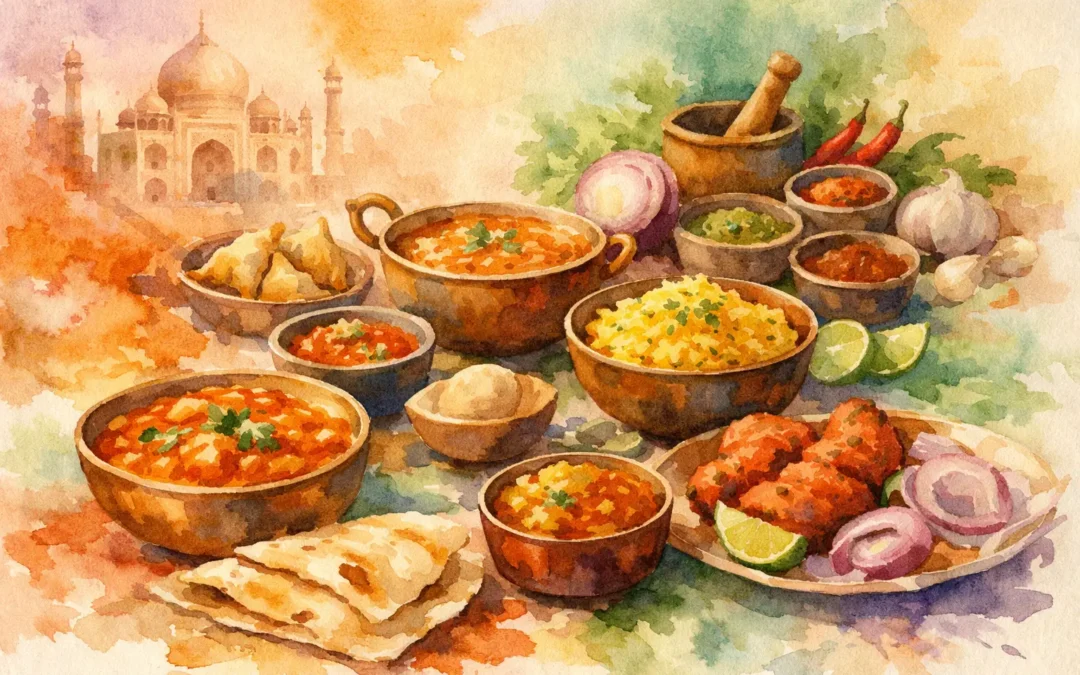
One curry can be creamy and mild, another can be smoky, sharp and full of heat – and both can be completely authentic. That is usually where the confusion starts. When people ask what makes Indian food authentic, they are often really asking whether authenticity means strict tradition, particular ingredients, or simply flavour that feels true to Indian cooking. The honest answer is that it is a mix of all three.
Authentic Indian food is not one fixed thing. It is shaped by region, technique, balance, freshness and the way spices are used. It is also about cooking with purpose rather than throwing in heat for effect or cream for comfort. Good Indian food should taste layered, distinctive and properly made, whether it is a street food snack, a slow-cooked curry or a tandoori dish served fresh from the oven.
What makes Indian food authentic in practice?
The biggest clue is that authentic Indian food tastes deliberate. Every element has a role. Spices are there to build flavour, not to overwhelm everything else. Garlic, ginger, onion, chilli, tomato, yoghurt, ghee, herbs and whole spices are combined in ways that create depth rather than noise.
That matters because Indian cooking is built on balance. A dish might be rich, but it should still have lift. It might be spicy, but you should still taste the main ingredient. It might be comforting, but it should not feel heavy for the sake of it. Authenticity shows in that balance.
Freshness is another major part of it. Freshly prepared ingredients, handpicked produce and spices used with care make a noticeable difference. A curry cooked from a tired base sauce and overloaded with generic seasoning will never have the same clarity as one made with fresh daily preparation. You can taste when the ingredients have been respected.
Authentic Indian food starts with regional identity
One of the most common mistakes is to treat Indian cuisine as if it were one style of cooking. It is not. India has a huge range of regional food traditions, and authenticity often begins with knowing where a dish comes from.
North Indian cooking is known for tandoori dishes, rich gravies, breads and dairy-based sauces. In other parts of the country, you will find lighter coconut-based curries, sharper tamarind notes, mustard seed, curry leaves, seafood, lentil-led dishes and very different spice profiles. Street food also varies enormously from one region to another.
That means an authentic Indian meal does not have to match someone else’s expectation of what Indian food should look like. A dish can be dry rather than saucy. It can be sour rather than creamy. It can be simple and still be entirely authentic. Regional truth matters more than trying to fit every plate into a familiar takeaway stereotype.
Spices matter, but not in the way many people think
People often assume authenticity is all about having a long spice list. In reality, it is less about quantity and more about judgment. Traditional spices are essential, but how they are used is what separates authentic cooking from imitation.
Whole spices may be tempered in hot oil at the start to release aroma. Ground spices may be added later to build body and warmth. Some dishes need earthy cumin and coriander. Others depend on cardamom, cloves, black pepper, fennel or fenugreek. The point is not to use every spice available. The point is to use the right ones at the right stage.
This is also why authentic Indian food does not have one standard level of heat. Chilli is only one part of the flavour. A proper dish can be mild and still feel deeply Indian because the flavour comes from spice layering, not just from fire. That is good news for diners who want authenticity without necessarily wanting extreme heat.
Technique is just as important as ingredients
Even the best ingredients will not create an authentic result if the cooking method is wrong. Indian food relies heavily on technique. Onions may be cooked slowly to develop sweetness and colour. Garlic and ginger may be fried just enough to lose their raw edge. Spices may need a little oil and time to bloom properly. Marinades need enough time to do their job. Doughs, batters and sauces all have their own rhythm.
This is one reason homemade-style Indian food and well-run restaurant cooking can both be authentic. The setting matters less than the method. If the dish is prepared with proper technique, care and consistency, it will carry the flavour it is meant to have.
There is also a trade-off here. Some dishes are naturally quicker and more suited to everyday dining, while others need longer cooking to achieve their depth. A good kitchen knows when speed is fine and when patience is essential. Authenticity is not about making everything slow. It is about knowing where time makes the difference.
The role of freshness in authentic flavour
Fresh daily preparation is not just a selling point. It is one of the clearest signs of quality in Indian cooking. Chopped herbs should still smell vibrant. Marinades should taste lively. Sauces should not taste flat or over-reduced. Vegetables should keep their character, and meat should be cooked until tender rather than masked with extra seasoning.
This is especially important in dishes built on a few core ingredients. In a simple dal, you notice the quality of the lentils, the tempering and the final seasoning. In a paneer dish, you notice texture immediately. In street food, freshness is often the difference between something bright and exciting and something heavy.
At Worthing Indian Cafe & Bar, that focus on fresh daily ingredients and authentic Indian spices is exactly what helps make familiar favourites taste true, reliable and full of character.
What makes Indian food authentic beyond curry
For many diners in Britain, the word Indian still gets reduced to curry. Curries are important, of course, but authenticity reaches much further. Indian street food, grilled starters, rice dishes, breads, lentil dishes, chaats and regional specials all tell a fuller story.
Street food in particular shows how authentic Indian flavour can be bold, quick and accessible at the same time. You do not need a formal setting or a luxury price tag for food to be authentic. In fact, some of the most memorable Indian dishes are everyday foods designed to be eaten fresh, shared easily and enjoyed without fuss.
That suits modern local dining very well. Families, couples and takeaway customers are often looking for food that feels genuine but also convenient. Authenticity and accessibility are not opposites. When the cooking is done properly, Indian food can be both true to its roots and easy to enjoy on a busy weekday.
Common myths about authentic Indian food
One myth is that authentic Indian food must be very spicy. It does not. Plenty of traditional dishes are gently spiced, aromatic or creamy without losing their identity.
Another myth is that authenticity means refusing any adaptation at all. The reality is more practical. Cooking always adjusts slightly to ingredients, seasons, kitchen style and diners’ preferences. The important thing is whether the dish still respects its flavour base, technique and character. Small adaptations can be sensible. Stripping out what defines the dish is where authenticity starts to fade.
There is also a tendency to judge authenticity by appearance alone. A bright red sauce or a thick creamy texture may look familiar, but visual cues are not enough. Taste, aroma and balance tell you much more.
How diners can recognise authentic Indian food
You do not need expert knowledge to spot the difference. Start with the flavour. Does the dish taste layered, or just hot and salty? Can you notice individual elements, or does everything blur together? Authentic Indian food usually has a clear structure to its flavour.
Then think about the menu as a whole. A stronger menu often shows range, with space for regional dishes, street food, grilled items and classic curries prepared with care. That variety suggests confidence rather than reliance on a single generic sauce base.
Finally, notice how the food feels after a few bites. Properly cooked Indian food should be satisfying, not clumsy. Rich dishes should still feel balanced. Lighter dishes should still feel complete. That sense of control is often the best sign that the kitchen understands the cuisine.
Why authenticity matters
Authenticity matters because it protects the real character of the food. It gives diners more than a familiar label. It gives them dishes with identity, depth and consistency. It also makes Indian cuisine more enjoyable for everyone, from people ordering a quick midweek takeaway to groups sitting down for a relaxed meal.
When a kitchen uses fresh ingredients, traditional spices and proper cooking methods, the result is not only more authentic. It is simply better to eat. The flavours are cleaner, the dishes feel more distinctive, and the whole meal becomes more memorable.
If you are choosing where to eat or what to order, authenticity is worth looking for not as a rigid rule, but as a sign of care. When Indian food is made properly, you can taste the difference straight away – and that is what keeps people coming back.