
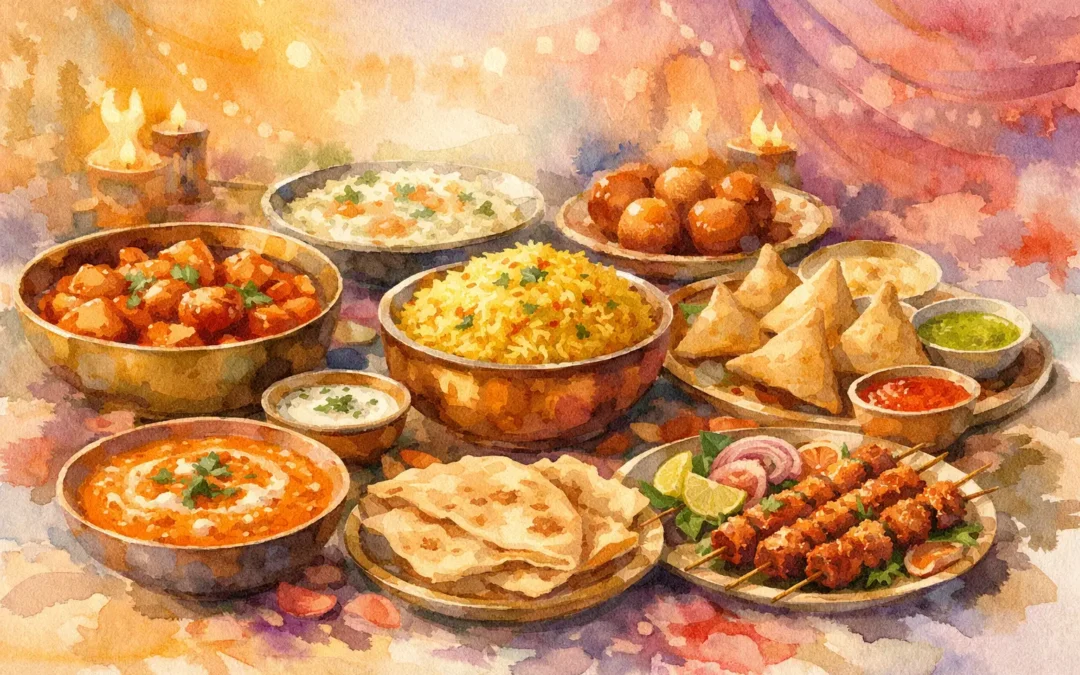
A celebration meal should arrive at the table with colour, aroma and enough choice for every guest to find a new favourite. The best indian dishes for celebrations do exactly that: crisp starters to pass around, fragrant curries to share, comforting rice dishes and a little something sweet to finish. Whether you are marking a birthday, hosting family, planning a work gathering or simply bringing friends together, Indian food makes the occasion feel generous without becoming fussy.
Why Indian dishes for celebrations work so well
Celebrations rarely suit a one-plate meal. Guests arrive at different times, have different appetites and often want to try more than one thing. Indian cuisine is made for this kind of table. A selection of dishes creates a relaxed, sociable meal where people can share flavours, compare favourites and go back for another spoonful.
There is also real variety in a well-planned Indian spread. Rich, slow-cooked curries sit comfortably alongside lighter tandoori dishes, fresh chutneys, crunchy street-food starters and fragrant basmati rice. Vegetarian guests should never feel like an afterthought, while those who enjoy meat or seafood have plenty of satisfying choices too.
The key is balance. Choose familiar favourites for guests who prefer mild flavours, then add a few brighter or spicier dishes for those looking for more heat. A celebration menu does not need every dish to be hot. It needs to be full of flavour, freshly prepared and easy for everyone to enjoy.
Start with dishes made for passing around
The first plates set the mood. Indian street food and starters are especially useful when guests are still chatting, pouring drinks and settling in. They offer bold flavour in manageable portions, and they make a table look inviting straight away.
Samosas remain a popular choice for good reason. Their crisp pastry and warmly spiced filling appeal to all ages, especially when served with tangy tamarind or cooling mint chutney. Onion bhajis bring a similar crowd-pleasing crunch, while vegetable pakoras are an easy option for mixed groups.
For a slightly more substantial start, look towards tandoori cooking. Chicken tikka, paneer tikka or seekh kebabs bring smoky flavour and a satisfying char from the grill. These dishes work particularly well for a birthday meal or evening party because guests can help themselves while the main dishes are being laid out.
Chaat adds a different kind of excitement. It combines crisp textures, potatoes or chickpeas, yoghurt, chutneys and aromatic spices, balancing sweet, sharp and savoury flavours in one dish. It is a good choice when you want your menu to feel a little more adventurous, though it is best served promptly so its crunch stays at its best.
Build a main course with contrast
A memorable celebration spread needs more than several similar curries. Think about texture, heat and richness as you choose. One creamy dish, one tomato-based curry, one dry or grilled option and one vegetable centrepiece will give guests plenty of range without making the meal feel overwhelming.
Butter chicken or chicken tikka masala can be a welcoming anchor for guests who like a smooth, gently spiced sauce. Their rich, comforting character makes them dependable choices for family occasions. For a deeper, fuller flavour, lamb rogan josh brings tender meat and warming spices, while a traditional chicken curry offers a lighter but equally satisfying alternative.
Vegetarian mains deserve equal attention. Palak paneer brings soft paneer in a savoury spinach sauce, while dal makhani offers slow-cooked lentils with a creamy, comforting finish. Chana masala, made with chickpeas and lively spices, gives the table a brighter, heartier option. These are not simply additions for vegetarian guests – they are dishes everyone can enjoy alongside meat curries.
If your group enjoys stronger flavours, a jalfrezi or madras can add welcome warmth. It is wise to make the heat level clear and to include cooling sides such as raita. That way, spice lovers get the kick they want and everyone else can enjoy the occasion comfortably. A good host does not need to guess every guest’s preference; offering a range is the simplest answer.
Rice, breads and sides turn a meal into a feast
Curries are only part of the celebration. Fragrant pilau rice is a natural base for a shared meal, while plain basmati rice lets the flavours of a richer sauce take centre stage. For a larger gathering, offering both is practical and gives guests an easy choice.
Fresh naan is often the first side dish to disappear. Plain naan is versatile, garlic naan adds a savoury lift, and peshwari naan offers gentle sweetness and texture that pairs well with spicier curries. Chapatis can be a lighter alternative when the menu already includes several rich dishes.
Do not overlook the smaller accompaniments. A bowl of cucumber raita cools the palate, pickle brings sharp heat, and chutneys add sweetness or tang. These details help guests tailor each mouthful to their own taste. They also make the table feel more abundant without requiring another heavy main dish.
Plan the right amount of food for your group
For a small family meal, two starters, two mains, one vegetable dish, rice and breads will often provide enough variety. For a larger party, it is better to add range gradually than to order too many versions of the same curry. Consider your guests first: children, mild-spice eaters, vegetarians and confident chilli fans all need a place on the table.
It also depends on the style of celebration. A relaxed dinner at home may call for generous sharing dishes and a simple dessert. A standing drinks party benefits from more hand-held starters, kebabs and chaat. For an office gathering, dishes that travel well and are easy to serve can make the evening run more smoothly.
If you are ordering for a group, ask about portions, dietary requirements and the best balance of dishes. Freshly made food with clear choices is more valuable than an oversized order that leaves half the table untouched. At Worthing Indian Cafe & Bar, authentic Indian spices, fresh daily ingredients and flexible options for dine-in, collection, delivery and private functions make it easier to match the food to the occasion.
Leave room for a sweet finish
A dessert does not need to be elaborate after a generous Indian meal, but it gives the occasion a proper finishing touch. Gulab jamun, with its soft milk dumplings in fragrant syrup, is a classic choice for guests with a sweet tooth. Kheer offers a gentler finish: creamy rice pudding scented with cardamom and often topped with nuts.
For a warm celebration, kulfi can be particularly welcome. Its dense, creamy texture and flavours such as mango, pistachio or cardamom bring a refreshing contrast after spice-led dishes. If your guests are already full, sharing a few desserts between the table is often better than serving one large portion each.
Make the occasion feel easy, not over-planned
The most successful celebration meals are generous but relaxed. Put dishes in the centre of the table, provide serving spoons, keep water and raita within reach, and let guests choose their own combination of flavours. Indian food invites that kind of easy sharing.
Choose dishes with a mix of familiar comfort and a little surprise, make room for every appetite, and focus on freshness above excess. When the food is warmly spiced, properly prepared and served for people to enjoy together, the conversation tends to take care of itself.