
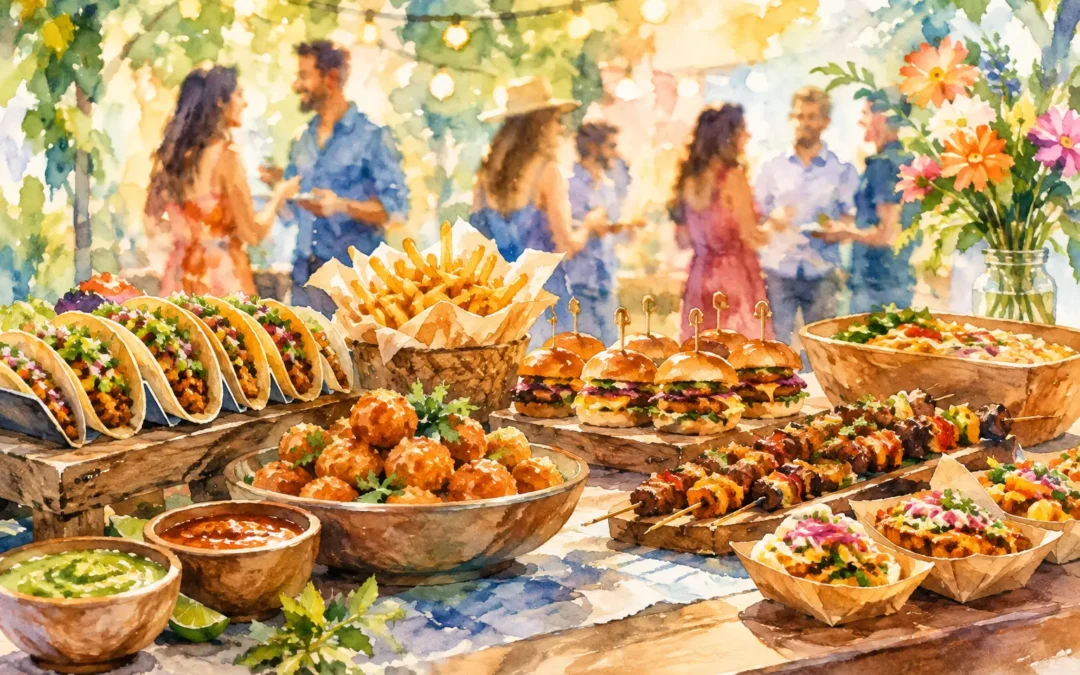
The best street food for parties does not leave guests balancing a full plate on their knees or waiting for a formal meal to begin. It gives people colourful, freshly made food they can enjoy while catching up, moving around and going back for one more bite. Indian street food is particularly well suited to this kind of gathering: bold flavours, generous sharing dishes and options for every appetite.
Whether you are planning a birthday, family get-together, work celebration or a relaxed evening with friends, the right food makes hosting easier. The aim is simple: offer enough variety to feel generous, choose dishes that travel and serve well, and keep the experience welcoming rather than overcomplicated.
Why street food works so well for parties
Street food has an easy, sociable feel. Guests do not need to sit down at the same time, and there is no pressure to serve several courses in a fixed order. A tray of crisp samosas, warm onion bhajis or tender chicken tikka can arrive at the table while everyone is still settling in, giving the occasion an instant sense of celebration.
Indian street food also brings contrast to a party menu. You can combine crisp snacks with soft breads, smoky grilled dishes with cooling yoghurt, and gently spiced vegetarian favourites with richer curries. That balance matters. A table made up entirely of fried food can become heavy, while a menu with only curries can be awkward for guests who are standing and chatting.
For hosts, it is a practical choice too. Many dishes can be arranged in sharing trays, replenished as needed and enjoyed without a knife and fork. It suits a busy home, a hired function room or a workplace gathering equally well.
Building a street food for parties menu
A good party menu needs a clear centre, not endless choice. Start with two or three familiar crowd-pleasers, then add a few dishes that bring variety in texture, heat and colour. Guests may have different confidence levels with spice, so a mix of mild, medium and hotter options is usually more welcoming than making every dish fiery.
Begin with easy-to-share starters
Starters set the pace. Vegetable samosas offer a crisp pastry and warmly spiced filling that most guests recognise straight away. Onion bhajis are another reliable favourite, especially with a fresh chutney or cooling dip alongside them. For meat eaters, chicken tikka brings chargrilled flavour without being difficult to eat while standing.
If your party is smaller, choose two starters and serve a little more of each. For larger groups, three or four options help prevent one tray disappearing before everyone has had a chance to try it. The important thing is to order enough of the favourites rather than spreading the budget too thinly across too many dishes.
Add one or two substantial dishes
Street food does not have to mean snacks alone. A party feels more satisfying when there are a couple of warmer, more filling choices. Chicken curry, lamb dishes, chickpea curry or paneer in a richly spiced sauce can all work well when served with rice and naan bread.
Choose dishes with different strengths. A creamy, mild curry can sit comfortably beside a tomato-led dish with more warmth, while a vegetarian option makes sure every guest has something substantial. At an evening party where drinks are being served, guests often eat in smaller portions over a longer period. In that case, a selection of starters and one hearty curry may be enough. For a lunchtime celebration or a gathering that replaces a full meal, offer more rice, breads and main dishes.
Do not overlook the sides
Sides turn a collection of dishes into a proper spread. Pilau rice gives guests an easy base, while plain rice is useful for anyone who prefers a simpler accompaniment. Naan bread is ideal for sharing, but it is worth including a gluten-free alternative when needed.
Chutneys, yoghurt dips and fresh salad bring welcome contrast to warmer spices. They also allow each guest to adjust their plate to their own taste. A little cooling yoghurt can make a medium-spiced dish suitable for more people, while chilli sauce gives heat-lovers the extra kick they want.
How much food should you order?
Portion planning depends on the time of day, the length of the party and whether food is the main event. For a drinks-led gathering, plan for a steady flow of bite-sized dishes plus a few filling options. If dinner is the focus, treat the menu as a shared meal and make sure there is enough rice, bread and curry for everyone to build a full plate.
As a useful starting point, allow each guest two or three starter pieces where a meal follows, or four to six pieces for a more informal grazing-style party. Add at least one substantial main option per person, supported by generous shared rice and naan. Larger appetites, late-night events and parties with fewer side dishes all call for a little extra.
It is also wise to think about the guest list rather than simply the headcount. A group of teenagers after a sports event will eat differently from a daytime family celebration. If children are attending, keep a few mild choices available. If the group includes keen spice fans, adding one hotter dish is usually more effective than making everything hot.
Make serving simple, not stressful
The food should support the party rather than create work for the host. Serve hot dishes in sturdy bowls or catering trays, with clearly labelled serving spoons. Put napkins, small plates and cutlery in one easy-to-reach place so guests can help themselves without asking where anything is.
Keep cold items, such as salad and yoghurt-based dips, separate until shortly before serving. Hot dishes should stay covered where possible to retain their warmth, then be refreshed in smaller batches if your party runs for several hours. If you are collecting food, plan the timing so that the main dishes arrive close to when people are ready to eat.
For parties at home, avoid trying to reheat ten different items at once. A focused menu of dishes that can be served together will feel far more relaxed. If you are arranging a larger celebration, discuss the number of guests, serving time and dietary needs before ordering. That allows the food to be prepared in quantities that make sense for your event.
Cater confidently for dietary needs
A thoughtful menu does not need to feel restrictive. Indian food naturally offers plenty of vegetarian choices, from vegetable samosas and bhajis to lentil dishes, chickpeas and paneer. These should be treated as proper party favourites, not an afterthought placed at one end of the table.
Ask guests about allergies and dietary requirements in advance, especially around nuts, dairy and gluten. Recipes and preparation methods vary, so it is always best to confirm specific needs when placing an order. Labelling dishes at the party is a small detail that helps guests choose with confidence and saves the host repeating ingredients throughout the evening.
Fresh Indian food for celebrations in Worthing
For a party that needs dependable flavour without the work of cooking for a crowd, professionally prepared food can make all the difference. Fresh daily ingredients, traditional Indian spices and well-balanced dishes give your table the variety of a street-food feast while leaving you free to enjoy your own guests.
Worthing Indian Cafe & Bar can help make celebrations straightforward, whether you are collecting food for a smaller gathering or arranging dishes for a private party or function. Choosing a menu in advance gives you time to match the food to your guest list, budget and occasion, with comforting favourites alongside dishes that add something new to the table.
The most memorable parties rarely depend on perfect decorations or a tightly planned schedule. Put out warm food, plenty of flavour and enough room for guests to help themselves, then let the conversations do the rest.