
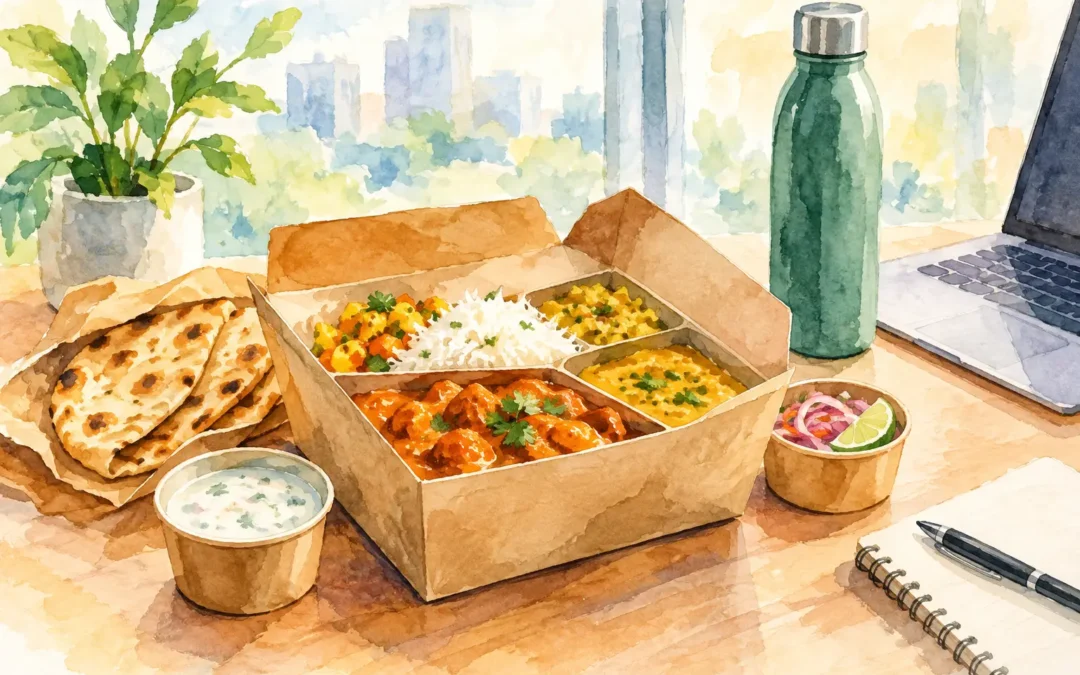
A good office lunch has a job to do. It needs to arrive on time, suit different tastes, feel more exciting than another meal deal and leave everyone ready for the afternoon. An Indian takeaway for office lunch does all of that when it is planned around fresh dishes, clear portions and a menu with something for every colleague.
Whether you are arranging a Friday team treat, welcoming a new starter or feeding a small meeting, Indian food brings variety without making the order complicated. Fragrant curries, grilled dishes, street-food favourites, rice, breads and vegetarian choices can all sit on one table and make lunch feel properly shared.
Why Indian takeaway works for an office lunch
Office groups rarely want exactly the same thing. One person may prefer a mild, creamy curry, while another wants a hotter dish with a little more kick. Someone may be vegetarian, another may prefer grilled chicken, and a few colleagues may simply want plenty of rice and naan to share. Indian cuisine is particularly well suited to that mix.
A well-chosen order gives everyone choice while keeping the food familiar and approachable. Classic curries offer comforting, satisfying flavours, while regional dishes and Indian street food bring colour and variety to the table. You do not need to turn lunch into a formal event for it to feel special.
It is also a practical choice. Many Indian dishes travel well, hold their warmth and are easy to serve in the office. Rice and breads help make portions go further, and shared sides create a relaxed, sociable lunch without the need for a complicated set-up.
How much food should you order?
The right amount depends on whether lunch is the main event or a lighter meeting meal. For a working lunch, it is usually sensible to plan one main dish per person, with shared rice, breads and a few sides. If your group has big appetites or lunch is replacing an evening meal after a long session, add extra rice, naan and a couple of starters.
For a group that does not know the menu well, choose a balanced spread rather than ordering every dish at the same heat level. Include a mild option, a medium-spiced favourite, a vegetarian dish and a grilled or tandoori-style choice where available. This keeps the table welcoming for everyone, including colleagues who are less confident with spice.
Rice is often the simplest base for a larger order because it is easy to portion out. Naan, chapati or other breads are ideal for sharing, but bear in mind that they can disappear quickly. Ordering a little extra bread is rarely a bad idea, especially when there are rich sauces on the table.
A sensible mix for a small team
For six to eight people, a varied order might include several curries across different spice levels, one or two vegetarian dishes, a grilled dish, rice for the group, breads and a few starters or sides. The exact balance depends on your team, but variety matters more than choosing the largest possible number of dishes.
Ask colleagues about dietary requirements before placing the order, rather than trying to solve them at the last minute. Knowing who needs vegetarian, vegan or allergen-aware choices makes the whole process smoother and helps everyone enjoy the meal confidently.
Build an Indian takeaway for office lunch that suits everyone
The best group orders have contrast. A table full of very similar curries may be tasty, but it misses the chance to give people different textures and flavours. Start with dependable favourites, then add a few dishes that make the lunch feel more generous.
Choose one or two mild dishes for colleagues who prefer a gentler flavour. Add medium-spiced options for broad appeal, then include a hotter dish for those who enjoy a stronger chilli warmth. Heat is personal, so it is better to offer choice than assume the whole team wants the same level of spice.
Vegetarian dishes should be a considered part of the order, not an afterthought. Lentils, chickpeas, vegetables and paneer can be full of flavour and satisfying in their own right. They also give the rest of the team more variety to try. Freshly prepared dishes using traditional spices have depth well beyond heat alone.
Starters can work particularly well for a lunchtime meeting where people are arriving at different times. Samosas, onion bhajis, grilled bites and other Indian street-food favourites are easy to share while everyone gets settled. For a shorter lunch break, you may prefer to focus on mains and sides so there is less food to organise.
Timing matters as much as the menu
The difference between a great office lunch and a stressful one is often timing. Decide when you want to eat, then arrange collection or delivery with enough time for food to be laid out and colleagues to gather. If the meeting starts at 1pm, having the food arrive at 1pm can mean everyone is still waiting while the containers are opened and dishes are divided.
For a small order, click and collect can be a useful option if someone is nearby and can bring it back to the office promptly. Delivery is often more convenient for larger groups or busy days, particularly when no one should have to leave a meeting to collect lunch.
Where possible, place a larger order in advance. This gives the kitchen time to prepare everything carefully and helps ensure that your food is ready when needed. It is especially worthwhile for Friday lunches, team celebrations and days when the office is likely to be busier than usual.
At Worthing Indian Cafe & Bar, fresh daily ingredients, handpicked produce and authentic Indian spices help make a group order feel dependable as well as delicious. The aim is simple: quality food at a reasonable price, ready for the occasions when the team needs a proper lunch.
Keep serving simple in the office
Before the food arrives, clear a table and make sure there is room for everyone to serve themselves. Plates, napkins, cutlery and a few serving spoons make a noticeable difference, particularly with shared dishes. Label any meals ordered for specific dietary needs so there is no confusion once the lids come off.
If your workplace has limited table space, portioning the order into small groups can help. Put rice and breads in the middle, keep each curry together with its serving spoon, and place starters where people can reach them first. It takes only a minute, but it prevents the lunch queue from becoming a bottleneck.
Remember that not every office lunch needs to be a large spread. For a quick meeting, individual mains with rice can be the easiest option. For a relaxed Friday gathering, shared curries, starters and breads create more of an occasion. The right format depends on the time available, your budget and how your team likes to eat.
Make your next team lunch worth looking forward to
A thoughtfully planned Indian takeaway turns an ordinary office break into time people actually enjoy together. Choose fresh dishes, give colleagues a range of flavours and order early enough for a calm handover. Then let the food do what it does best: bring the team around the table for a warm, satisfying break in the day.