
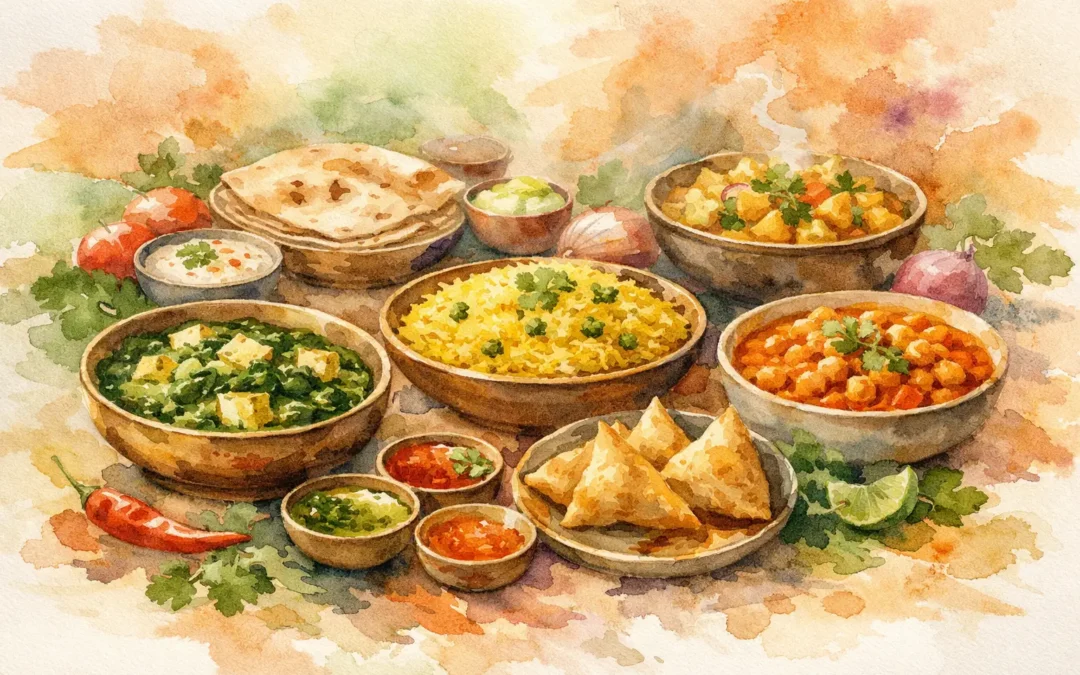
If you have ever looked at an Indian menu and wondered which Indian dishes are vegetarian, you are not alone. Indian food offers one of the best choices for meat-free dining, but the names can be unfamiliar if you do not order it often. The good news is that many of the most popular dishes are naturally vegetarian, full of flavour, and made with fresh vegetables, lentils, paneer, chickpeas and authentic Indian spices.
For anyone ordering a quick takeaway, planning a family meal out, or choosing dishes for a group, it helps to know what is usually vegetarian and what is not. Indian cuisine has deep vegetarian roots, so there is plenty to choose from without feeling like you are settling for the side options.
Which Indian dishes are vegetarian on a typical menu?
A large part of a standard Indian menu is already suitable for vegetarians. Lentil dishes, vegetable curries, chickpea dishes, potato-based street food, paneer dishes and many rice sides are all common choices. That said, it is still worth checking how each dish is prepared, because the same name can vary slightly from one kitchen to another.
Some dishes are almost always vegetarian. Dal, for example, is made from lentils and cooked with spices, onions, tomatoes and herbs. Chana masala is another easy one to recognise, made with chickpeas in a rich, spiced sauce. Aloo gobi combines potatoes and cauliflower, while saag dishes often use spinach with paneer or potatoes.
Paneer is a particularly popular choice if you want something filling. It is a fresh Indian cheese that holds its shape in sauces, making it ideal for curries. Paneer tikka masala, kadai paneer, shahi paneer and saag paneer are all widely loved vegetarian dishes with very different flavour profiles. Some are creamy and mild, others are richer with peppers, onions and a stronger spice blend.
Popular vegetarian Indian dishes worth knowing
If you want to order with confidence, these are the names that come up again and again on Indian menus.
Dal dishes
Dal is one of the most dependable vegetarian options. It can be simple and comforting or deeply spiced and rich, depending on the recipe. Dal tadka is usually yellow lentils finished with fried garlic, cumin and spices. Dal makhani is darker, creamier and more indulgent, often made with black lentils and kidney beans.
If you like satisfying food that still feels wholesome, dal is hard to beat. It goes especially well with pilau rice or fresh naan.
Chana masala
Chana masala is a chickpea curry with tomato, onion, ginger and warming spices. It has plenty of body and works well as a main dish rather than just a side. For many customers, it is one of the easiest vegetarian curries to enjoy because the flavour is bold, familiar and filling.
Aloo gobi
Aloo gobi is a dry-style curry made with potatoes and cauliflower. It is fragrant rather than saucy and often includes turmeric, cumin and coriander. This is a good option if you prefer a dish with texture and a lighter finish.
Saag paneer and saag aloo
Saag means leafy greens, most often spinach. Saag paneer combines spinach with cubes of paneer for a soft, creamy dish with gentle spice. Saag aloo uses potatoes instead, so it is ideal if you want a dairy-free option, though it is always best to ask how it is cooked.
Vegetable curry
This can sound basic on a menu, but a good vegetable curry is anything but plain. Mixed vegetables cooked fresh daily with traditional spices can be colourful, hearty and full of character. The exact vegetables may change, which is often a good sign that the kitchen is using fresh produce rather than a fixed, one-note mix.
Paneer-based curries
Paneer appears in several favourite vegetarian dishes. Kadai paneer tends to be punchier, with peppers, onions and a stronger tomato base. Paneer butter masala is softer, creamier and a little sweeter. Paneer tikka masala brings a lightly charred flavour if the paneer has been marinated and grilled before going into the sauce.
These dishes are ideal for customers who want a meat-free curry that still feels rich and substantial.
Vegetarian Indian street food and starters
Indian food is not only about curries. Some of the best vegetarian choices are found in starters and street food, especially if you are sharing.
Samosas are one of the best-known examples. Vegetable samosas are usually filled with spiced potatoes and peas inside crisp pastry. Onion bhajis are another reliable choice, made from sliced onions mixed with gram flour and spices, then fried until golden.
Pakoras can also be vegetarian, often made with vegetables such as spinach, potato or cauliflower. Then there are dishes like aloo tikki, which are spiced potato patties, and chaat, which can include potatoes, chickpeas, yoghurt, chutneys and crisp toppings. Chaat is especially good if you enjoy sweet, tangy and savoury flavours together.
For a lighter table spread, these starters work well alongside poppadoms, chutneys and a couple of mains. They are also useful when ordering for a group, because they suit both dedicated vegetarians and anyone simply looking to eat a bit less meat.
Rice, bread and sides that are often vegetarian
If you are building a full vegetarian meal, sides matter. Plain rice, pilau rice, jeera rice and many vegetable rice dishes are vegetarian, though special rice can sometimes include meat, so it is worth checking. Breads such as naan, roti and chapati are often suitable too, but some contain butter or ghee.
Side dishes like bombay potatoes, tarka dal, mushroom bhaji and saag bhaji are commonly vegetarian and can easily turn a simple order into a generous meal. This is often the best approach if different people want different levels of spice or richness. One paneer curry, one dal and a couple of sides can suit a table better than everyone ordering separately.
Dishes that sound vegetarian but need a quick check
This is where it helps to be practical. Not every dish that looks vegetarian is automatically suitable for every vegetarian diner.
Some curries use ghee, cream or yoghurt, which is fine for many vegetarians but not for vegans. Some breads are brushed with butter. A vegetable biryani is usually vegetarian, but kitchens vary. Even a lentil dish may be finished differently depending on the recipe.
There is also the issue of naming. A dish called masala, jalfrezi or madras describes a style of sauce rather than the main ingredient. That means it could be made with paneer, vegetables, chicken, lamb or prawns. If you know the sauce you like, simply check what it has been paired with.
For anyone with stricter dietary requirements, a quick question when ordering is always the best option. A good restaurant will be clear about ingredients and happy to guide you.
How to choose the right vegetarian dish for your taste
If you enjoy milder flavours, look towards korma-style vegetable dishes, saag paneer or paneer butter masala. If you want something richer and more filling, dal makhani or chana masala are strong choices. If you prefer a bit more heat and freshness, kadai paneer or a well-spiced vegetable curry may suit you better.
Texture matters too. Some people want a saucy curry with rice, while others prefer drier dishes like aloo gobi or bombay potatoes alongside bread and chutneys. If you are ordering for home, it is often smart to combine both. That way the meal feels balanced and everyone gets a little variety.
For families or couples sharing a takeaway, vegetarian Indian food is especially good value because lentils, chickpeas, paneer and vegetables hold up well, travel well and still feel freshly cooked when they arrive. That is one reason these dishes remain regular favourites at Worthing Indian Cafe & Bar.
Why Indian cuisine is such a strong choice for vegetarians
Indian cuisine does not treat vegetarian food as an afterthought. In many regions, it sits right at the centre of everyday cooking. That means the dishes are built around flavour from the start, using spices, herbs, pulses and vegetables properly rather than simply removing meat from a recipe.
You can taste the difference. A well-made vegetarian curry should feel complete on its own, not like a compromise. Fresh daily ingredients, handpicked produce and traditional spice blends make a real difference, whether you are choosing a quick midweek takeaway or a relaxed meal with friends.
If you are still deciding which dish to try first, start with a paneer curry, a dal or chana masala. They are popular for good reason, easy to enjoy, and a great way to see how varied vegetarian Indian food can be. Once you know the basics, reading the menu gets much simpler and ordering becomes part of the pleasure.