
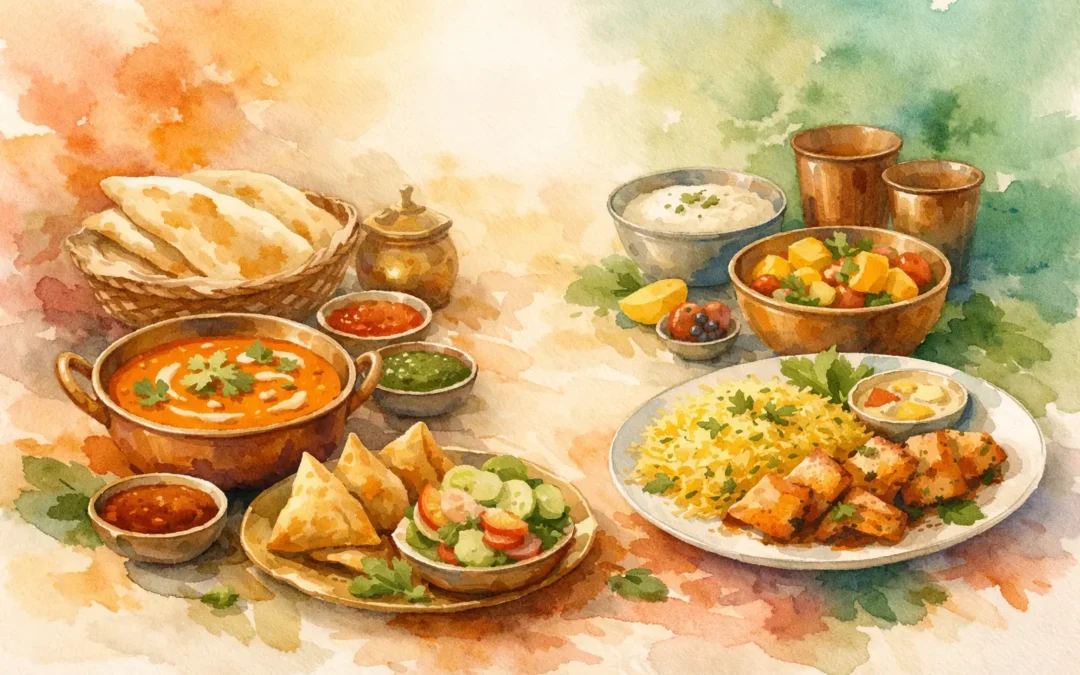
A good Indian meal should leave you satisfied, not as though you have had to choose between flavour and feeling well. This healthy Indian menu guide is for those evenings when you want the warmth of authentic spices, a proper curry or a few favourites to share, while making choices that suit your appetite and routine. Healthy eating is not about ordering the plainest dish on the menu. It is about balance, portion awareness and choosing freshly prepared food that gives you plenty of flavour.
Indian cooking has a lot to offer when you look beyond the idea that every dish is rich or heavy. Lentils, chickpeas, vegetables, yoghurt, lean proteins, herbs and traditional spices all have a natural place on the table. The difference often comes down to how a dish is cooked, what it is served with and how much of it you order.
What makes an Indian meal a healthy choice?
A healthy Indian order can be colourful, generous and full of character. Curries made with tomato, onion, ginger, garlic and spices can be lighter than dishes based on large amounts of cream, butter or ghee. Tandoor cooking is also a reliable option, as the high heat adds a smoky finish to marinated food without needing a heavy sauce.
That does not mean creamy curries, naan bread or crispy starters are off limits. They are part of the enjoyment, especially for a relaxed meal with family or friends. The practical approach is to make them one part of the order rather than the whole meal. Choose a vegetable dish or grilled main alongside a richer favourite, share sides around the table and stop when you are comfortably full.
Freshness matters too. Dishes prepared with fresh daily ingredients, handpicked produce and authentic Indian spices do not need to rely on excessive salt or richness to taste memorable. A well-seasoned dal, a bright vegetable curry or properly marinated chicken can be every bit as satisfying as a heavier choice.
Healthy Indian menu guide: choose your main wisely
Start by thinking about the style of cooking you enjoy. If you prefer a lighter main, look for tandoori dishes, grilled kebabs, tikka, lentil curries and vegetable-based options. Chicken tikka is usually a straightforward choice: tender chicken is marinated in yoghurt and spices, then cooked at high heat. Pair it with salad, raita and a modest serving of rice for a filling meal with plenty of flavour.
Tomato-based curries can also work well. Jalfrezi is often made with peppers, onions and a lively blend of spices, while bhuna-style dishes tend to have a thick, reduced sauce rather than a large amount of cream. These preparations vary by recipe, so it is always sensible to ask if you have particular dietary needs or are looking for a less rich option.
For a meat-free meal, do not overlook dal. Lentils provide fibre and plant protein, making them a satisfying centrepiece rather than simply a side dish. Chana dishes made with chickpeas are another good choice, particularly when served with vegetables and wholemeal-style breads where available. A vegetable curry with spinach, aubergine, okra, cauliflower or mixed seasonal vegetables brings colour and variety to the table.
Creamy classics have their place, but they are best chosen with intention. Korma, makhani-style dishes and some mild curries can be higher in cream, butter, coconut or ground nuts. If one person at the table is craving a creamy curry, balance the rest of the order with grilled food, dal and vegetables rather than ordering several rich mains together.
Sauce is not the enemy, but quantity matters
Sauce carries much of the character in Indian food. It is where toasted spices, ginger, garlic and slow-cooked onions build depth. There is no need to avoid it completely. Instead, choose a sauce that suits your meal and use rice or bread to enjoy it without automatically ordering extra portions.
If you are ordering a takeaway, serving your meal onto a plate rather than eating straight from the container can make portions easier to judge. Save leftovers for lunch the next day if you have ordered generously. Many curries and dals reheat well, making a good-value order go further.
Build a balanced plate with sides
The side dishes are where a meal can become more balanced or more filling than planned. Rice is a perfectly good accompaniment, especially steamed basmati rice. Its gentle flavour lets the spices in the main dish shine. If you are choosing rice and bread, consider sharing one portion of each between two people instead of ordering both per person.
Naan is a favourite for a reason, and there is room for it in a healthy approach. A plain naan shared across the table is usually easier to balance than several stuffed or buttered breads. Roti or chapati, when available, can be a lighter alternative because they are generally less rich than naan. It depends on your appetite and the rest of your meal – after a tandoori main and vegetable side, a bread may be all you need.
Vegetable sides are one of the easiest ways to add substance without making the meal feel overly heavy. Saag, mixed vegetables, aubergine dishes and dry-style vegetable preparations can offer a welcome contrast to a saucy curry. Raita adds cooling yoghurt and can soften the heat of spicy dishes, helping you enjoy a lively curry without reaching for extra rice or bread.
For starters, think of them as part of the meal rather than an extra course that has no effect on your hunger. Grilled tikka, seekh kebabs, vegetable dishes or a lighter sharing plate can be more balanced than making several fried starters the main event. Samosas, bhajis and pakoras are delicious, but sharing them is often the best way to enjoy their crisp texture while leaving room for your main.
Make healthier choices when ordering for a group
Indian food is made for sharing, which makes it easier to create a varied and sensible order. Rather than choosing the same curry for everyone, mix a grilled dish, a lentil or chickpea dish, a vegetable curry and one house favourite. This gives each person choices and reduces the temptation to over-order rich dishes just to make sure there is enough food.
A useful table for four might include two mains with different cooking styles, one dal, one vegetable side, rice to share, a couple of breads and raita. Adjust the quantity for bigger appetites, children or whether you are also ordering starters. It is not a strict formula, but it keeps the meal varied and avoids a table full of very similar sauces.
Takeaway and delivery meals can be especially tempting after a busy day. Ordering ahead can help you choose what you genuinely want rather than adding extra dishes at the last minute. At Worthing Indian Cafe & Bar, fresh daily preparation and authentic regional flavours mean you can choose a quick weekday meal that still feels like proper food, whether you are collecting it, eating in or enjoying a relaxed night at home.
Do not forget drinks and spice levels
Your drink choice can change how a meal feels. Water or sparkling water is always refreshing with spicy food. A mango lassi is a lovely treat and its yoghurt can cool the palate, though it is richer and sweeter than water. If you are having one, consider sharing it or enjoying it in place of a dessert.
Do not order a dish milder than you enjoy simply because you think a healthier choice must be bland. Spices such as cumin, coriander, turmeric, cardamom, chilli and black pepper bring aroma and depth without needing heavy additions. Ask for guidance on heat levels if you are unsure. A curry that is too hot can stop you enjoying the food, while one with the right warmth makes every bite more satisfying.
The best healthy choice is one you can enjoy regularly, not a joyless order you will regret before the plates are cleared. Choose a fresh, flavourful main, add vegetables or dal, share the richer extras and let the spices do their work. That is a simple way to enjoy Indian food with comfort, confidence and plenty of taste.