
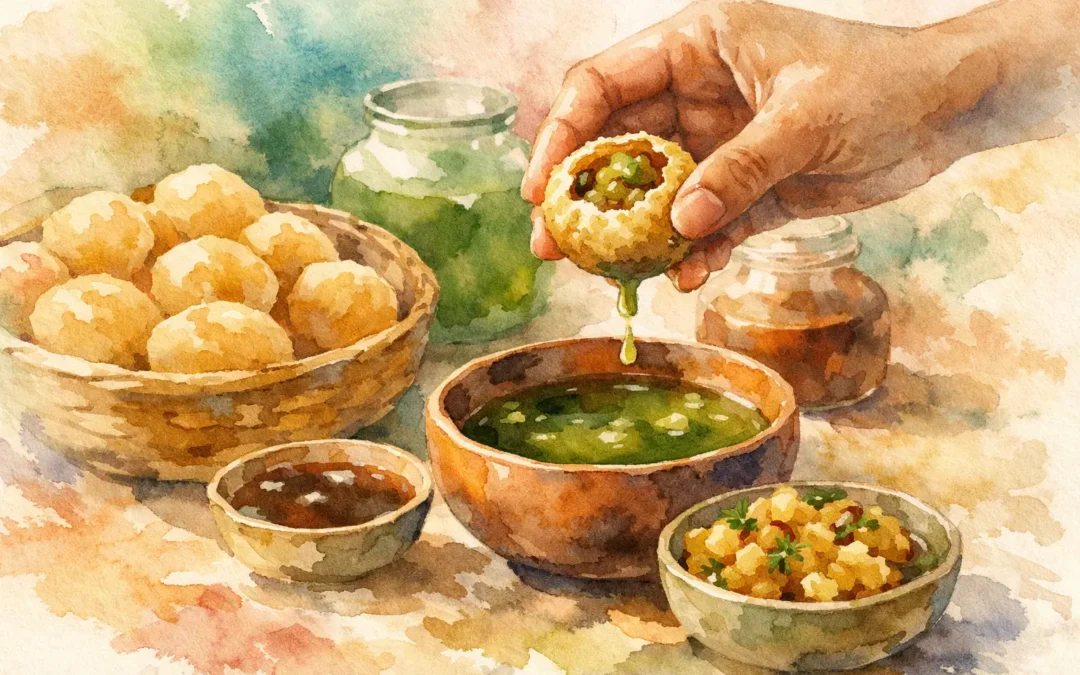
A good pani puri arrives as a small challenge: a crisp, hollow shell, a spicy potato filling and brightly flavoured pani that is not waiting around for anyone. If you are wondering how to eat pani puri, the answer is simple – fill it, eat it whole and enjoy the burst before the puri loses its crunch.
This much-loved Indian street-food favourite is made for quick, joyful eating rather than careful cutlery work. The balance matters: cool potato, tangy tamarind, fragrant mint and coriander water, a little heat, and that unmistakable crackle from the shell. Once you know the rhythm, it is one of the most satisfying ways to eat.
What is pani puri?
Pani puri is a popular Indian chaat made with small, crisp fried puris. Each puri is gently opened, filled with a savoury mixture, then topped up with spiced water known as pani. Depending on the recipe and region, the filling may include mashed potato, chickpeas, moong beans, onion, sev, chutney or a combination of these.
The pani is where much of the excitement sits. It is commonly made with mint, coriander, green chilli, tamarind, black salt, cumin and other traditional Indian spices. Some versions are refreshing and herby; others are sharp, sweet, deeply tangy or properly hot. There is no single correct flavour level. The best pani puri is the one that feels lively but still lets you taste every element.
At a street-food stall in India, pani puri is often assembled and handed over one at a time. In a restaurant setting, you may receive the crisp puris, fillings and pani separately so you can build them at the table. Either way, timing is everything.
How to eat pani puri in the traditional way
Start by picking up one puri with clean, dry fingers. Hold it gently between your thumb and forefinger. It is delicate, so pressing too hard can shatter it before you have had the chance to fill it.
Use your thumb or a small spoon to make a hole in the top. The opening only needs to be large enough for the filling and pani. Add a small amount of potato or chickpea filling first, followed by any chutney or onion provided. Avoid overfilling – the shell needs room for the water, and too much filling makes it harder to eat in one bite.
Next, dip the filled puri into the pani or spoon the pani into it. Be generous enough to get the full flavour, but do not wait too long once the puri is wet. Bring it straight to your mouth and eat the entire pani puri in one bite.
That last step is the key. Do not bite it in half, nibble around the edge or try to eat it with a knife and fork. The filling and pani are designed to arrive together. Eating it whole gives you crisp shell, soft filling, fresh herbs, warming spice and tang in a single mouthful.
Why one bite is best
A pani puri shell is at its best for only a few seconds after it meets the water. Leave it too long and it softens, leaks and becomes difficult to manage. One bite keeps the textures distinct and saves your plate, clothes and table from unnecessary splashes.
If the puri feels too large for a comfortable mouthful, use less filling or less pani on the next one. A well-made puri should still be easy to eat whole. There is no prize for fitting in the most filling – balance is what makes each portion enjoyable.
Get the order right: crisp first, pani last
When pani puri is served as a do-it-yourself plate, build only one at a time. It can be tempting to prepare all six puris before you start, especially when they look so colourful. But the first few will turn soft while you are eating the last ones.
Keep the puris dry until you are ready. Add the filling, then chutney if you like it, then pani immediately before eating. Repeat at your own pace. This makes every bite fresh and crisp, which is the point of serving the components separately.
If there are two or more pani options, try a small amount of each with your first puri. A sweet tamarind chutney can soften the edge of a fiery mint pani, while a spicier option may suit diners who enjoy a stronger chilli kick. It depends on your taste, so there is no need to choose the hottest bowl simply because it is there.
How much pani should you add?
Enough to fill the shell, but not so much that it spills before it reaches your mouth. For most puris, a quick dip into the pani is ideal. If you are spooning it in, one or two small spoonfuls are usually plenty.
The puri should feel full but still hold together. If it collapses in your hand, you have either added too much liquid or waited too long. That is not a disaster – pani puri is wonderfully informal food – but the next one will be even better when you move quickly.
Those who are new to Indian street food often start with a lighter amount of pani, then increase it as they become used to the sharp, spicy flavours. A good serving should be refreshing as well as warming. Mint and coriander lift the palate, while tamarind brings a fruity sourness and traditional spices add depth.
A few easy pani puri etiquette tips
Pani puri is relaxed, hands-on food, so do not overthink it. Still, a few practical habits make the experience more enjoyable when sharing a table.
Use the serving spoon for the filling and pani rather than dipping your fingers into shared bowls. Build one puri at a time, and keep napkins close by because an enthusiastic splash is part of the experience. If you are sharing several dishes, take turns using the pani bowls so everyone can enjoy the flavours comfortably.
It is also completely fine to ask for a milder or hotter pani where possible. Authentic Indian food is full of variety, not a test of endurance. The right level of spice is the level that lets you enjoy the herbs, tang and freshness rather than reaching for water after every bite.
For children or diners who prefer gentler flavours, a potato-filled puri with sweet tamarind chutney and a smaller amount of mild pani can be a brilliant introduction. For chilli lovers, the brighter green pani often brings a bolder kick, especially when made fresh with green chilli and warming spices.
Common mistakes when eating pani puri
The most common mistake is treating pani puri like a snack you can eat slowly. It is better thought of as a series of small, freshly made bites. Fill, dip, eat, repeat.
Another is overloading the shell with every topping available. Chaat is all about contrast, but too much filling can hide the delicate crunch and make the puri impossible to eat cleanly. A modest spoonful gives the pani space to work.
Finally, do not judge pani puri by heat alone. Some of the best versions are punchy with tamarind, black salt, roasted cumin and fresh herbs rather than overwhelmingly spicy. Flavour should feel layered, bright and satisfying.
Enjoy pani puri fresh
Pani puri is at its finest when the ingredients are freshly prepared and the puris are crisp. That is why it works so well as a starter or a shared plate before a curry, biryani or other regional Indian dishes. It wakes up the appetite and gives the table something fun to talk about.
At Worthing Indian Cafe & Bar, authentic Indian spices and fresh daily ingredients help bring the vibrant character of Indian street food to a relaxed local meal. Whether you are trying pani puri for the first time or returning for that familiar crunch and tang, take your time choosing the flavours – just not too much time once the pani goes in.
The best next move is simple: pick up one puri, fill it with what appeals to you, add the pani and eat it while it is still crackling. The little bit of mess is part of the pleasure.