
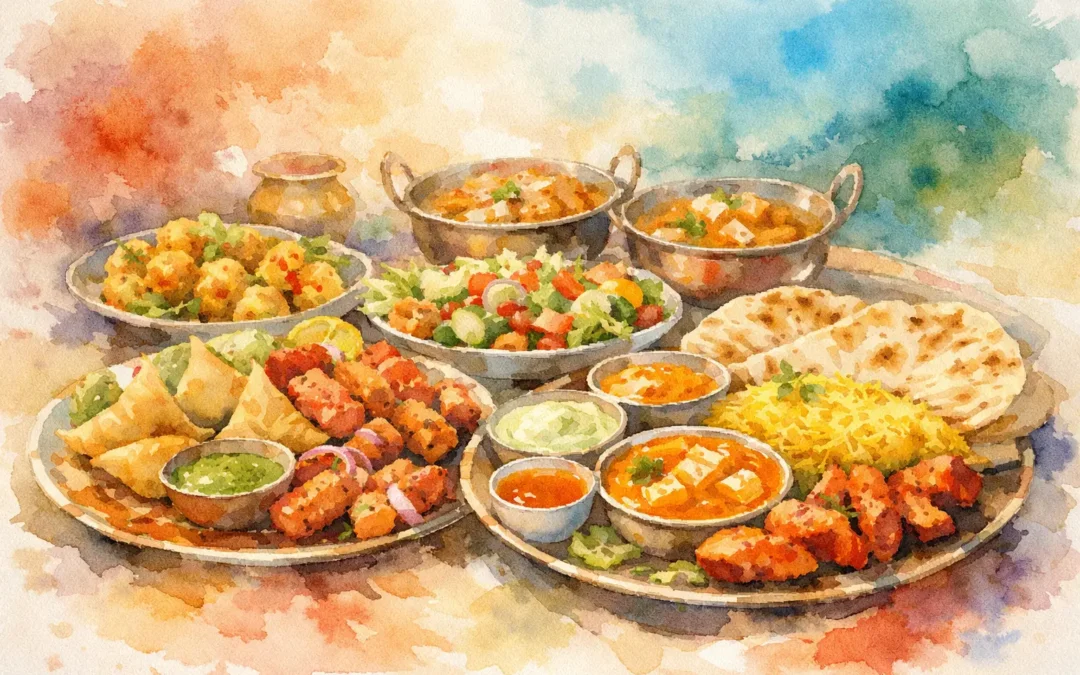
A good sharing platter should get the conversation started before the main dishes arrive. The sizzle of spiced chicken, crisp onion bhajis, warm flatbreads and colourful chutneys turn an ordinary meal into something everyone can enjoy together. Knowing how to choose Indian sharing platters means thinking beyond quantity: the best choice has enough variety, the right level of spice and food that suits every person around the table.
Whether you are planning a relaxed dinner with friends, a family takeaway or a small celebration, a well-chosen platter makes ordering simpler and more generous. Start with the people you are feeding, then build a selection of fresh street food, grilled favourites, vegetarian dishes and comforting sides around them.
Start with the size of your group
The first question is not simply how many people are eating, but how they are eating. A platter served before individual curries works differently from one intended to be the main event. For a table ordering curries afterwards, allow a few pieces per person as a starter. If sharing dishes are the centre of the meal, plan a more substantial mix with breads, rice and at least one filling vegetarian option.
For two people, a compact platter with two or three starters is usually enough to sample different flavours without filling up too early. A group of four can comfortably share a broader selection of tandoori items, fried street-food favourites and vegetable snacks. Larger groups benefit from ordering several platters rather than one enormous dish. This gives guests more choice and avoids the familiar problem of all the most popular bites disappearing first.
Appetites matter too. A group meeting after work may want plenty of satisfying food straight away, while guests gathering for a long evening meal may prefer lighter starters before their curries. It is always sensible to add a little extra when children, teenagers or particularly hungry guests are involved.
How to choose Indian sharing platters with variety
Variety is what makes Indian sharing food so enjoyable. The ideal platter brings together different textures and cooking styles: something crisp, something chargrilled, something soft and something bright with chutney or salad. It should not feel like four versions of the same fried snack.
A balanced selection often includes a tandoori item such as chicken tikka or seekh kebab, a crisp favourite such as onion bhaji or samosa, and a vegetable-led dish such as paneer tikka or vegetable pakora. These dishes offer distinct flavours while giving both meat-eaters and vegetarians something they can enjoy.
Think about colour as well as flavour. A platter with golden pakoras, flame-grilled tikka, fresh onions and vibrant mint or tamarind chutney looks inviting when it reaches the table. Food that looks generous encourages people to try something new, which is exactly what sharing is about.
If your guests already know they love particular dishes, include the favourites but leave room for one less familiar choice. A mild, smoky paneer dish or a tangy chaat-style bite can become the talking point of the meal without taking a risk on the whole order.
Balance heat, not just flavour
Spice preferences can vary widely in one family or friendship group. A sharing platter is usually best kept mild to medium, with chilli sauces or fresh chillies available for guests who like extra heat. This lets everyone taste the food comfortably while still enjoying authentic Indian spices.
A platter that is too fiery can leave some guests unable to enjoy the rest of the meal. On the other hand, choosing only mild dishes can feel flat for people who enjoy bolder flavours. The practical answer is contrast: order approachable dishes with fragrant spices, then add one hotter item or a spicy dip for those who want it.
Do not assume that a dish is hot simply because it is richly spiced. Indian cooking uses spices to create warmth, fragrance and depth, not just heat. Cumin, coriander, cardamom, ginger and garam masala can make food beautifully aromatic without making it overwhelming.
Make sure every guest has a choice
Sharing only works when everyone can join in. Before ordering, check whether anyone is vegetarian, vegan, avoiding gluten, has an allergy or does not eat particular meats. A mixed platter may look plentiful, but it is less useful if one or two people can only eat the garnish.
Vegetarian dishes deserve the same care as meat dishes, not an afterthought. Paneer, lentils, chickpeas, potatoes and seasonal vegetables all carry Indian spices wonderfully and add real substance to a spread. A vegetarian starter alongside grilled chicken or lamb gives the platter better balance for everyone.
For allergies and dietary requirements, always ask the restaurant directly before placing an order. Ingredients, preparation methods and kitchen handling can differ between dishes. This is especially important with nuts, dairy, gluten and sesame, which can appear in sauces, breads, marinades and garnishes.
If you are hosting, label dishes when serving at home and keep separate serving spoons where needed. It is a small detail that helps guests relax and enjoy their food.
Choose platters that match the occasion
A weekday takeaway calls for easy favourites that travel well and arrive ready to share. Crisp snacks, tandoori dishes, kebabs and hearty vegetarian starters are reliable choices, especially when paired with naan breads, poppadoms and chutneys. For delivery or collection, consider how long the journey home will take. Grilled dishes and substantial snacks tend to hold their texture better than delicate items intended to be eaten immediately.
For a restaurant meal, you can be more adventurous. A platter is an easy first course while everyone settles in, orders drinks and decides on main dishes. It also keeps the table sociable, particularly when guests have different ideas about what they want for their mains.
For birthdays, family gatherings and private parties, build the order around familiar crowd-pleasers and add a few special dishes for variety. A combination of chicken, lamb, paneer and vegetable options suits mixed groups well. Order enough breads and sauces to match, because they are often the first things guests reach for once the platter lands.
Do not forget the supporting dishes
A platter is more satisfying when there is something to scoop, dip or share alongside it. Poppadoms and chutneys create a light opening, while naan, roti or paratha make grilled dishes feel more filling. Rice may not be needed for a starter-led spread, but it becomes useful if the sharing selection is replacing a full meal.
Chutneys are not just an extra. Cool mint yoghurt can soften a warmly spiced kebab, while tamarind brings sharp sweetness to samosas and pakoras. A pickle or fresh salad can cut through richer dishes. These contrasts stop the meal from becoming too heavy and give every bite a little more character.
Get better value without ordering too much
The most cost-effective sharing order is not always the biggest platter. It is the one that gives your group a good spread of food without leaving you with a table full of duplicates. Start with the number of guests and the role of the platter, then add only what will be eaten.
If curries are to follow, spend your budget on a varied starter platter rather than adding extra rice and breads too early. If the platter is the meal, include filling elements such as paneer, kebabs, breads and a chickpea or lentil dish. This creates a satisfying meal at a reasonable price without relying on one expensive centrepiece.
For larger orders, ask whether dishes can be adjusted for your group or arranged as a party-style selection. A restaurant that prepares food fresh daily can help you choose combinations that suit the occasion, rather than leaving you to guess from a long menu.
Order with confidence for your next get-together
The best sharing platter feels generous, colourful and easy for everyone to enjoy. Choose a mix of grilled, crisp and vegetarian dishes, keep the heat comfortable for the group, and add breads and chutneys that bring the selection together. If you are unsure, describe your group, budget and dietary needs when ordering – a helpful team can point you towards the right balance.
At Worthing Indian Cafe & Bar, fresh daily ingredients, handpicked produce and traditional spices make sharing food a simple way to enjoy authentic Indian flavour together. For a casual evening, a family meal or a celebration, choose dishes that invite everyone to reach in for another bite.