
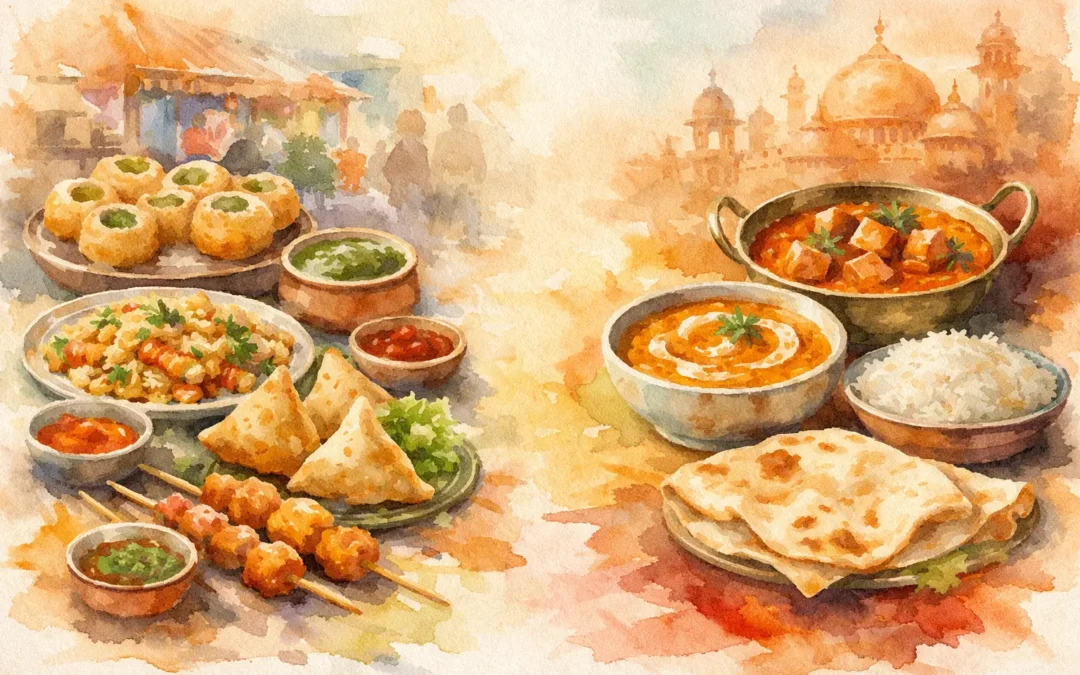
A crisp samosa eaten straight from the fryer and a slow-cooked chicken curry may both belong on an Indian menu, but they offer very different ways to eat. When people compare Indian street food versus curry dishes, the real difference is not simply snacks against mains. It is about texture, pace, regional character and the kind of meal you want at that moment.
Indian food is wonderfully varied, and there is room for both. Street food brings quick, bold combinations of spice, crunch, tang and freshness. Curry dishes bring warmth, depth and satisfying sauces designed to be enjoyed with rice, naan or roti. Knowing what sets them apart can make choosing your next meal much easier.
Indian Street Food Versus Curry Dishes: The Main Difference
Indian street food is made for immediate enjoyment. Across India, vendors prepare dishes that are often assembled to order, served hot, and built around lively contrasts. You might find crisp pastry with soft spiced fillings, fluffy breads with chickpeas, or crunchy puris topped with yoghurt, chutney and masala. A great street-food dish gives you plenty to notice in every bite.
Curry dishes are usually more centred on a main ingredient cooked in a sauce or gravy. That can be chicken, lamb, fish, paneer, vegetables, lentils or chickpeas. The sauce may be creamy, tomato-rich, smoky, gently spiced or full of chilli heat, depending on the recipe and region. Curries tend to be more comforting and substantial, particularly when shared as part of a full meal.
Neither is better than the other. Street food suits the days when you want variety, quick flavour and something sociable to share. A curry often suits a relaxed dinner, a family takeaway, or an evening when you want a proper plate of food with all the familiar accompaniments.
Why Indian Street Food Feels So Exciting
The appeal of Indian street food often starts with texture. A samosa has a crisp golden shell and a warm filling of potato, peas and spices. Onion bhajis are craggy and crunchy outside, soft within and especially good with a fresh chutney. Pani puri brings a completely different experience: a delicate crisp shell filled and eaten in one bite, with spiced water, potato and tangy flavours bursting through.
Then there is the balance of sweet, sour, spicy and cooling elements. Tamarind chutney can add sweetness and sharpness, mint chutney offers freshness, and yoghurt can soften a lively masala. These contrasts are a key part of the experience. Indian street food is rarely meant to taste flat or one-dimensional.
It is also naturally suited to sharing. Ordering a few starters or small plates lets a couple, family or group try several dishes without committing to one flavour. That makes street food a strong choice for casual dinners, early evening drinks, a catch-up with friends or a party menu where guests can help themselves.
Fresh preparation matters here. Fried items need to arrive crisp, breads should be warm, and chutneys should taste bright. The best results come from fresh daily ingredients, carefully prepared fillings and authentic Indian spices used with confidence rather than excess.
Street Food Is Not Always Light
Because it is served in smaller portions, street food can seem like the lighter choice. Sometimes it is, particularly with dishes based on chickpeas, grilled vegetables, yoghurt or fresh herbs. However, many favourites are fried or feature rich sauces, so the answer depends on what you order and how much you share.
A mixed street-food meal can be a great alternative to a large main, but it can also become a feast of its own. If you want a more balanced spread, pair crisp dishes with a chickpea dish, grilled paneer or a fresh salad-style chaat. Variety is one of its biggest strengths.
What Makes Curry Dishes So Comforting
A good curry is about layers of flavour built over time. Onions may be slowly cooked for sweetness, ginger and garlic add warmth, and spices such as cumin, coriander, turmeric, cardamom and garam masala each play their part. The aim is not to make every curry taste the same, but to bring out the character of the chosen ingredients.
For example, a creamy korma is usually mild and gently aromatic, while a madras-style curry offers more heat and a fuller chilli kick. A bhuna may be thicker and more intensely spiced, with less sauce than a dish designed to be spooned generously over rice. Lentil-based dals provide a wholesome, comforting option that proves a satisfying curry does not need to contain meat.
Curry dishes are particularly flexible for different tastes. One person can choose a mild paneer curry, another can enjoy a hotter lamb dish, and the table can share rice, naan, poppadoms and side dishes. This makes curries a reliable choice for family meals and group orders where everyone wants something slightly different.
Sauce, Spice and Heat Are Not the Same Thing
It is easy to assume that a darker or richer-looking curry will be hotter, but this is not always true. Spice is about flavour as much as heat. A dish can contain a generous blend of aromatic spices and still be mild, while a simpler sauce can be hot because of fresh or dried chillies.
When ordering, think about the flavour you enjoy rather than choosing only by heat level. If you prefer creamy and mild, look for dishes with yoghurt, cream, coconut or ground nuts. If you enjoy tangier flavours, tomato-based curries may appeal. If you like deeper heat, choose dishes where chilli, black pepper and stronger masala are more prominent.
Which Should You Choose for Your Meal?
Choose Indian street food when you want a meal with movement and variety. It is ideal if you enjoy trying different flavours, sharing plates and mixing crunchy, soft, sweet and spicy bites. It also works brilliantly as a starter before a curry, especially for a dine-in meal where you have time to enjoy the full spread.
Choose curry dishes when you want something more settled and filling. A curry with rice or bread gives you a complete, comforting meal that travels well for delivery or click and collect. Curries are often easier to reheat gently at home too, although freshly cooked food is always at its best.
There is no rule that says you must choose one or the other. A balanced order might begin with samosas or bhajis, then move on to a curry with rice and naan. For a lighter meal, combine a chaat or grilled dish with a vegetable side. For a bigger gathering, a mixture of street-food favourites, curries and breads gives everyone choice without making the table feel repetitive.
Regional Variety Goes Beyond the Curry House Menu
The word “curry” is useful, but it can hide how broad Indian cooking really is. India’s regions use different ingredients and cooking styles shaped by climate, local produce and tradition. Coastal areas often make excellent use of fish, coconut and curry leaves. Northern dishes may feature tandoor cooking, dairy and rich gravies. Vegetarian dishes from many regions make imaginative use of lentils, beans, vegetables and paneer.
Street food has the same regional depth. Chaat is not one fixed dish, and neither is a dosa, a kebab or a stuffed bread. Recipes vary from city to city and family to family. That is why an authentic menu should offer familiar favourites while leaving space for dishes that show the colour and character of Indian regional food.
For diners in Worthing, this means Indian food can suit far more than the usual Friday-night takeaway. It can be a quick lunch, a relaxed weekday dinner, a shared meal with friends, or food for a birthday and private function. The best choice is the one that fits the occasion and leaves everyone happy at the table.
At Worthing Indian Cafe & Bar, fresh daily preparation, handpicked produce and traditional spices help make both street-food plates and classic curries feel generous, authentic and reasonably priced. Start with the dish that suits your mood, then leave room to try something new next time.