
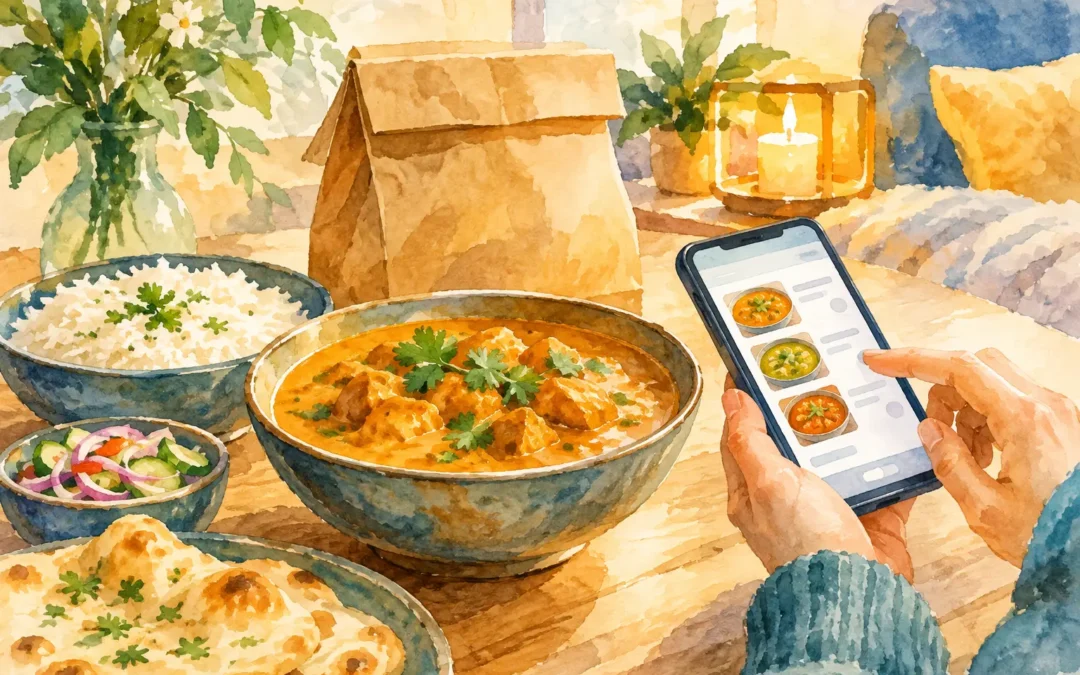
A long day changes what a good dinner looks like. You want proper flavour, food that arrives hot or is ready to collect on time, and enough choice to please everyone without spending twenty minutes deciding. These weeknight curry ordering tips make it easier to turn a busy evening into a satisfying meal, whether you are feeding the family, sharing with a partner or enjoying a quiet night in.
Start with the kind of evening you are having
The best order is not always the biggest one. Before looking through the menu, think about how hungry everyone is, how much time you have and whether you want a familiar favourite or something a little different.
For a quick meal after work, a curry, rice and naan can be exactly right. If you are ordering for two or more people, sharing a few dishes gives everyone more variety and can make the meal feel more generous without over-ordering. A main dish with one rice, one bread and a side is often a sensible starting point for two, then add more according to appetite.
Weeknights also call for food that travels well. Saucy curries, rice dishes, tandoori grills and substantial sides hold their warmth and flavour particularly well for takeaway or delivery. Crisp starters can still be a great choice, but they are best enjoyed as soon as the order arrives.
Choose your curry by flavour, not just heat
Heat matters, but it is only one part of a good curry. Indian cooking brings together spices, herbs, tomatoes, onions, yoghurt, cream, lentils and fresh ingredients in many different ways. Choosing by flavour helps you find a dish you will genuinely enjoy.
If you want something mild and comforting, look for creamy, gently spiced curries with a rich sauce. These are a dependable option for children, cautious spice eaters and anyone who wants a relaxed meal after a demanding day. A mild curry does not mean a bland one – balanced spices can still bring plenty of depth.
For medium heat, choose dishes with tomato, onion and aromatic spice bases. They offer warmth without taking over the whole meal, making them ideal when your table has mixed preferences. Medium dishes are often the easiest choice for a weekday order because they feel full of flavour while still letting you enjoy the rice, breads and sides alongside them.
If you like a hotter curry, go for it, but consider the rest of the order. A fiery main pairs well with cooling yoghurt-based sides, plain rice and a soft naan. When everyone is sharing, ordering one hot dish and one mild or medium dish gives the table a better balance than choosing the same level of spice for every curry.
Ask for guidance when you are unsure
There is no prize for guessing the hottest dish on the menu. If you are trying a new curry, ask which option suits your preferred level of heat and whether it is rich, tangy, smoky or more straightforwardly spicy. A helpful recommendation can prevent a disappointing dinner and introduce you to a new favourite.
Build a balanced order around the mains
A curry deserves the right accompaniments. Rice carries the sauce and makes a meal more filling, while naan and other breads are perfect for scooping up every last bite. If your curry has a generous sauce, include at least one of these rather than relying on starters alone.
Plain basmati rice is a smart match for richer or hotter dishes because it keeps the flavours clear. Pilau rice adds gentle spice and works well with milder curries. Naan brings a soft, comforting texture, while garlic naan is a good choice when you want another layer of flavour. It depends on the main: with a boldly spiced curry, plain rice or plain naan may be the better partner; with a mild dish, flavoured bread can add interest.
Do not overlook vegetable sides. A lentil dish, spiced vegetables or chickpeas can add substance and make an order go further, especially for families or groups. They are also an easy way to create more variety when some people want meat and others prefer vegetarian food.
For most weeknight meals, avoid ordering several heavy, creamy curries with multiple rich breads unless you are feeding a larger group. The food may be delicious, but a little contrast makes the meal more enjoyable. Think one richer dish, one tomato or onion-based curry, rice, bread and a vegetable side.
Make ordering for different tastes simple
Feeding several people does not need to mean separate orders for everyone. The easiest approach is to choose a small range of dishes that cover different spice levels and textures. A mild curry, a medium curry, a vegetable dish and a hotter option will usually give a family or small group enough choice.
Be clear about dietary needs when placing the order. Vegetarian, vegan, dairy-free and gluten-sensitive requirements deserve attention, particularly where sauces, breads and marinades are concerned. If there is an allergy, state it directly rather than assuming a dish is suitable. A restaurant can only help properly when it has the right information.
Portion size is another practical point. If people have had a late lunch, keep the order focused. If you are ordering after sports, travelling or a particularly busy day, add an extra rice, naan or side rather than hoping one main will stretch further than it should. A little planning reduces both waste and the frustration of not having enough food.
Plan delivery or collection around your evening
Convenience is a major reason to order curry on a weekday, so make the service fit your schedule. Delivery is ideal when you need to stay home, finish work or manage family routines. Click and collect can be quicker when you are already out and want to pick up dinner on the way back.
Order before everyone is starving if you can. Early evening can be busy, and placing your order with a little time to spare means you are more likely to eat when you planned to. Check the estimated collection or delivery time, and have plates, drinks and serving spoons ready before the food arrives. It is a small detail, but it makes takeaway feel calmer and more like a proper meal.
If you are collecting, keep the journey home in mind. Curries and rice travel well, but placing the bag flat and heading home directly helps keep everything in the best condition. Once you are home, serve the food promptly. Naan is at its best while warm, and hot dishes should not be left sitting for longer than necessary.
Get more from leftovers without compromising quality
A well-planned order can make tomorrow’s lunch easier, but only if leftovers are handled carefully. Refrigerate cooled food promptly in suitable containers, and reheat it until piping hot. Rice needs particular care: cool it quickly, keep it chilled and only reheat it once.
When ordering with leftovers in mind, choose dishes that will still taste good the next day. Lentils, chickpeas, vegetable curries and many saucy mains often develop even more flavour overnight. Keep breads separate where possible, as they are best refreshed with a brief warm-up rather than stored under steam.
Choose freshness and familiarity when time is short
On the busiest evenings, a dependable local restaurant makes all the difference. Fresh daily ingredients, handpicked produce and authentic Indian spices bring a homemade sense of comfort to food you do not have to cook yourself. Familiar favourites are always a good call, but a weekday order is also a low-pressure chance to add one new side or regional dish to the table.
At Worthing Indian Cafe & Bar, the aim is simple: authentic flavour, generous choice and a reasonable price for the nights when cooking can wait. Choose food that suits the people around your table, give yourself a little time to enjoy it, and let dinner be the easy part of the evening.