
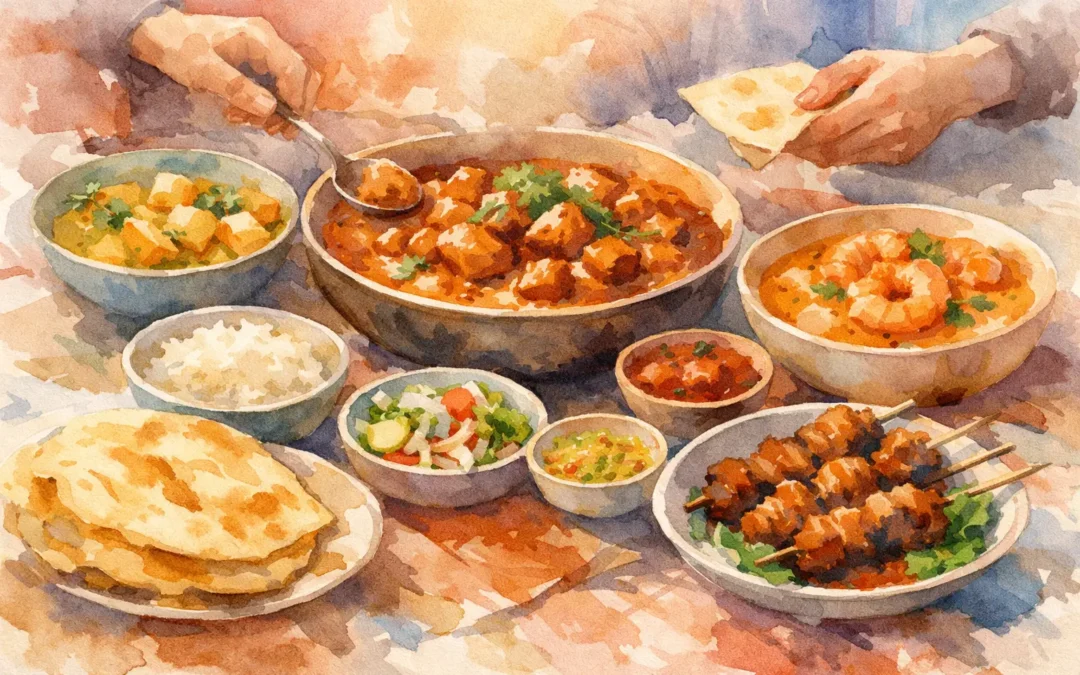
A good shared Indian meal starts when the table is full enough for everyone to try something different. The best curry dishes for sharing bring together contrasting flavours, gentle and fiery heat, rich sauces and fresh sides, so every guest can build a plate they enjoy. Whether it is a relaxed Friday night takeaway, a family meal or a small celebration, choosing a balanced selection makes all the difference.
What makes a curry good for sharing?
The most shareable curries are not necessarily the hottest or the richest. They are the dishes that hold their flavour when served alongside rice, breads, starters and other sauces. A creamy, mild curry gives everyone a comfortable place to begin, while a tomato-led or chilli-forward dish adds excitement for guests who like more heat.
Variety matters more than ordering several versions of the same curry. Aim for different textures and styles: one creamy dish, one medium-spiced favourite, one bolder option and a vegetable dish if your group includes vegetarian diners. This gives the table plenty of choice without making the meal feel overly heavy.
Saucy curries are especially useful for sharing because they stretch well across steamed basmati rice and warm naan. Drier dishes, such as tandoori grills or stir-fried street-food favourites, can be excellent additions, but they work best as part of the wider spread rather than the only main course.
The best curry dishes for sharing at the table
Chicken tikka masala for a familiar favourite
Chicken tikka masala is a reliable choice when a group includes different tastes. Tender pieces of chicken tikka are served in a smooth, gently spiced sauce with a rounded, slightly creamy finish. It is flavourful without being overwhelming, making it a popular centrepiece for families, couples and mixed groups.
It pairs easily with both rice and naan, and it helps balance hotter dishes on the table. If someone is new to Indian food or prefers a milder meal, this is often the curry they will reach for first.
Korma when mild comfort is needed
A korma brings a softer, richer character to a shared meal. Its creamy sauce, often lifted with gentle spices and a subtle sweetness, is ideal for guests who do not want a lot of chilli. Chicken korma is a dependable choice, while vegetable korma gives non-meat eaters a satisfying main dish rather than an afterthought.
Because korma is rich, it is best ordered alongside a brighter curry, such as a bhuna or jalfrezi. That contrast keeps each serving interesting and stops the whole meal becoming too creamy.
Bhuna for deep, traditional flavour
Bhuna is a strong choice for diners who enjoy a thicker sauce and deeper spice flavour. The onions, tomatoes and spices are cooked down to create a concentrated, satisfying curry that feels hearty without relying on cream. Chicken, lamb or vegetable bhuna can all sit comfortably at the centre of a shared order.
This is often a good middle-ground dish. It usually offers more intensity than korma or tikka masala, but it does not need to be as hot as a vindaloo. Serve it with pilau rice and a plain naan so its slow-cooked flavours can stand out.
Jalfrezi for colour and a proper kick
For the guests who like some heat, jalfrezi earns its place on the table. With peppers, onions, tomatoes and fresh green chillies, it is bright, lively and full of texture. The heat can vary, so it is worth checking the spice level if you are ordering for a group with mixed preferences.
A chicken jalfrezi works particularly well beside a milder curry, allowing people to mix sauces and control how much heat they want. It also brings colour to the table, which is always welcome when a shared meal arrives.
Madras for warming spice
Madras is a classic for people who want a fuller chilli warmth and a more direct spice profile. It is bold, fragrant and satisfying, especially with lamb or chicken. While it may not suit every guest as their main curry, a single Madras can be an excellent shared dish for adding depth and heat to the selection.
The key is balance. If you order Madras, include a mild curry and plenty of rice, naan or chapati. This means everyone can enjoy the meal at their own pace, rather than being limited by the hottest dish on the table.
Vegetable curry for every kind of group
A vegetable curry is essential when sharing, even if everyone at the table eats meat. Fresh vegetables, lentils, chickpeas or paneer bring different textures and make the order feel more generous. They are also useful for guests who prefer a lighter plate or want to add more variety between richer curries.
Choose a vegetable curry with a distinct character rather than a substitute for another dish. A spinach-based saag, a chickpea curry or a mixed vegetable curry can offer earthy, comforting flavour and pair beautifully with rice and breads.
Build a balanced order, not just a bigger one
For four people, three curries are often enough when they are supported by starters, sides, rice and breads. A useful combination might be a chicken tikka masala, a lamb bhuna and a vegetable curry, with jalfrezi added if your group enjoys spice. For a larger gathering, add another main with a different sauce rather than doubling up on the same dish.
Rice should be generous, particularly if you are ordering several saucy curries. Plain basmati rice lets the spices shine, while pilau rice adds extra fragrance. Naan is ideal for scooping up thicker sauces, and chapati can be a lighter option if the meal already includes several rich dishes.
Do not overlook the sides. Onion bhajis, samosas, pakoras or crispy street-food starters give everyone something to enjoy while the curries are being shared. Raita can cool a spicy jalfrezi or Madras, while chutneys and pickles add sharpness and sweetness. These small contrasts make the whole meal feel more complete.
Choose heat with your guests in mind
The best approach is to order across the heat scale rather than assuming everyone wants the same level of spice. One mild dish, one medium dish and one hotter dish gives the table flexibility. Guests can taste a little of everything, return to their favourites and avoid committing to a full portion that is too hot for them.
If you are unsure, medium heat is often the safest place for the main selection. You can then add a hotter curry for confident chilli lovers, plus cooling raita and extra rice. A restaurant can usually help explain how dishes are prepared and guide you towards a suitable mix for children, first-time diners or guests with particular dietary needs.
Fresh food makes sharing more enjoyable
When several dishes are open on the table, freshness is easy to notice. Tender meat, vegetables with texture, properly cooked rice and sauces made with authentic Indian spices all help each curry retain its own character. A shared meal should feel generous, not greasy or repetitive.
At Worthing Indian Cafe & Bar, fresh daily ingredients, handpicked produce and traditional spices help create curries that are full of flavour and easy to enjoy together. The same care matters whether you are sitting down for dinner, collecting a takeaway or arranging food for a gathering at home.
For your next shared meal, choose one curry that feels familiar, one that brings warming spice and one that offers something different. Put the rice in the middle, pass the naan around, and let everyone find the combination that makes their plate just right.