
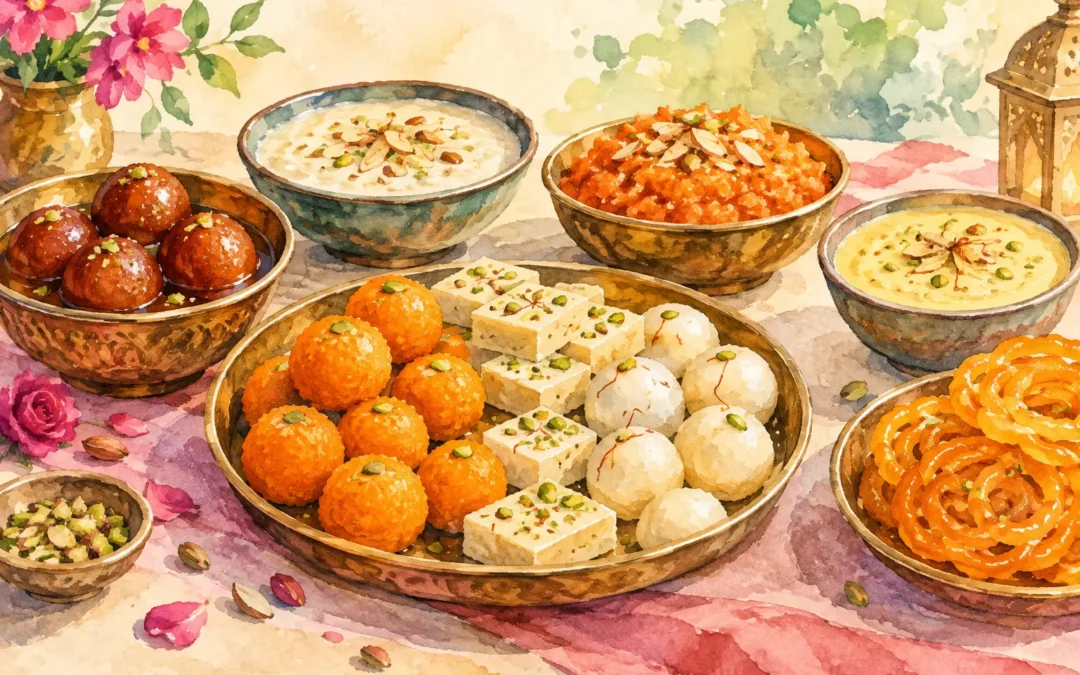
A good Indian meal often leaves just enough room for something sweet. The best Indian desserts to share bring everyone back to the table for one more spoonful, whether you are finishing a relaxed family dinner, adding a treat to a Friday-night takeaway or planning food for a small celebration. They are comforting, colourful and full of familiar ingredients such as milk, cardamom, saffron, pistachios and rose.
Dessert is also one of the easiest ways to make a meal feel generous. Rather than ordering one pudding each, choose a few different dishes and let everyone try something new. Some are best served warm and syrupy, while others are cool, light and especially welcome after a spicy curry or a plate of lively street food.
Best Indian desserts to share with family and friends
The right choice depends on the size of your group, the rest of your meal and whether you are eating straight away or taking dessert home. Here are ten favourites that work particularly well when the spoons are being passed around.
1. Gulab jamun
Gulab jamun is a classic for good reason. These soft milk-based dumplings are fried until golden, then soaked in a fragrant sugar syrup that may be scented with cardamom, rosewater or saffron. They arrive warm, rich and wonderfully soft.
For sharing, gulab jamun is hard to beat because it is naturally portioned. Two or three pieces can be served in a bowl, giving everyone an easy taste without the need to divide a slice. It is a good choice after a hearty curry, although its sweetness is substantial, so pairing it with kulfi or plain ice cream can balance the plate.
2. Rasmalai
Rasmalai offers a softer, cooler contrast. Delicate cheese dumplings are soaked in sweetened, saffron-infused milk and often finished with chopped pistachios or almonds. The result is creamy without being heavy in the same way as a baked pudding.
This is a particularly good dessert to share after dishes with warming spices, chilli or a rich sauce. The chilled milk and gentle saffron flavour refresh the palate. Serve it with spoons and make sure there is enough of the fragrant milk in the dish – it is too good to leave behind.
3. Kulfi
Kulfi is India’s traditional frozen dessert, usually denser and creamier than standard ice cream. Popular flavours include malai, mango, pistachio, cardamom and almond. It melts more slowly, which makes it a practical choice for a table that likes to talk long after the main course has finished.
Order different flavours if you can. Mango kulfi is bright and fruity, while pistachio or malai kulfi has a richer, nutty character. For a family meal, slicing kulfi into rounds or sharing a mixed platter means children and adults can find a favourite without committing to one flavour each.
4. Jalebi
Jalebi is made for those who enjoy a little theatre with their dessert. The bright orange spirals are crisp at first bite, then sticky with sugar syrup. Their flavour is sweet, tangy and lightly fermented, giving them more character than an ordinary doughnut.
Jalebi is best when it is fresh and warm. Because each spiral can be picked up and shared easily, it suits informal gatherings and buffet-style celebrations. It is very sweet, so a small portion goes a long way. A side of chilled rabri or vanilla ice cream creates a pleasing contrast between hot, crisp jalebi and cool cream.
5. Gajar ka halwa
Gajar ka halwa is a warm carrot pudding slowly cooked with milk, sugar, ghee and nuts. It has a deep, comforting flavour, with the natural sweetness of carrots brought forward by cardamom and a gentle richness from the ghee.
This dessert is ideal on cooler evenings or when you want something that feels homemade and satisfying. It shares well from one larger bowl, especially with a scoop of ice cream alongside. The trade-off is that it is filling, so it works best when the main meal has not been overly rich.
6. Kheer
Kheer is Indian rice pudding, made by simmering rice with milk, sugar and aromatic spices until it becomes creamy. Depending on the recipe, it may include raisins, cashews, almonds, coconut or saffron. Every household and region has its own variation, which is part of its appeal.
For groups with different tastes, kheer is a safe and welcoming choice. It is familiar enough for guests who prefer a simple pudding, yet the cardamom and nuts keep it distinctly Indian. Serve it chilled for a lighter finish, or slightly warm when you are after comfort food.
7. Shrikhand
Shrikhand is a thick, chilled yoghurt dessert with a smooth, tangy sweetness. It is often flavoured with saffron, cardamom, mango or nuts. Its light, fresh character makes it especially useful when you want dessert without another very rich dairy dish.
Mango shrikhand works beautifully in spring and summer, while saffron and pistachio versions feel more celebratory. It can be shared in small bowls with fruit, biscuits or puris, although it is equally enjoyable by the spoonful. If your meal already includes plenty of creamy curries, shrikhand can be the more refreshing option.
8. Sandesh
Sandesh is a Bengali sweet made from fresh chhena, a soft curd cheese. It is lightly sweetened and shaped into small rounds, squares or decorative moulds. Some versions are flavoured with rose, saffron, pistachio or seasonal fruit.
Its smaller size makes sandesh excellent for a party table or after-dinner sharing plate. Compared with syrup-soaked sweets, it is usually more delicate and less intensely sweet. That makes it a thoughtful choice for guests who would like a taste of dessert without a large portion.
9. Peda
Peda is a small, fudgy milk sweet, often flavoured with cardamom and topped with pistachio. It has a dense texture and a mellow, caramelised dairy flavour that makes one piece feel satisfyingly indulgent.
Like sandesh, peda needs no cutting or serving fuss. It suits celebrations, office gatherings and family occasions where people may be standing, chatting or choosing food at different times. A selection of pedas, barfi and other mithai gives guests variety, but bear in mind that these sweets are rich. A few well-chosen pieces are usually better than an overflowing box.
10. Falooda
Falooda is the dessert to choose when you want something colourful, cooling and a little more playful. It may combine milk, rose syrup, vermicelli, basil seeds, jelly and ice cream in one tall glass. Regional versions vary, and that variety is part of the fun.
Falooda is best for a relaxed meal where everyone has time to enjoy it properly. It is less tidy than a small sweet and not always the easiest option for delivery, but it is a real crowd-pleaser for hot days and birthday meals. One or two large servings can be shared with long spoons for a memorable finish.
How to choose Indian desserts for a shared meal
For a table of two to four people, choose one warm dessert and one chilled dessert. Gulab jamun with kulfi is a dependable pairing, while jalebi with rabri offers a more indulgent contrast. If you are feeding a larger group, add portion-friendly sweets such as peda or sandesh alongside a bowl dessert like kheer or gajar ka halwa.
Think about the balance of the meal, too. After a fiery vindaloo or richly spiced street-food selection, rasmalai, kulfi or shrikhand can cool things down. After a lighter meal, warm gulab jamun or gajar ka halwa brings the comfort. For children, mango kulfi and kheer are often easy introductions, while jalebi adds a fun, crunchy treat.
Freshness matters as much with dessert as it does with the main course. Chilled desserts should stay cold until serving, while jalebi and gulab jamun are at their best when enjoyed promptly. If you are ordering takeaway, ask for warm items to be packed separately where possible, then serve them as soon as you are home.
At Worthing Indian Cafe & Bar, a shared dessert is a simple way to turn an everyday meal into an occasion. Choose a couple of contrasting favourites, put the spoons in the middle of the table and leave room for that last sweet bite.