
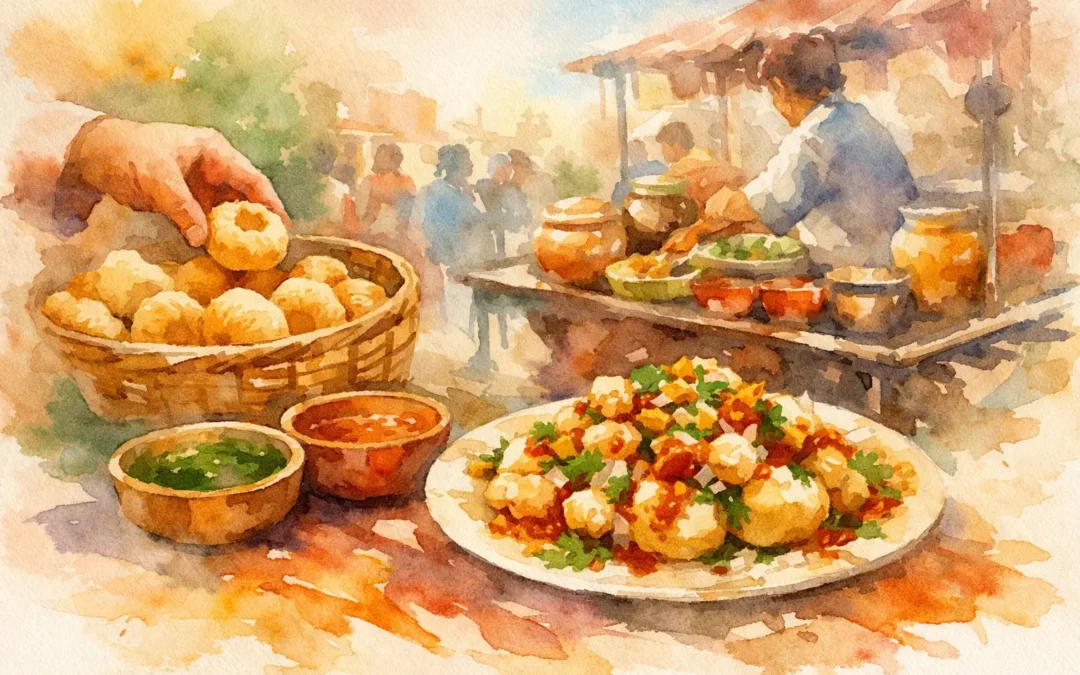
You do not need to know every regional snack on the menu to enjoy chaat properly. If you have ever looked at a list of Indian street dishes and wondered where to start, this guide on how to order Indian street chaat will help you choose with confidence and get something that suits your taste, appetite and spice level.
Chaat is one of the most exciting parts of Indian street food because it is built around contrast. You get crunch, softness, sweetness, spice, tang and freshness in the same dish. That balance is what makes it so moreish, but it also means the right order depends on what kind of meal you want. Some chaats are light and snack-like, while others are filling enough for lunch.
What chaat actually is
Chaat is a broad category of Indian street food rather than one single item. It usually combines crisp elements such as sev, papdi or puri with chutneys, yoghurt, potatoes, chickpeas, onions and fresh herbs. The word itself is often associated with bold, lively flavours that hit different notes at once.
That is why ordering chaat is a little different from ordering a curry. With a curry, many people choose by protein or sauce. With chaat, it is more about texture, temperature and flavour balance. If you like crunchy food with a sweet-and-sour finish, one option will suit you better than a warm, soft, spicy potato-based chaat.
How to order Indian street chaat for your taste
The easiest way to order well is to start with what you already enjoy. Think less about unfamiliar names and more about whether you prefer crisp or soft, cool or hot, mild or punchy.
If you like fresh, cooling flavours, look for chaats made with yoghurt and chutneys. Dahi-based dishes are often a good entry point because the yoghurt softens the spice and brings a creamy finish. If you prefer something sharper and more vibrant, tamarind-heavy chaats tend to give that sweet, tangy lift many people associate with Indian street food.
If texture matters most to you, ask yourself whether you want a proper crunch. Pani puri, sev puri and papdi chaat are all known for crispness, though they eat quite differently. Pani puri is light, punchy and interactive. Papdi chaat is more layered and often more filling. Sev puri usually gives a lighter, brighter bite.
If you want something warmer and more substantial, aloo-based chaats and samosa chaat are often the better choice. These dishes can feel closer to a small meal, especially if you are ordering takeaway and want something satisfying rather than just a quick snack.
Know the common types before you choose
A little familiarity goes a long way when reading a menu. Papdi chaat is usually a safe place to begin. It combines crisp wafers with yoghurt, chutneys and toppings, so you get that classic mix of crunch, sweetness and spice without anything too extreme.
Samosa chaat is ideal if you want comfort as well as flavour. A samosa is broken up and topped with chutneys, chickpeas, yoghurt and spices. It is rich, hearty and excellent if you are hungry. The trade-off is that it is heavier than some of the lighter street-style chaats.
Pani puri is one of the most well-known options, but it is also the one that surprises people most. Hollow crisp puris are filled and served with flavoured water, often tangy and spicy. It is lively and refreshing, though it is best enjoyed fresh and straight away. For delivery or a slower meal at home, it can lose some of its appeal if not packed carefully.
Bhel puri is a smart choice if you want something light, crisp and less rich. It is usually made with puffed rice, chutneys, herbs and crunchy toppings. It feels less heavy than yoghurt-based chaats and suits people who enjoy a fresher finish.
Aloo tikki chaat is warmer, softer and more comforting. Spiced potato patties are topped with chutneys and other garnishes. If you like potato dishes and want a street food plate with a bit more substance, this is often a strong option.
Spice level matters, but so does sharpness
People often focus only on heat, but with chaat the bigger factor can be sharpness. Tamarind, chaat masala, green chutney and fresh onion can all create a bold flavour even when the dish is not especially hot.
If you are sensitive to chilli, say so clearly when ordering. A good kitchen can often guide you towards a chaat that still feels authentic and full of flavour without pushing the heat too far. Yoghurt-based chaats are often friendlier if you prefer milder food, while green chutney and pani can be more intense.
It is also worth remembering that some dishes build heat gradually. The first few bites may feel balanced, then the spice and tang start to come through more strongly. If you are ordering for children or for someone trying chaat for the first time, it is usually better to choose milder dishes first and add more heat another time.
How to order Indian street chaat for dine-in or takeaway
Where you are eating makes a difference. Some chaats are at their best the moment they are assembled. Crisp elements can soften over time, especially once chutneys and yoghurt are added.
For dine-in, you can be more adventurous with delicate, crunchy options. Pani puri and papdi-based chaats are great choices when served fresh because the contrast in texture is part of the experience. If you are eating in with friends or family, sharing a couple of chaats between the table is often the best way to try different styles.
For takeaway or delivery, sturdier chaats tend to travel better. Samosa chaat and aloo tikki chaat usually hold up well because they are more substantial to begin with. That does not mean crisp chaats cannot work, but it depends on how quickly you are eating and how the food is packed.
If you are ordering from Worthing Indian Cafe & Bar for home, it makes sense to choose a mix. Pick one fresher, lighter chaat for contrast and one warmer, more filling option so the meal feels balanced and satisfying.
Pairing chaat with the rest of your order
Chaat can be a starter, a side or the centre of a lighter meal. The right choice depends on what else you are having.
If you are following it with a curry, rice and bread, keep your chaat lighter. Bhel puri or papdi chaat can work well because they wake up the appetite without making the meal feel too heavy from the start. If chaat is your main focus, then samosa chaat or aloo tikki chaat may be a better fit.
For groups, variety matters more than perfection. One crunchy option, one yoghurt-based option and one warm, hearty option usually gives everyone something to enjoy. Chaat is social food by nature, and it often works best when shared across the table.
What to ask if you are unsure
You do not need expert knowledge to order well. A few simple questions can help you avoid disappointment and get something that genuinely suits you.
Ask whether a dish is served cold, warm or mixed. Ask if it is more crunchy or soft. Ask whether the chutneys make it sweeter, tangier or spicier. These details matter far more than the name alone.
It is also sensible to mention if you dislike raw onion, prefer less yoghurt or want something filling. Chaat is all about balance, so small preferences can make a big difference to the final dish.
The best way to start if you are new to chaat
If this is your first time, start with a classic that offers balance rather than extremes. Papdi chaat is often the easiest introduction because it shows what chaat is meant to do – crisp texture, cooling yoghurt, sweet tamarind, fresh herbs and a gentle kick of spice.
If you already know you like bold street food flavours, go for pani puri or a sharper, more tangy option. If you want something that feels more like a meal, samosa chaat is usually the safer bet. There is no single right answer, only the right fit for your appetite and preferences.
The main thing is not to overthink it. Chaat is meant to be lively, fresh and enjoyable, not formal. Order with the flavours and textures you genuinely like in mind, and you are far more likely to find a dish you will want again next time.