
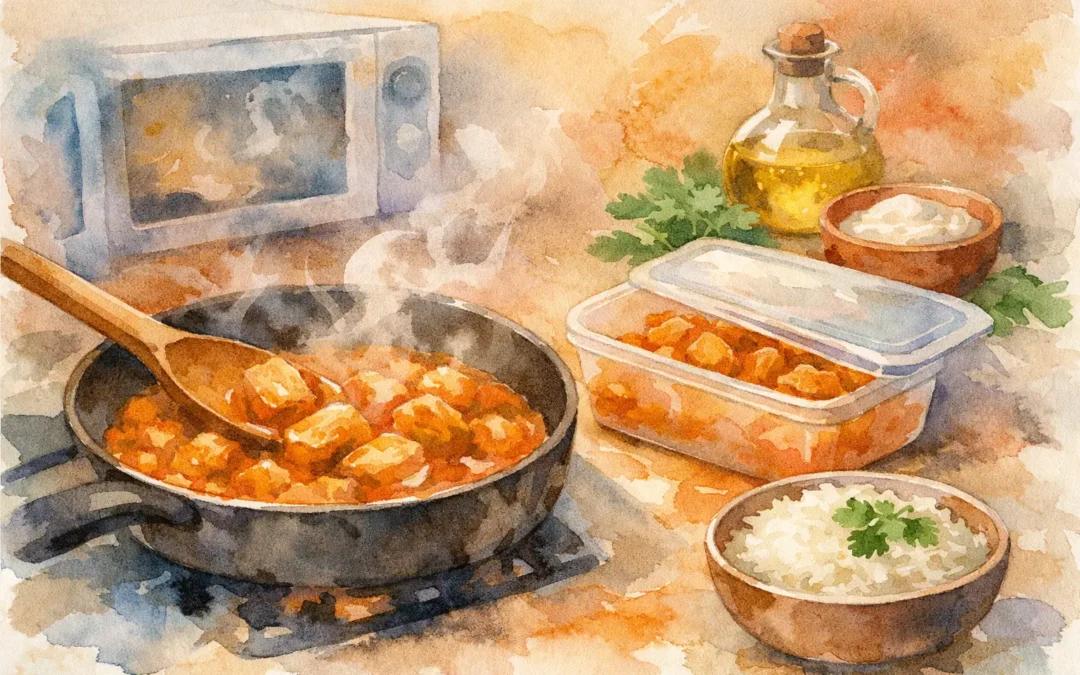
Last night’s curry should still taste rich, fragrant and properly satisfying – not oily, dried out or merely warm around the edges. Knowing how to reheat takeaway curry correctly makes all the difference, especially when you want to enjoy every spoonful of a freshly made meal for a second time.
The best method depends on the dish, the amount you are reheating and the equipment you have at home. A saucy chicken curry is very forgiving on the hob, while rice needs more careful handling. The simple aim is the same: heat food quickly and evenly until it is piping hot throughout, without boiling the flavour out of it.
Store your takeaway properly first
Good reheating begins when the meal arrives. If you are not eating the leftovers straight away, transfer them from the delivery bag and let excess steam escape. Food should not sit at room temperature for hours while everyone decides whether they have room for one more poppadom.
Ideally, cool leftovers promptly and place them in the fridge within two hours. Divide a large portion into smaller, shallow containers so it cools faster and is easier to reheat evenly the next day. Keep curry, rice, naan and side dishes separate where possible. This protects the texture of each item and makes serving simpler.
Eat refrigerated leftovers within one to two days for the best quality. If a curry has been left out overnight, has an unusual smell, or you are unsure how long it has been sitting out, it is safer to discard it. A great curry is never worth taking chances with.
How to reheat takeaway curry safely
Whether you use a microwave or hob, reheat the curry until it is steaming hot all the way through. If you have a food thermometer, the centre should reach 75C. Stirring is essential, as thick sauces can be scorching at the edge while still cool in the middle.
Only reheat a portion once. Rather than warming the whole container and returning some to the fridge, take out the amount you plan to eat. This keeps the remaining food in better condition and avoids repeated warming and cooling.
Reheating curry on the hob
The hob is usually the best choice for curries with plenty of sauce, such as korma, tikka masala, madras, jalfrezi or dhal. It gives you more control and helps the sauce stay glossy rather than splitting or catching.
Put the curry into a saucepan over a low to medium heat. Add a small splash of water if the sauce has thickened in the fridge – one or two tablespoons is often enough. You can also use a little milk or cream for a mild, creamy curry, but water is the safest neutral choice when you want the original spice balance to come through.
Cover the pan loosely and stir every minute or so, scraping the bottom gently. Once the curry begins to bubble, keep it moving for several minutes until the meat, vegetables and sauce are hot throughout. Do not rush it over a high heat. A fierce boil can make chicken tougher, cause dairy-based sauces to separate and reduce a carefully balanced sauce too far.
For a drier dish such as tandoori chicken pieces, seekh kebab or a masala with very little sauce, use a splash of water in the pan and cover with a lid. The trapped steam helps the food warm through without losing moisture.
Reheating curry in the microwave
The microwave is ideal when you need a quick lunch or an easy weekday supper. Use a microwave-safe bowl rather than reheating in foil containers, and cover it with a microwave-safe lid or plate. Leave a small gap for steam to escape.
Heat on medium or high power in short bursts, starting with two minutes. Stir well, paying particular attention to the cooler middle, then continue in one-minute bursts until piping hot. Leave it to stand for a minute before eating, as the heat will continue to spread through the sauce.
Microwaves vary, and dense portions take longer than a single serving of sauce. If you are reheating a large container, divide it between two bowls instead of trying to heat it all at once. This is faster, safer and much less likely to leave you with a lukewarm centre.
Reheat rice with extra care
Rice deserves its own plan. Once cooked rice cools, it can become unsafe if left at room temperature for too long, so refrigerate it promptly and only reheat it once.
For microwave reheating, place the rice in a bowl, sprinkle over a tablespoon or two of water and cover loosely. Heat for one to two minutes, fluff with a fork, then heat again if needed until steaming hot. The added water creates steam and brings back some softness without making the rice soggy.
On the hob, add the rice to a non-stick pan with a small splash of water. Cover and warm gently, breaking up clumps with a fork as it heats. This method works particularly well for pilau rice, which can dry out in a microwave if heated for too long.
Do not leave reheated rice sitting around while you finish the curry. Serve it straight away, and discard any portion that has already been reheated.
What about naan, poppadoms and sides?
Naan is best reheated separately. Wrap it loosely in foil and warm in an oven at around 180C for five to eight minutes, or heat it briefly in a dry frying pan over a low heat. A tiny splash of water on the surface before warming can help restore softness, particularly with plain naan.
Avoid microwaving naan for too long. It can go from soft to chewy very quickly. If the naan is garlic or peshwari, gentle oven heat is usually the better option because it warms the filling or topping without making the bread rubbery.
Poppadoms should stay out of the microwave. If they have lost their crispness, warm them for a couple of minutes in a low oven, watching closely. Onion bhajis and samosas are also better in the oven or air fryer than the microwave, where their crisp coating can soften.
For vegetable sides, use the same approach as curry: a covered saucepan on a gentle heat or short microwave bursts with stirring. Dhal may thicken considerably in the fridge, so add a splash of water and stir well as it warms. Saag dishes can also need a little moisture to stay smooth and full of flavour.
Small adjustments that protect flavour
Takeaway curry often tastes even more developed the next day because the spices have had time to settle into the sauce. The key is not to overpower that flavour during reheating.
If the curry seems too thick, add water gradually rather than pouring in a large amount. If it seems a little dry after heating, stir through a teaspoon of yoghurt or cream only if that suits the dish. For hotter curries, a squeeze of lemon at the end can lift the spice, while fresh coriander adds colour and a just-served feel.
Be cautious with extra salt, chilli powder or garam masala. Restaurant curries are already carefully seasoned, and reducing the sauce slightly during reheating can make flavours seem stronger. Taste only once the curry is fully hot, then make small adjustments if needed.
Common mistakes to avoid
The biggest mistake is heating food too quickly. High heat may seem efficient, but it can catch the sauce, toughen meat and leave uneven temperatures. A few patient minutes on the hob, with regular stirring, are usually worth it.
Another common problem is reheating everything together. Rice needs steam, naan needs dry heat and curry needs gentle stirring, so each item benefits from its own method. Separating them gives you a meal that feels far closer to the one you ordered.
Finally, do not judge heat by the bowl or container. Check a piece of chicken, a spoonful from the centre of the sauce and the middle of the rice. Every part should be steaming hot before you sit down.
A fresh takeaway is always a treat, but properly stored leftovers can make an equally comforting meal the following day. Warm them with care, serve them as soon as they are ready, and let those authentic Indian spices do what they do best: turn an ordinary evening at home into something worth looking forward to.