
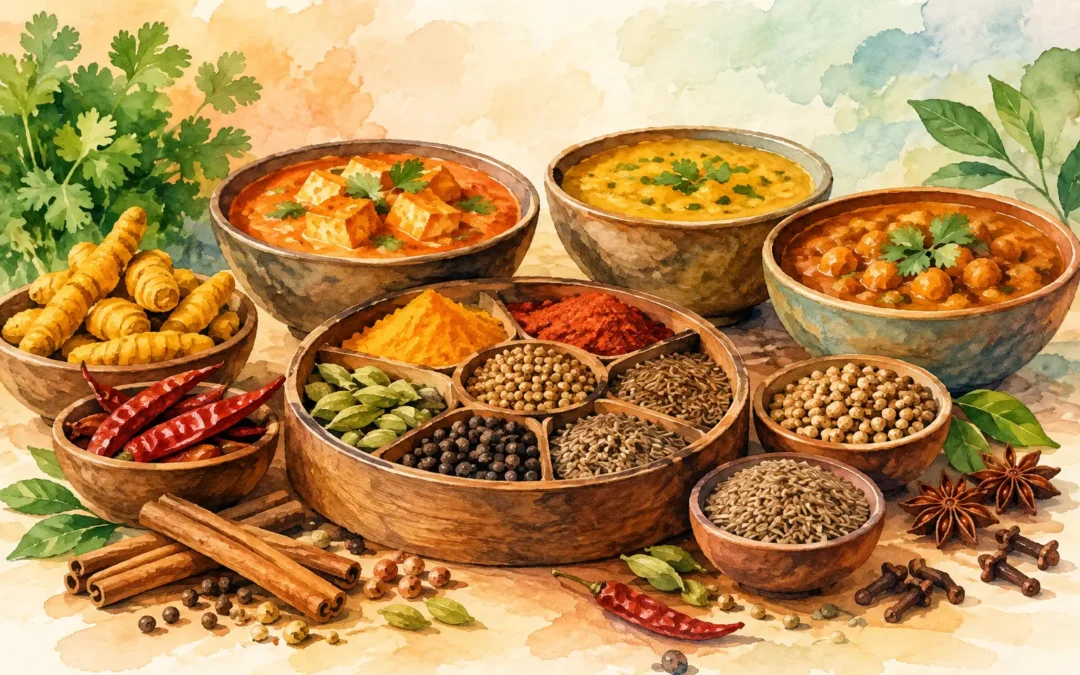
A great curry is not simply hot or mild. It may be fragrant with cardamom, gently earthy from cumin, tangy with tamarind or rich with toasted coriander. This Indian spice profile guide makes it easier to understand those flavours, so choosing a dish feels less like a guess and more like ordering exactly what you fancy.
Indian food is wonderfully varied, and the spices in a dish do more than add heat. They bring warmth, colour, aroma, depth and balance. A creamy curry can still have plenty of flavour, while a lighter street-food dish may be bright, sharp and full of fresh spice. Knowing the difference helps you find new favourites without straying too far from what you enjoy.
Indian Spice Profile Guide: The Flavours Behind the Heat
When people say they like a “spicy” curry, they may mean very different things. Heat comes mainly from chilli, but many of the flavours people associate with Indian cooking come from spices that are not hot at all.
Cumin has a deep, savoury, slightly nutty character. It is often used as a base note in curries, dals and rice dishes, helping create that familiar warm flavour without overwhelming the other ingredients. Coriander seed is lighter and more citrusy, adding a gentle sweetness and freshness that works especially well with vegetables, chicken and tangy sauces.
Turmeric brings its golden colour along with an earthy, lightly bitter note. It is rarely the dominant flavour, but it helps give many curries their rounded, traditional taste. Fenugreek, often used as dried leaves, has a distinctive savoury aroma with a faint bitterness. In the right amount, it gives creamy curries and tomato-based sauces a fuller, restaurant-style finish.
Then there are the aromatic spices. Cardamom can be floral, sweet and warming, particularly in rice dishes, kormas and richer gravies. Cloves and cinnamon offer warmth and gentle sweetness, while black pepper gives a sharper, more immediate heat than chilli. These spices are often used together in whole or ground form to build layers rather than one obvious flavour.
Heat Is Only One Part of the Picture
Chilli is important, but a hotter dish is not automatically more flavourful. The level of heat can vary depending on the type of chilli used, when it is added and whether the dish contains cooling ingredients such as yoghurt, cream or coconut.
A mild curry may use cumin, coriander, turmeric, cardamom and fenugreek in generous amounts, yet contain little chilli. It can be rich, fragrant and full-bodied rather than plain. A hotter curry may have a fresh chilli bite, a deeper dried-chilli warmth, or both. Fresh green chilli can taste bright and sharp, while dried red chilli often brings a fuller, smokier warmth.
If you enjoy flavour but prefer less heat, look for dishes described as creamy, aromatic, gently spiced or cooked in a mild sauce. Korma-style dishes often lean towards sweet warming spices, nuts and creaminess. Butter chicken and many tikka masala-style curries are usually rounded by tomato, butter or cream, giving a balanced and approachable profile.
For a medium level of warmth, dishes with a tomato and onion base can be a good choice. Jalfrezi-style curries often bring peppers, onions and a livelier chilli presence, while bhuna-style dishes are usually thicker and more intensely cooked, with spices clinging closely to the meat or vegetables. If you want a bolder hit, vindaloo-style flavours commonly combine chilli with tangy vinegar or tomato notes, rather than relying on heat alone.
How Fresh Spices Build Better Flavour
The best Indian dishes have balance. A cook may begin by warming whole spices in oil, then add onions, ginger, garlic and tomatoes before building the sauce with ground spices. Each stage changes the final flavour.
Whole spices release aroma slowly in hot oil. This is why a rice dish can smell fragrant before it reaches the table. Ground spices need careful cooking too. Added too early or cooked too fiercely, they can taste bitter. Added at the right point with onion, tomato or a little water, they become mellow, rich and well blended into the sauce.
Fresh ginger and garlic are just as important as the spice cupboard. Ginger brings a peppery brightness, while garlic adds savoury depth. Fresh coriander at the end can lift a rich curry, and a squeeze of lemon can make a grilled dish or chaat taste cleaner and more vibrant.
That is also why freshly prepared food tastes different from a sauce that has been sitting for hours. The fragrance is clearer, the herbs remain brighter and the individual spices work together without becoming heavy.
Regional Indian Flavours Can Taste Very Different
There is no single Indian spice profile. Regional cooking uses spices in different proportions and combines them with local ingredients, cooking styles and textures.
North Indian dishes often feature warming, rounded flavours. Think cumin, coriander, cardamom, cloves, cinnamon, tomatoes, yoghurt and slow-cooked onions. Tandoori cooking adds charred, smoky notes from the grill, while rich curries may be softened with butter, cream or ground nuts.
South Indian cooking can be sharper and more aromatic, with curry leaves, mustard seeds, coconut, tamarind and black pepper playing a bigger role. Tamarind adds a distinctive sour-sweet tang that cuts through richer flavours. Mustard seeds bring a small pop of pungency, while coconut can make a dish feel creamy without the dairy richness of a North Indian-style sauce.
Coastal dishes often pair spices with fish or prawns and may use coconut, curry leaves and tangy ingredients to keep the flavour fresh. Street food is frequently bolder still, bringing together sweet, sour, spicy and crunchy elements in one bite. Chaat masala, for example, has a tangy, savoury quality that makes snacks and starters immediately moreish.
Choosing a Dish by Flavour Profile
If you are ordering for the table, choosing a mix of profiles makes the meal more enjoyable. One creamy curry, one tomato-based dish, a grilled item and a fresh side can give everyone something different without making the meal overly hot.
Choose a creamy, mild dish when you enjoy gentle warming spice, a silky sauce and little chilli. Choose a tomato and onion curry when you want a familiar, balanced flavour with more savoury depth. Choose grilled tikka or tandoori dishes when you prefer smoky, charred flavour and a lighter finish. Choose a tangy dish when you like brightness from lemon, tamarind or tomato alongside the spice.
Vegetable dishes deserve just as much attention as meat curries. Lentils are comforting and earthy, aubergine takes on smoky spice beautifully, and chickpeas work well with bold tomato, ginger and coriander flavours. A side of dal can also soften the heat of a stronger main while adding plenty of satisfying depth.
Rice, naan and chutneys are not simply extras. Plain basmati rice lets a complex curry shine, while pilau rice adds its own fragrant spices. Naan is ideal for scooping thicker sauces, and cooling yoghurt-based sides can balance a fiery dish. Mango chutney brings sweetness, while lime pickle is sharp, salty and punchy – best enjoyed in small amounts if you are new to it.
A Simple Way to Order With Confidence
Start with the flavour you want before deciding on the heat. Ask yourself whether you fancy something creamy, smoky, tangy, rich, fresh or fiery. Then choose the protein or vegetable you prefer. This approach is far more useful than picking a dish only because you recognise its name.
If you are unsure, choose one dependable favourite and add one new flavour to share. It is an easy way to explore without risking the whole meal. For families and groups, ordering dishes at different heat levels means everyone can enjoy their food comfortably.
At Worthing Indian Cafe & Bar, our dishes are prepared with fresh daily ingredients and authentic Indian spices, so you can enjoy familiar favourites or try something new at a reasonable price. Whether you are sitting down for a relaxed meal or choosing a takeaway for home, let your own taste lead the order: mild does not mean boring, and hot does not have to mean overpowering.