
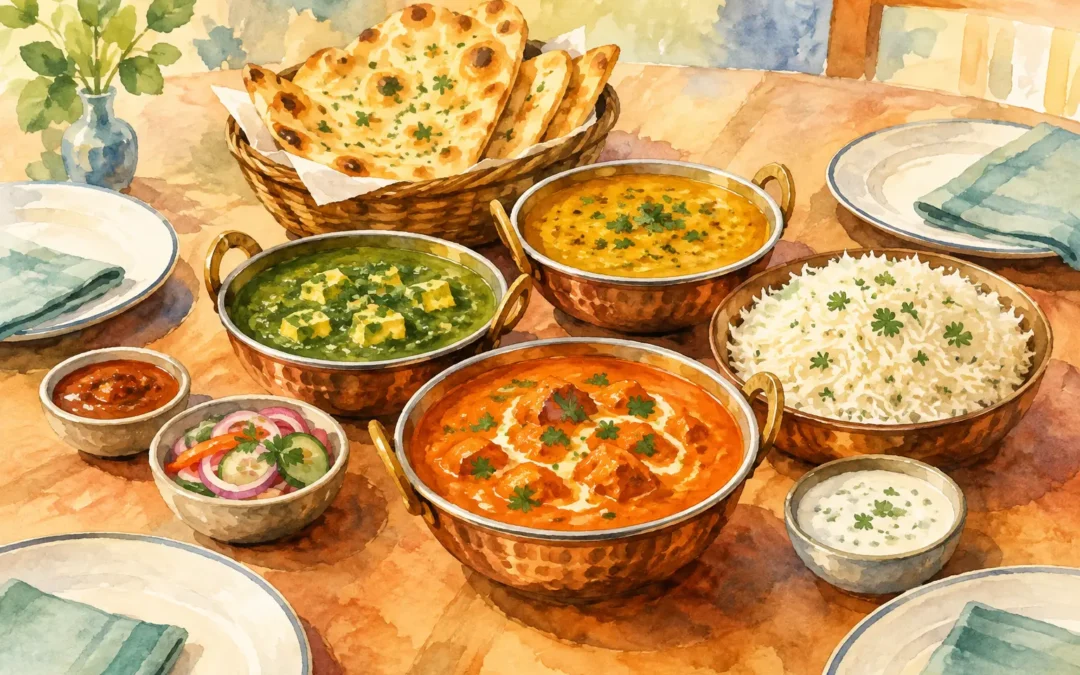
A good family takeaway should not leave one person with all the food they love and another picking at plain rice. This Indian takeaway family order example is designed for four people with different appetites: a mix of familiar curries, fresh sides, Indian street-food favourites and enough rice and bread to share comfortably.
The aim is variety without ordering too much. A well-balanced order gives everyone a chance to try something new, while keeping a few dependable dishes on the table for children, cautious eaters and serious curry fans alike.
An Indian takeaway family order example
For a family of four, start with two dishes that feel familiar, one dish with more spice or character, and one vegetarian option. Add two rice portions, two breads and a couple of starters or sides. This usually creates a generous meal with a little left for lunch the next day, depending on appetites.
A practical order could look like this:
- One chicken tikka masala or butter chicken for a mild, creamy curry with broad appeal.
- One chicken jalfrezi or lamb rogan josh for fuller spice and deeper flavour.
- One vegetable curry, such as saag aloo, chana masala or mixed vegetable curry.
- One paneer dish, particularly useful if someone does not eat meat or simply enjoys a lighter option.
- Two pilau rice portions and one plain steamed rice, so the spices stay balanced.
- One garlic naan and one plain naan, or a naan and a few chapatis if your family prefers less richness.
- Onion bhajis or vegetable samosas to share, plus a fresh yoghurt-based side if you are ordering hotter curries.
This combination offers contrast. The creamy curry softens the heat of a jalfrezi, the vegetable dishes bring colour and texture, and rice and bread make the meal feel generous without relying on extra mains. At Worthing Indian Cafe & Bar, dishes are prepared with fresh daily ingredients and traditional Indian spices, so a varied order can still feel like one complete meal rather than a random selection.
Choose mains for different appetites
The easiest way to order for a family is to think about who will eat what before choosing individual dishes. You do not need four separate mains unless everyone has very different tastes. Sharing works especially well with Indian food because each curry brings its own sauce, spice level and ingredients to the table.
For younger children or anyone who prefers gentle flavours, chicken tikka masala, butter chicken or a mild korma-style dish is often the safe choice. These dishes are creamy and comforting, with aromatic spices rather than a sharp chilli heat. If sweetness is a concern, ask for a recommendation from the restaurant rather than assuming every mild curry tastes the same.
For adults who enjoy a little heat, a jalfrezi is a lively choice with peppers, onions and a brighter, more noticeable spice. A madras can work too, but it may be too hot to share widely. Rogan josh is a good middle ground for families who want richer flavour without turning dinner into a chilli challenge. Its slow-cooked style and warming spices are satisfying with rice or naan.
Vegetarian mains should not be treated as an afterthought. Paneer dishes are filling and popular with both vegetarians and meat eaters, while chickpea, lentil and vegetable curries add a different texture to the meal. A spinach-and-potato dish such as saag aloo is particularly useful alongside richer curries because it feels earthy, fresh and less heavy.
A note on spice levels
Heat is personal. One person’s medium is another person’s very hot, particularly when children are sharing from the same dishes. If you are unsure, keep most of the family order mild to medium and choose one hotter dish for the table. Chutneys, pickles and fresh chillies can add extra fire for those who want it, without making the whole meal difficult to enjoy.
Rice, naan and sides make the order work
Families often over-order mains and under-order the things that turn them into a proper shared meal. Rice, breads and sides matter because they stretch sauces, soften spice and give everyone an easy option to return to.
For four people, two rice portions and two breads are a sensible starting point. Choose pilau rice if the family enjoys fragrant, lightly spiced rice. Add plain rice when you have bold curries or younger diners, as it gives the table a neutral base. If everyone has a large appetite, add a third rice portion rather than a fourth main.
Naan is ideal for scooping up sauces and sharing. Garlic naan brings plenty of flavour, but a plain naan is useful when there are already spicy or richly seasoned dishes on the table. Peshwari naan can be enjoyable with a mild meal, although its sweeter filling will not suit every curry. Chapatis are a lighter alternative for families who want less butter and richness.
A cooling raita or plain yoghurt side is a small addition with a big job. It can calm a hot curry, complement fried starters and help children try a dish they might otherwise avoid. A crisp salad or cucumber side also brings welcome freshness, particularly if the order includes several creamy dishes.
Add starters without spoiling the main event
A shared starter is part of the fun of a takeaway night, but it is easy to fill up before the curries arrive at the table. For a family of four, choose one or two shareable starters rather than one each.
Onion bhajis are a reliable choice: crisp on the outside, soft in the middle and easy to divide. Vegetable samosas are similarly useful, especially when you need a vegetarian option. Chicken tikka offers a smokier, protein-rich starter that can also suit people who prefer to avoid fried food. If your family likes Indian street food, chaat-style dishes bring tang, crunch and freshness, but they are best eaten promptly while the textures are at their best.
Think about balance here. If the mains are creamy and mild, a sharper starter with tamarind, onion or fresh herbs can wake up the meal. If the mains are already hot, keep starters simple and use the sauces sparingly.
How to adapt the order for your family
There is no single perfect family order because portion sizes and preferences vary. A household with two teenagers may need an extra main or rice portion. Two adults and two small children may find that three mains, rice and naan is plenty. The best guide is how your family usually eats, not a fixed rule on a menu.
If one person is vegetarian, choose at least one substantial vegetarian main rather than expecting them to make a meal from side dishes. If someone avoids dairy, check dishes and breads carefully, as cream, yoghurt, butter or ghee can appear in sauces and dough. For allergies, always speak directly with the restaurant when ordering rather than relying on assumptions about a dish.
For a Friday night treat, you might add a second starter and a dessert. For a quick weekday meal, skip the starter and focus on three mains, rice and naan. Both can feel generous when the food is freshly prepared, well packed and shared at the table.
A simple order to remember
If choosing feels overwhelming, use this formula: one mild curry, one medium or hotter curry, one vegetable dish, one paneer or second meat dish, two rice portions, two breads and one shared starter. It gives your family a table full of authentic flavour at a reasonable price, without making the order unnecessarily complicated.
Set out the curries in the middle, warm the plates, put the naan within reach and let everyone serve themselves. The best family takeaway is not the biggest order – it is the one where every person finds a favourite and there is just enough left to look forward to tomorrow.