
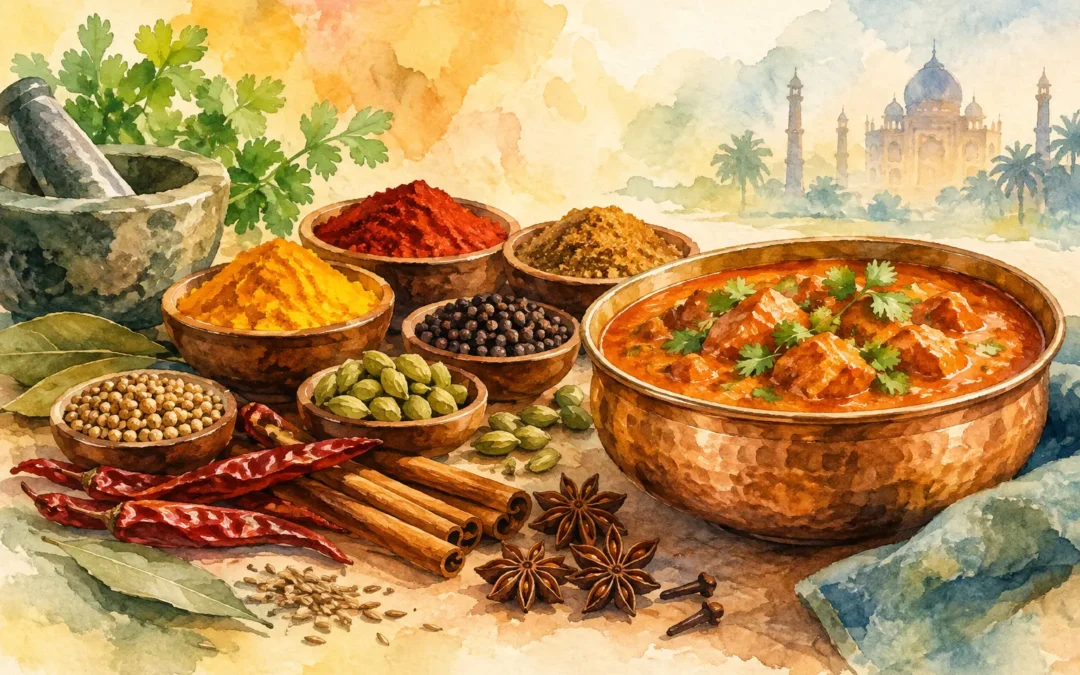
A curry can look rich, smell inviting and still fall flat if its spices are not handled with care. That is why Indian spices matter so much: they do far more than add heat. They bring aroma, colour, depth and balance to every dish, from a quick weekday takeaway to a relaxed meal shared around the table.
At their best, spices make food feel complete. A warming curry, a crisp street-food snack or a fragrant rice dish should have layers of flavour that reveal themselves as you eat. Some spices bring gentle sweetness, others add earthiness, warmth, citrus notes or a slow-building warmth. The aim is never to make every dish hot. It is to make it memorable.
Why Indian spices matter beyond the heat
Indian cooking uses spice with purpose. Chilli may provide heat, but it is only one part of the picture. Cumin gives a nutty, earthy character; coriander offers a light, citrusy note; turmeric brings its distinctive golden colour and gentle bitterness; while cardamom, cloves and cinnamon can create warmth and perfume.
The difference is in the balance. A good blend does not ask one spice to do all the work. Instead, each ingredient has a role. Tangy tamarind can lift richer flavours. Fresh ginger and garlic bring a lively savoury base. Fenugreek can add a subtle, rounded finish. A little garam masala added near the end can carry a dish’s aroma all the way to the table.
This is why two curries made with similar ingredients can taste completely different. The choice of spices, their proportions and the point at which they are added all change the final result. A creamy korma needs a different touch from a punchy madras, just as a fragrant biryani calls for a different approach from a smoky tandoori dish.
Fresh spices make the flavour clearer
Spices are pantry ingredients, but they are not timeless. Ground spices gradually lose their fragrance once opened, while whole spices stay aromatic for longer when stored well. Freshly prepared spice mixes have a cleaner, brighter character, which is especially noticeable in dishes with simple ingredients.
Freshness is also about how spices are cooked. Many Indian dishes begin by gently heating whole spices in oil or ghee. This releases their natural oils and creates the first layer of flavour. Onions, ginger, garlic and tomatoes may follow, creating a masala base that is rich without being heavy.
Ground spices need care too. Added too early or cooked over fierce heat, they can catch and taste bitter. Added at the right moment, often with a little moisture from tomatoes, yoghurt or water, they become rounded and full of flavour. It is a small detail, but it is one reason restaurant-quality Indian food tastes so satisfying.
At Worthing Indian Cafe & Bar, the focus on fresh daily ingredients and traditional spices is there for a simple reason: it makes every curry, grill and street-food dish taste as it should. Authentic flavour is not about making food complicated. It is about preparing the basics properly and consistently.
Spice blends are not a shortcut
It is easy to assume that a curry powder or one all-purpose blend is the answer to Indian cooking. Convenient blends can be useful at home, particularly on busy evenings, but they cannot represent the full variety of Indian food. Regional dishes have their own combinations, methods and levels of intensity.
In North Indian cooking, you may notice warming whole spices, creamy sauces and rich tomato-based gravies. Southern dishes often make more use of mustard seeds, curry leaves, coconut, tamarind and black pepper. Coastal cooking can be bright and tangy, while dishes from other regions may be more earthy, smoky or gently sweet.
That variety matters for diners. It means there is no single taste called “Indian food”. There are countless flavours to suit different appetites. Someone looking for a mild, comforting curry can find one with real depth, while someone who enjoys bolder heat can choose a dish where chilli is balanced by spice, acidity and slow-cooked flavour.
Heat is only one part of the experience
A hotter dish is not automatically a more authentic one. Too much chilli can cover the very aromas that make a curry special. The best heat arrives as part of the dish, rather than taking over completely.
If you prefer mild food, choices such as korma-style dishes, creamy curries or gently spiced vegetable options can still offer plenty of character. If you enjoy a stronger kick, dishes with chilli, pepper or a hotter sauce can be satisfying without losing their balance. The right choice depends on your taste, the dish itself and what you are having alongside it.
Rice can soften a rich sauce, while a naan or roti is ideal for enjoying the last of a well-spiced gravy. Cooling yoghurt-based sides can offer contrast to a hotter curry. These combinations are not rules, but they help turn a good meal into a properly rounded one.
The method matters as much as the ingredients
Indian spices are not simply sprinkled in at the end. Timing is central to flavour. Whole cumin seeds may be tempered at the start. Ground coriander and turmeric may be cooked into the masala. Garam masala may be used later for its final burst of fragrance. Each stage creates something different.
Toasting is another important technique. A brief, careful toast can deepen the flavour of whole spices before they are ground. The key word is careful. Spices burn quickly, and burnt spice is difficult to hide. Good cooking relies on attention, not just a long list of ingredients.
This also explains why a fresh curry is worth seeking out. When a sauce is cooked properly, the spices have time to lose their raw edge and combine with the other ingredients. The result should taste rounded and natural, not powdery or overly salty. Whether you are dining in, collecting a meal after work or ordering food for a quiet evening at home, that care carries through in every spoonful.
Spices bring colour, aroma and everyday value
A well-stocked spice cupboard can make straightforward ingredients feel generous. Lentils, chickpeas, vegetables, chicken and paneer all take on new character with the right seasoning. That is part of the lasting appeal of Indian cuisine: familiar ingredients can be turned into something comforting, vibrant and full of flavour.
Spices also help create variety across a menu without relying on richness alone. A dish can be creamy, tomato-led, tangy, dry, smoky or aromatic. It can be mild enough for the whole family or full of chilli for those who want more heat. This makes Indian food a practical choice for shared meals, where different people may want very different things.
For parties and group occasions, that variety is particularly useful. A selection of curries, rice, breads, grilled dishes and sides gives everyone a chance to find a flavour they enjoy. The best spread includes contrast: something mild, something warming, something fresh and something with a little more fire.
Why Indian spices matter to every meal
The real value of Indian spices is not that they make food hotter or more exotic. It is that they make food fuller in flavour. They add the aroma that reaches the table first, the colour that makes a dish inviting and the depth that keeps you coming back for another bite.
When spices are fresh, balanced and cooked with care, even an everyday dinner can feel like a treat. Choose the flavours that suit your table, take your time with the sides, and let a properly spiced meal do what it does best: bring people together over food that tastes genuinely good.