
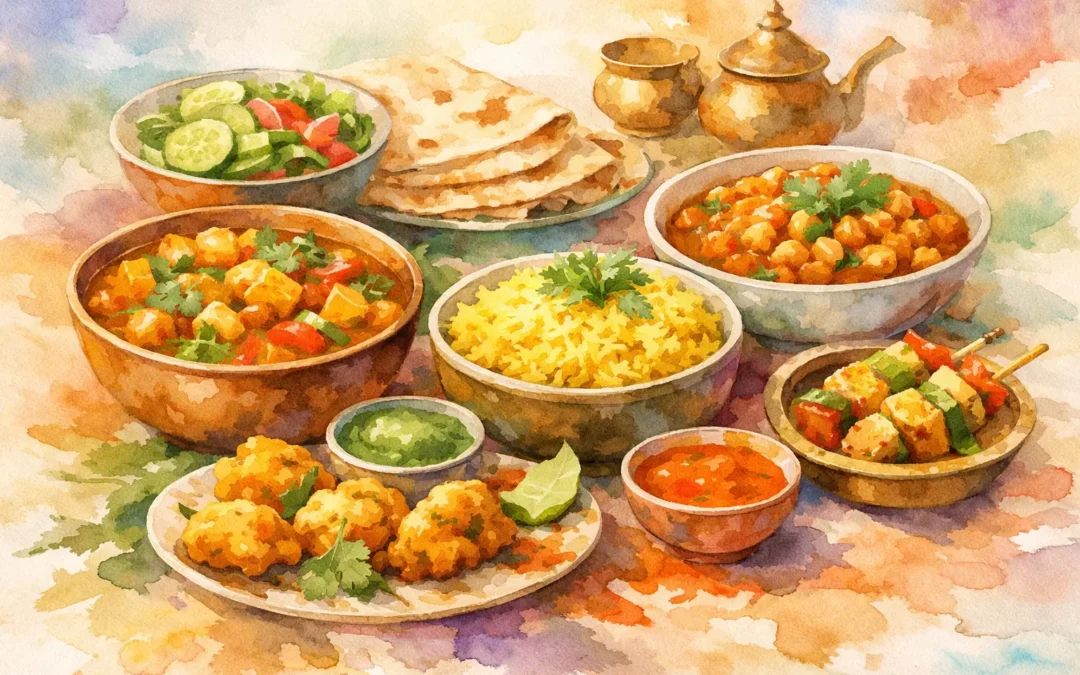
A fragrant vegetable curry, warm chapati and a bright spoonful of chutney can make Indian food an excellent choice for vegans. But can vegans eat Indian food without worrying about hidden dairy or animal ingredients? Often, yes – provided you know what to look for and ask how a dish is prepared.
Indian cuisine has a huge range of naturally plant-based recipes built around pulses, vegetables, rice, wheat, herbs and traditional spices. Yet ingredients such as ghee, butter, cream, yoghurt and paneer are also central to many much-loved dishes. A quick conversation before ordering helps turn a tempting menu into a truly vegan meal.
Can vegans eat Indian food safely?
Yes, vegans can eat Indian food, and there is usually plenty to enjoy. Many regional dishes have long relied on chickpeas, lentils, beans, potatoes, aubergine, okra, spinach and seasonal vegetables rather than meat. Rice dishes, dal, vegetable curries and breads can all be suitable, depending on the recipe.
The key point is that vegetarian does not automatically mean vegan. A vegetarian curry may contain paneer, cream, yoghurt, butter or ghee. Even a dish based on lentils or vegetables may be finished with a small amount of butter for richness. This is not a reason to avoid Indian food; it simply means checking the preparation matters.
At a restaurant, be clear that you are vegan rather than asking only for a vegetarian option. Ask whether the dish contains dairy, ghee, honey or egg, and whether it can be made without them. A helpful kitchen can often adapt a vegetable or lentil dish while keeping its authentic spice and depth of flavour.
Naturally vegan Indian dishes to look for
Some of the best vegan choices are also among the most satisfying. Indian cooking uses spices with real purpose: toasted cumin brings warmth, mustard seeds add a gentle bite, turmeric brings earthy colour, and fresh coriander can lift a dish at the end. A meal does not need cream or butter to feel full of flavour.
Dal and lentil curries
Dal is one of the strongest places to start. It may be made with red lentils, split chickpeas, black lentils or yellow lentils, simmered with onion, tomatoes, garlic, ginger and spices. Some versions are finished with ghee or butter, especially richer restaurant-style dals, so ask for a vegan preparation using vegetable oil instead.
A good vegan dal is comforting, filling and ideal with steamed basmati rice or chapati. It is also a practical choice for a weekday takeaway because it travels well and still tastes generous when enjoyed at home.
Chickpea and bean dishes
Chana masala, chole and rajma are usually strong vegan contenders. Chickpeas or kidney beans are cooked in a spiced tomato and onion sauce, often with ginger, garlic and a blend of whole spices. They offer plenty of texture and protein without relying on meat or dairy.
Recipes vary from kitchen to kitchen, particularly where ghee is used for tempering spices. Confirm the cooking fat, then enjoy these dishes with rice, roti or a dairy-free side of vegetables.
Vegetable curries and dry dishes
Aloo gobi, bhindi, baingan bharta and mixed vegetable curries can be full of character and naturally vegan when made with oil. Aloo gobi combines potato and cauliflower with warming spices. Bhindi uses okra, while baingan bharta is a smoky aubergine dish that can be deeply savoury without any dairy.
Dry vegetable dishes are particularly useful for vegan diners because they tend to let the ingredients and spices do the work. Still, it is worth checking whether butter, ghee or yoghurt has been added during cooking.
Rice, breads and street-food favourites
Plain boiled rice, jeera rice and many vegetable pilau rice dishes can be vegan, though some kitchens use ghee. Chapati and roti are often made simply from wholemeal flour, water and salt, but recipes can vary. Naan is more likely to contain yoghurt, milk, butter or egg, so it is not the safest choice unless the restaurant confirms a vegan version.
Indian street food can offer great vegan possibilities too. Samosas filled with potato and peas are often suitable, as are crispy onion bhajis, vegetable pakoras and chaat-style dishes. The detail is in the accompaniments: yoghurt, sev containing dairy, or sweet chutney made with honey can change the answer. Ask about the pastry, batter and sauces rather than assuming.
Ingredients vegans should check before ordering
Dairy is the most common issue on an Indian menu. Ghee is clarified butter and is not vegan, even though it may be used in small amounts to fry spices or finish a dish. Butter chicken, paneer curries, creamy kormas and tikka masala-style sauces are generally unsuitable unless a specific vegan alternative is offered.
Yoghurt can appear in marinades, sauces, raita and some breads. Cream is often added to mild curries to create a smooth texture, while paneer is a fresh Indian cheese. Look out for terms such as makhani, malai, shahi or creamy, as these can signal a dairy-rich dish, although the exact recipe always decides.
There are a few less obvious points to consider. Some poppadoms contain ingredients that vary by supplier, and some chutneys may contain yoghurt or honey. Frying oil can also be shared with non-vegan foods. For many diners, shared equipment is acceptable; for others, especially those with allergies, it is an essential question. Let the team know your needs clearly so they can advise honestly.
How to order a vegan Indian meal with confidence
The easiest approach is to choose a lentil, chickpea or vegetable main, then ask for it to be made without ghee, butter, cream and yoghurt. Pair it with plain rice or confirmed vegan roti, and add a vegetable side if you want more variety. This gives you a balanced meal with different textures rather than relying on one dish alone.
It also helps to explain what you mean by vegan. Saying, “No meat, fish, egg, dairy, ghee or honey, please,” removes guesswork and is especially useful when ordering online or for delivery. If you have an allergy as well as a vegan preference, say so directly, as allergy procedures require extra care.
Do not feel limited to the mildest option. Vegan Indian food can be gentle, medium or hot, and spice level is separate from whether a dish contains animal ingredients. A tomato-based chickpea curry may be lively and tangy; a slow-cooked dal may be mellow and warming. Ask for a recommendation that suits both your dietary needs and your preferred heat level.
A vegan meal should still feel like a treat
Choosing vegan should not mean settling for a plain plate of vegetables. The best Indian vegan dishes have layers: the sweetness of onion cooked slowly, the brightness of tomato, the fragrance of fresh herbs and the warmth of carefully balanced spices. Fresh daily ingredients make a real difference, particularly in vegetable dishes where every element is visible on the plate.
For a relaxed meal out, a quick collection after work or a family takeaway, it is possible to enjoy authentic Indian flavours at a reasonable price while keeping your order plant-based. At Worthing Indian Cafe & Bar, speaking to the team before ordering is the simplest way to find a fresh, flavourful choice that works for you.
Next time you are choosing Indian food, start with the dishes that celebrate lentils, chickpeas and vegetables, ask the few questions that matter, and order the flavours you genuinely fancy.