
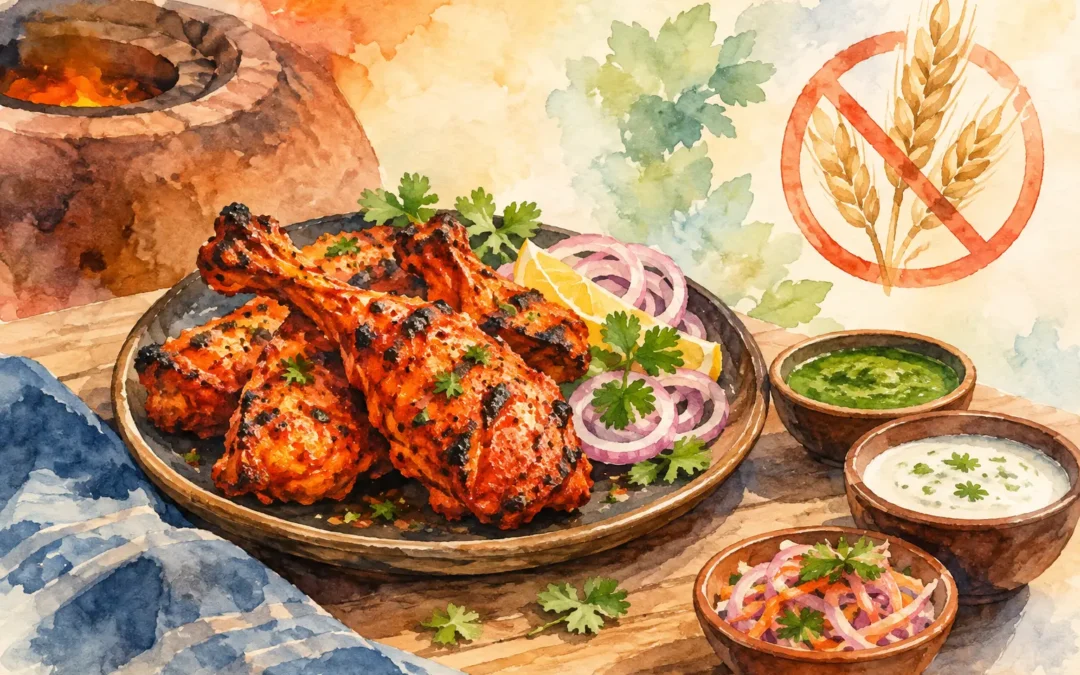
A sizzling tandoori platter can look like the easy choice when you avoid gluten: charred chicken, fragrant spices, yoghurt and fresh salad. But does tandoori food contain gluten? Often, the main tandoori meat, fish or paneer can be made without gluten-containing ingredients. The detail that matters is the marinade, the kitchen preparation and what is served alongside it.
For anyone with coeliac disease, a wheat allergy or a gluten sensitivity, it is never enough to judge a dish by its name. Tandoori cooking has plenty of naturally gluten-free potential, but recipes vary from restaurant to restaurant. A quick conversation before ordering helps you enjoy the authentic flavour while making a choice that suits your dietary needs.
Does tandoori food contain gluten?
Traditional tandoori dishes are cooked in a tandoor, a very hot clay oven. The word tandoori describes the style of cooking, not a fixed recipe. Chicken tikka, tandoori chicken, lamb tikka, fish tikka and paneer tikka are generally marinated with ingredients such as yoghurt, ginger, garlic, lemon, chilli, cumin, coriander, turmeric and garam masala.
Those core ingredients do not naturally contain gluten. Plain meat, fish, vegetables, paneer, yoghurt and individual spices are usually suitable for a gluten-free diet. The smoky flavour comes from the heat of the tandoor and the spice marinade, not from flour.
However, some recipes include additions that change the answer. A chef may use a prepared spice blend, a sauce, a thickener or a small amount of flour in a marinade. The tandoor may also be used to cook naan and other wheat-based breads. That creates a possible risk of cross-contact, even when the tandoori dish itself has no gluten ingredient.
Where gluten can appear in tandoori dishes
The most common issue is not the chicken, lamb or paneer. It is the extras used to create a particular texture, colour or flavour. Some marinades are straightforward yoghurt and spices, while others may contain ingredients that need checking.
Flour can occasionally be added to a marinade or coating. Wheat flour is more likely in certain restaurant-style recipes designed to give a thicker finish, although it is not essential to authentic tandoori cooking. Gram flour, also called besan, is made from chickpeas and is naturally gluten-free, but it should still be checked for any risk of cross-contamination during production.
Ready-made spice mixes and blended seasonings can also be worth asking about. Individual ground spices are normally gluten-free, but commercial mixes can include flour, starches or anti-caking ingredients. Asafoetida, a pungent spice sometimes used in Indian cooking, is another ingredient to flag: some versions are blended with wheat flour.
Sauces deserve the same care. Tandoori items are sometimes served with a chutney, dressing or curry sauce that has been thickened with flour or contains malt vinegar, soy sauce or another gluten-containing ingredient. Mint yoghurt may be suitable, but the recipe and preparation still need confirming. Do not assume a side is safe simply because it looks like yoghurt or salad.
Finally, consider the garnish and accompaniments. Naan, roti and paratha are usually made with wheat, and poppadoms can vary depending on the recipe and fryer used. Rice is naturally gluten-free, but flavoured rice should be checked if it has been prepared with stock, seasoning mixes or shared utensils.
The tandoor and cross-contact
A tandoor is central to the flavour of many Indian dishes, but it can present a practical concern for people with coeliac disease. Naan bread is often cooked directly against the inside wall of the oven. If a gluten-free tandoori dish is cooked in the same space, there may be a cross-contact risk from flour residue or shared tools.
Cross-contact can also happen earlier in the kitchen. A brush used for buttering naan, a tray used for marinated meat, a work surface dusted with flour or a serving spoon used across dishes can transfer small amounts of gluten. This is particularly relevant where gluten must be avoided strictly, rather than simply reduced.
That does not mean tandoori food is automatically off the menu. It means the kitchen needs clear information and the chance to advise honestly. A good restaurant will explain what can be prepared safely, whether a separate cooking area or utensils are available, and where they cannot guarantee an allergen-free dish.
How to order tandoori food with confidence
Start by telling the restaurant that you need to avoid gluten and explain why. Saying that you have coeliac disease or a wheat allergy helps the team understand that cross-contact matters as well as visible ingredients. If you are ordering online or by phone, include the request clearly and call if you need confirmation before placing the order.
Ask whether the specific tandoori dish contains wheat, barley, rye or any gluten-containing sauce, seasoning or thickener. It is also useful to ask about the marinade rather than relying on a general answer about tandoori food. Two chicken tikka recipes can look very similar while being prepared quite differently.
Then ask how the item is cooked. If naan is prepared in the same tandoor, ask whether the restaurant can offer a safer alternative or recommend another dish. Choose plain rice only after confirming its preparation, and check every dip, chutney and sauce you plan to add. A simple grilled item can become unsuitable through a single spoonful of sauce.
When collecting a takeaway, check that your order has been packed separately from breads and clearly marked where possible. This is especially helpful for family meals where naan, curries and tandoori starters are all ordered together. For delivery, make dietary requirements prominent in the order notes, but always contact the restaurant directly if your needs are strict.
Tandoori choices that may be easier to adapt
Plain tandoori chicken, chicken tikka, lamb tikka, grilled fish and paneer tikka can be good starting points because their traditional base is protein or paneer with yoghurt and spices. Vegetable tandoori dishes may also work well, provided the marinade and cooking method are checked.
The simpler the preparation, the easier it is to identify what is in it. A freshly marinated tandoori dish with a confirmed gluten-free recipe is often more straightforward than a rich curry with a long ingredient list. That said, simplicity is not a guarantee. The restaurant’s allergen information is always more reliable than assumptions based on the menu description.
For a complete meal, a confirmed plain basmati rice dish and a suitable yoghurt-based side may be a better fit than bread or heavily prepared accompaniments. If you are highly sensitive, ask for recommendations rather than trying to adapt several dishes at once. It keeps the order clear for the kitchen and gives you a more relaxed meal.
A note for coeliac disease and wheat allergy
Gluten intolerance, coeliac disease and wheat allergy are not all the same, and the level of risk can differ. Someone choosing to limit gluten may be comfortable with a different level of precaution from someone diagnosed with coeliac disease. Restaurants should never guess which standard you need, so be specific when you order.
For coeliac disease, even small amounts of gluten can cause harm. For a wheat allergy, ingredients and cross-contact can both be serious concerns. If the team cannot confidently confirm the ingredients or cooking process, choose a different dish. Missing out on one menu item is better than turning a pleasant meal into an avoidable health problem.
At Worthing Indian Cafe & Bar, fresh daily cooking and authentic Indian spices are at the heart of the food, and the best way to enjoy a meal that suits you is to speak to the team before ordering. Let them know your requirements, ask about the dish you have in mind and give the kitchen the information it needs to help make your visit or takeaway as enjoyable as possible.