
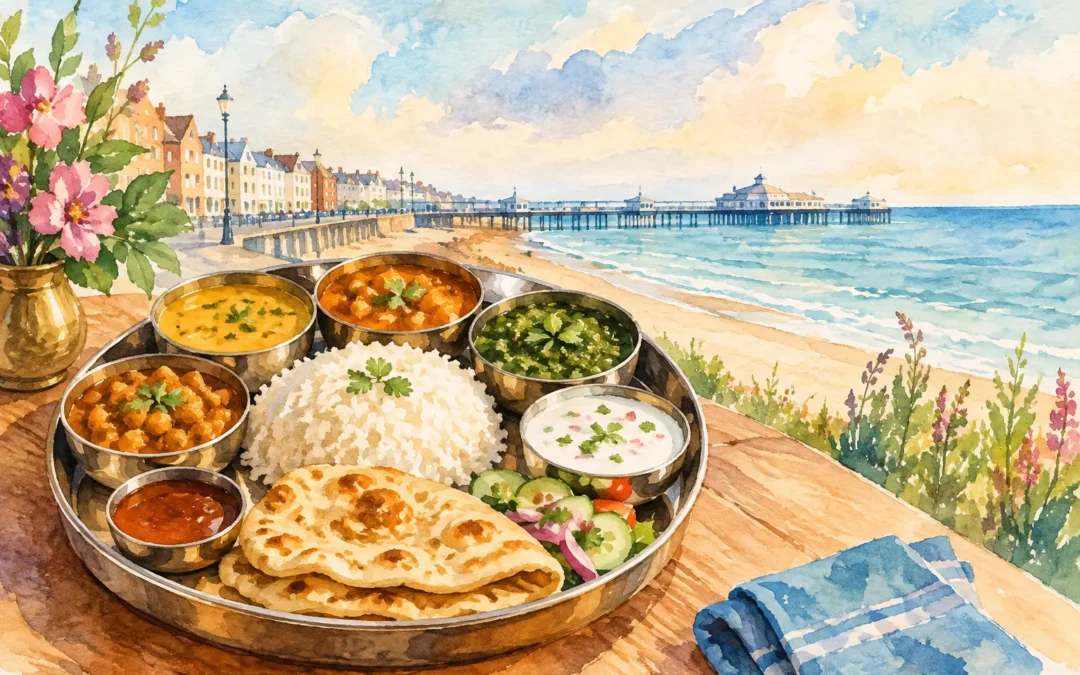
A thali arrives as more than a main course. It is a full Indian meal arranged on one plate, with small portions designed to work together: a warming curry, comforting dal, rice or bread, bright pickles, cooling yoghurt and something sweet. This guide to thali meals will help you understand what is on the plate, how to eat it and why it is such a satisfying choice for lunch, dinner or a relaxed meal with family.
What is a thali meal?
The word thali refers to the large round plate or tray used to serve a selection of dishes. Rather than choosing one curry with one side, you enjoy a range of flavours and textures in the same sitting. Small bowls, often called katoris, hold the wetter dishes, while rice, breads and accompaniments sit around them.
A thali is not one fixed recipe. It changes from region to region, season to season and kitchen to kitchen. A North Indian-style thali may include richer gravies, dal and breads such as roti or naan. A South Indian-style thali may feature rice, sambar, vegetable preparations, rasam and coconut-based accompaniments. Vegetarian thalis are especially common, while other versions may include chicken, lamb, fish or eggs.
That variety is the point. A good thali gives you a little heat, a little sweetness, savoury depth, freshness and comfort on one plate. It is a practical way to experience several classic dishes without ordering a large amount of each one.
What you can expect on a thali
The exact selection depends on the menu, but most thali meals bring together a few familiar elements. Dal is a lentil dish that adds gentle warmth and an earthy, nourishing base. A vegetable curry might feature seasonal produce cooked with traditional spices, while a meat or paneer dish provides a more substantial centrepiece.
Rice and bread have different jobs. Fragrant basmati rice is ideal for soaking up dal and lighter gravies. Roti, chapati or naan can be torn into small pieces and used to scoop thicker curries. Some thalis include both, which lets you enjoy each dish in more than one way.
Then come the details that make the plate memorable. Pickle offers sharpness and spice in small amounts. Chutney can bring fruitiness, herbs or tang. Raita, made with yoghurt, helps cool the palate between richer or hotter bites. Papad adds a welcome crunch, and a small dessert may finish the meal with cardamom, milk, coconut or syrupy sweetness.
Not every thali includes every item. Some are deliberately simple and light, while others are generous celebration-style spreads. The best choice depends on your appetite and whether you prefer mild, creamy dishes or bold, spicy flavours.
Why thali meals feel so complete
Indian cooking is often about balance rather than one dominant flavour. A thali makes that balance easy to taste. Rich curry becomes lighter with rice and raita. A mild dal becomes more exciting with a touch of pickle. Crisp papad contrasts with soft bread and slow-cooked vegetables.
There is also a useful everyday advantage: portion variety. If you are unsure what to order, a thali offers a broader introduction to Indian food than a single main dish. You can try a few preparations in sensible portions, find the flavours you enjoy most and still leave feeling properly fed.
For families and groups, thalis also make ordering less complicated. One person may prefer a vegetarian selection, while another wants chicken or lamb. Each diner has their own complete meal, but the table still feels shared and sociable. If you are ordering at home, it can provide the variety of a restaurant meal without needing to choose several separate sides.
How to eat a thali with confidence
There is no need to follow strict rules. Start by taking a small taste of each dish, especially the pickle and chutneys, which can be intense. Then combine flavours as you go. Try dal with rice first, then use bread for a thicker curry. Add a little raita if you would like to soften a spicy mouthful.
If you are eating with your hands, use your right hand to tear bread and gather small bites. Keep it comfortable and tidy rather than trying to scoop too much at once. Cutlery is equally welcome, particularly with rice and saucy dishes. The enjoyment matters more than technique.
A common mistake is mixing everything together immediately. It is better to taste each dish on its own first. Once you know which flavours you like together, build your own combinations. A spoonful of rice with dal and a little pickle may become your favourite bite; someone else may prefer paneer curry with roti and raita.
Take your time with the hotter elements. Pickles, chilli chutneys and certain curries are meant to be used in small amounts, not treated as a side dish. More is not always better. A little sharpness can lift the whole plate, while too much can hide the gentler spices in the rest of the meal.
Choosing the right thali for your appetite
A vegetarian thali is a strong choice when you want plenty of variety. Lentils, chickpeas, paneer, potatoes and fresh vegetables can all carry generous flavour when prepared with well-balanced spices. It is not simply a lighter alternative to a meat meal – it can be just as filling, especially when served with rice and bread.
A chicken or lamb thali suits diners looking for a heartier option. Chicken is often paired with lighter tomato, onion or yoghurt-based gravies, while lamb tends to be deeper and more slowly cooked. Fish thalis, where available, can offer a fresher profile with coastal or South Indian influences.
If you are new to Indian food, choose a selection with a mild or medium spice level and ask which dishes are the gentlest. Creamy does not always mean mild, and a dish described as dry may still carry plenty of chilli. A good restaurant should be happy to guide you towards flavours that suit your preference.
At Worthing Indian Cafe & Bar, the focus is on authentic Indian flavours, fresh daily ingredients and reasonable prices, making a thali-style meal an approachable way to enjoy more of the menu in one sitting. For a quick weekday supper, choose the selection that feels familiar. For a slower dine-in meal, be more adventurous and add a side or starter to share.
Making a thali work for dietary needs
Thali meals can be flexible, but it is always worth checking the individual dishes. Vegetarian does not automatically mean vegan, as ghee, butter, cream or yoghurt may be used. Likewise, breads can vary, and some dishes may contain nuts, sesame, mustard or other allergens.
Tell the team about allergies or dietary requirements before ordering, rather than relying on the name of a dish. Ask whether a substitution is possible, but remember that a set thali is built around balance, so changes may affect what can be served. For coeliac diners, gluten cross-contact and the ingredients in breads, sauces and fried items need particular attention.
When ordering for delivery or click and collect, read the dish description carefully and include clear notes with your order. It is the easiest way to enjoy the convenience of a complete Indian meal while helping the kitchen prepare it correctly.
Thali meals for a relaxed occasion
A thali does not need a special occasion, but it suits one beautifully. It works for a casual catch-up, a family meal before the weekend or a small celebration where everyone wants something satisfying without a formal multi-course menu. The plate itself creates a sense of occasion because there is always another flavour to try.
Pair it with water, a mango lassi or a refreshing soft drink if you want to keep the spices front and centre. If you are sharing starters, choose something crisp and light so the thali remains the main event. Save room for the sweet element at the end, even if it is only a few bites.
A good thali invites you to slow down, taste properly and enjoy the contrast between every small dish. Start with what looks most tempting, mix flavours at your own pace and let the plate turn an ordinary meal into something far more generous.