
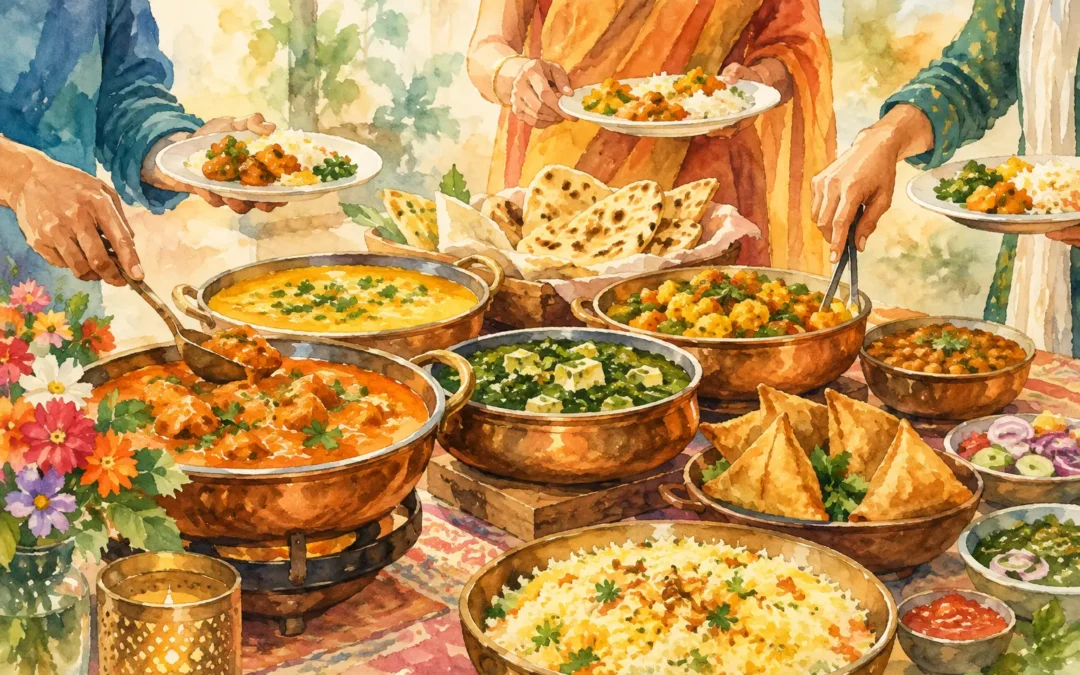
A good Indian buffet is not simply a long row of dishes. It is a relaxed way to enjoy different flavours around one table, whether you are catching up with family, arranging a work lunch or planning a celebration. Guests can choose their own favourites, try something new and return for the dishes that make them happy.
The best buffet-style Indian food feels generous without losing the things that matter most: fresh daily ingredients, authentic Indian spices and food served at the right temperature. There should be familiar comforts for curry lovers, exciting street-food flavours for the curious and enough variety for everyone to build a plate that suits them.
What Makes an Indian Buffet Worth Choosing?
Choice is the obvious answer, but it is not the only one. Indian cooking is built around contrast: warming spices beside cooling yoghurt, rich sauces alongside bright salads, crisp starters before slow-cooked curries. A buffet gives guests the freedom to enjoy those contrasts in their own order and proportions.
It is especially useful when a group has different tastes. One person may want a fragrant chicken curry with pilau rice, while another prefers a vegetable dish, freshly baked naan and a crisp samosa. A well-planned spread removes the pressure of finding one dish that pleases everyone. Instead, each guest can make a meal they will genuinely enjoy.
For hosts, it also creates a more sociable occasion. Rather than waiting for separate plates to arrive, people can begin choosing food together. That easy pace works well for birthdays, family meals, small office gatherings and private functions where the focus is as much on the company as the food.
Freshness Still Comes First
A wide choice means very little if dishes have been sitting too long. The quality of an Indian buffet depends on careful preparation, sensible portion planning and regular replenishment. Curries should remain aromatic and inviting, rice should be light rather than dry, and fried items need to keep their crisp texture.
Fresh daily preparation makes the difference. Handpicked produce, properly balanced spices and food cooked with care give every dish its character. It is also why a smaller, thoughtfully selected buffet can be better than an oversized selection that lacks consistency.
Building a Balanced Indian Buffet Plate
The pleasure of a buffet is having a little of several things, not piling every dish onto one plate. Start with a modest portion of rice or naan, choose one or two mains, then add contrasting sides. You can always return for more, and you will taste the individual dishes more clearly.
A useful plate often combines a richer curry with something lighter. For example, a creamy, gently spiced chicken dish can sit well beside a tomato-based lentil curry or seasonal vegetable dish. Add pilau rice for fragrance, naan for scooping sauces and a spoonful of chutney or pickle for a sharper finish.
If starters are available, enjoy them first rather than treating them as an afterthought. Onion bhajis, samosas, chicken tikka and paneer dishes bring different textures to the table. A cooling raita can balance chilli heat, while a fresh salad adds crunch and brightness.
Choosing Heat That Suits You
Indian food is often wrongly reduced to one question: how spicy is it? Heat matters, but flavour is broader than chilli. Cardamom can be floral, cumin can be earthy, coriander can be citrusy and cloves can add warmth. Mild dishes can be deeply aromatic, while hotter dishes should still have balance.
When serving a mixed group, include mild, medium and hotter options. A korma-style dish or creamy paneer curry gives cautious eaters a comfortable starting point. Medium curries bring a fuller spice profile, while a hotter option gives chilli lovers the kick they are looking for. Labelled dishes make the experience easier for everyone, particularly guests trying Indian cuisine for the first time.
It also helps to keep cooling accompaniments nearby. Natural yoghurt, cucumber raita and fresh salad are not just side dishes. They let guests adjust a meal to their own taste without losing the character of the food.
Indian Buffet Favourites for Every Guest
A balanced buffet needs more than several versions of the same curry. The strongest menus offer variety across proteins, vegetables, textures and sauces. Meat eaters may look for tender chicken, lamb or grilled tandoori dishes, while vegetarian guests deserve more than one token option.
Vegetable curries, dal, chickpeas and paneer can be some of the most satisfying dishes on the table when made well. They are full of spice, naturally suited to sharing and ideal for guests who want a lighter plate. Vegan choices are equally valuable, but they should be clearly identified so diners can choose with confidence.
Bread deserves attention too. Fresh naan, roti or paratha can turn a good curry into a complete meal. Rice choices also matter. Fragrant basmati rice works with almost every dish, while vegetable rice or pilau rice adds extra colour and flavour. If there is a rich sauce on your plate, use bread to enjoy every last spoonful.
A small dessert selection can finish the meal neatly. Something creamy, something fruity or a traditional sweet provides a gentle close after savoury spices. The key is not excess. A few well-made options are more appealing than a crowded dessert table.
Planning an Indian Buffet for a Group
For a party or function, a buffet can be one of the easiest ways to feed guests well. It is flexible, welcoming and easier to adapt than a fixed menu. The right selection depends on your group size, the time of day, the occasion and how adventurous your guests are with food.
For a family celebration, familiar favourites and milder choices often work best alongside one or two bolder dishes. For an office lunch, lighter curries, grilled starters, rice and breads can keep the meal satisfying without feeling too heavy. For an evening party, a fuller spread with starters, several mains and desserts creates a more celebratory feel.
Before finalising the food, ask guests about dietary needs. Vegetarian, vegan, gluten-sensitive and dairy-sensitive diners should have clear choices rather than needing to guess. It is worth checking ingredients and labelling dishes carefully, especially where nuts, dairy or allergens may be present.
Portion planning matters as well. Groups usually eat more of familiar dishes, rice, breads and popular starters. A sensible balance prevents waste while ensuring that guests are not left choosing from only a few dishes near the end of the meal. Quality and availability should feel consistent from the first serving to the last.
Buffet or Individual Meals?
A buffet is not always the best fit. For a quiet date night or a small meal where everyone wants something specific from the menu, individual dishes can feel more personal. They are also useful when a group has highly specific dietary requirements that are easier to manage plate by plate.
But for groups who want variety and a relaxed, shared experience, a buffet has real advantages. It can make ordering simpler, encourage people to try more flavours and keep the occasion moving at a comfortable pace. The best choice depends on the event, not just the number of guests.
At Worthing Indian Cafe & Bar, the focus is on making authentic Indian food approachable for everyday meals and special occasions alike. Fresh ingredients, traditional spices and reasonable pricing should never be difficult to find, whether you are dining in, collecting a meal or arranging food for a group.
Enjoying More Than Just a Full Plate
The value of an Indian buffet is not measured by how much fits on a plate. It comes from the chance to enjoy a proper range of flavours, share recommendations across the table and find a new favourite alongside the dishes you already know.
Choose food that looks freshly prepared, take smaller first portions and give every dish room to stand out. A well-chosen buffet meal should leave guests satisfied, comfortable and already talking about what they would choose next time.