
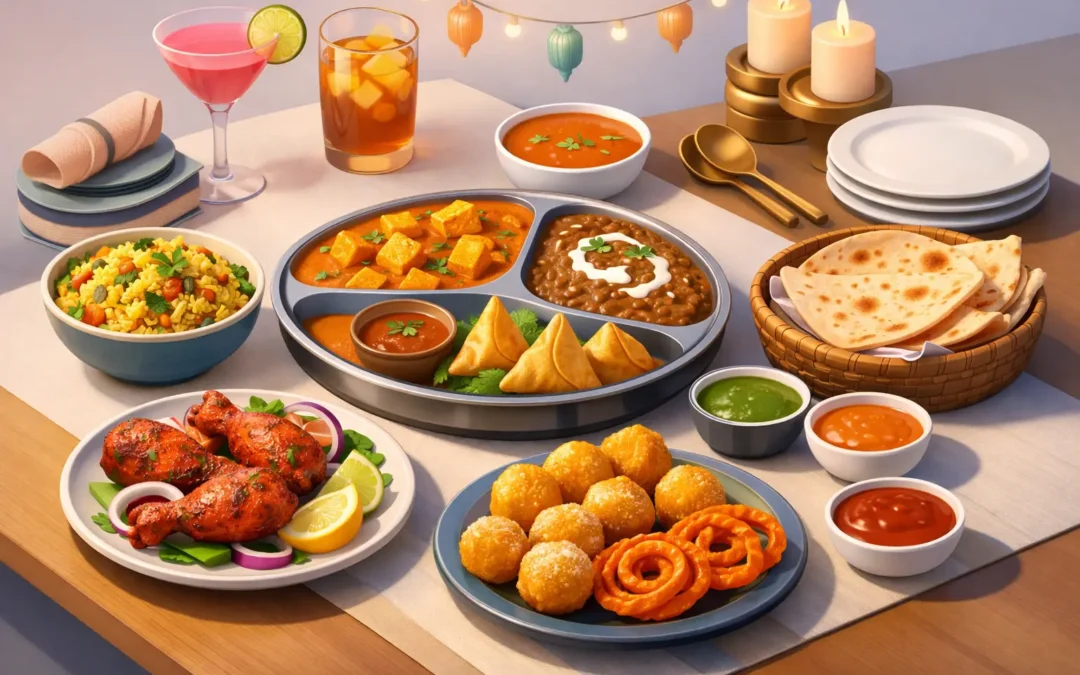
Planning food for a party sounds simple until you need to please different tastes, judge portions and make sure everything lands on the table hot and on time. That is where a good Indian party menu example helps. Instead of guessing, you can build a menu that feels generous, balanced and easy for guests to enjoy.
Indian food works brilliantly for parties because it offers variety without feeling fussy. You can serve bold starters, comforting mains, lighter sides and a dessert that rounds everything off properly. It also suits different occasions, from family birthdays and weekend get-togethers to office celebrations and relaxed evening functions.
A practical Indian party menu example
If you want a dependable format, start with one or two starters, two mains, rice, bread, a side or two, and one dessert. That gives guests enough choice without creating waste or turning the meal into hard work.
A strong menu for 10 to 15 guests could look like this:
- Vegetable samosas or onion bhajis
- Chicken tikka
- Chicken tikka masala or butter chicken
- Lamb rogan josh or lamb karahi
- Vegetable curry such as chana masala, saag aloo or mixed veg curry
- Pilau rice
- Plain naan and garlic naan
- Raita and fresh salad
- Gulab jamun or mango kulfi
This kind of spread works because it mixes familiar dishes with authentic flavour. Guests who prefer milder food have easy options, while those who enjoy more spice still get depth and warmth from the curry selection. It also gives vegetarians something substantial rather than an afterthought.
What makes a party menu work
A good party menu is not about ordering the most dishes. It is about balance. You want contrast in texture, flavour and richness so the meal feels complete from start to finish.
Start with light, easy-to-hold items. Samosas, bhajis and tikka pieces are popular because they are simple to serve and easy for guests to share while people are arriving. Then move into mains that cover different preferences. One creamy or milder curry and one richer or more spiced curry usually gives the right mix.
Sides matter more than people think. Pilau rice adds fragrance, naan helps guests enjoy the sauces properly, and raita brings a cooling finish that makes the whole meal feel more balanced. If the mains are rich, a crisp salad can make a real difference.
Dessert should be straightforward. At a party, most guests want something sweet and familiar rather than anything too heavy. Kulfi, gulab jamun or even a simple mango-based dessert usually goes down well.
Choosing dishes for different types of guests
The best Indian party menu example always depends on who you are feeding. A family gathering is different from a work event, and a birthday dinner is different from a casual drinks party.
For families and mixed ages
Keep spice levels moderate and include familiar dishes. Butter chicken, tikka masala, mild lentil dishes and vegetable options are reliable choices. Children and older guests often prefer milder heat, but that does not mean the food needs to be bland. Fresh daily ingredients and traditional spices still bring plenty of flavour.
For a casual evening party
You can be a little bolder. Add chilli paneer, lamb karahi or a fuller-flavoured chicken curry alongside the milder options. If guests are standing, focus more on starters and easy-sharing dishes.
For office parties or functions
Go for broad appeal and easy service. A menu with clear vegetarian and meat options keeps things simple. Rice-based and curry-based dishes are practical because they travel well and are easy to portion for a group.
How much food to order
This is one of the biggest worries when planning party catering. Order too little and it looks mean. Order too much and you are left with trays of food nobody can finish.
For a main meal, most groups do well with one starter portion per person if starters are being passed around, then enough mains for guests to sample two or three dishes with rice and bread. If your party starts later in the evening and centres on dinner, guests will eat more. If food is part of a drinks-led event, they may eat a little less but return to the table more often.
A useful approach is to order variety rather than doubling up on too much of the same thing. Three well-chosen curries and proper sides often work better than six mains that overlap in flavour.
Mild, medium or hot?
This is where many hosts overthink things. You do not need every dish to hit the same spice level. In fact, a better menu gives guests options.
A smart balance is one mild dish, one medium dish and one vegetarian dish with gentle warmth. If you know your guests enjoy heat, add one hotter side or curry. That way the whole table is covered without making the menu difficult.
Heat should never come at the expense of flavour. Proper Indian cooking is about layers of spice, not just chilli. For parties, this matters even more because you want food that guests come back for, not food they struggle through politely.
A sample menu for a home celebration
If you want something simple and proven, this menu is a safe choice for birthdays, anniversaries or weekend gatherings:
Starters
Begin with onion bhajis and chicken tikka. These are easy to share, full of flavour and popular with most guests.
Mains
Serve chicken tikka masala, lamb rogan josh and a vegetable curry such as chana masala. This gives you a mild creamy option, a richer meat dish and a satisfying vegetarian choice.
Sides
Add pilau rice, plain naan, garlic naan, poppadoms, mint yoghurt and a fresh salad. These sides help guests build a plate the way they like it.
Dessert
Finish with gulab jamun or kulfi. Both are classic, easy to serve and a good fit after a spiced meal.
This menu works because it covers the basics very well. It feels generous, looks colourful on the table and suits guests with different appetites.
Buffet or table service?
For most parties, buffet-style service is the easier option. Guests can choose what they like, portions are flexible and the meal feels relaxed. Indian food suits buffets particularly well because the dishes hold their character and are naturally designed for sharing.
Table service can work for smaller events or more formal celebrations, but it needs more planning. You will need to think about timing, serving space and how dishes will be shared. If convenience matters, buffet service is usually the better choice.
Don’t forget vegetarian options
A strong party menu should always include proper vegetarian dishes, even if most guests eat meat. This is not just about dietary preference. Indian vegetarian cooking is full of flavour and often becomes one of the most popular parts of the meal.
Paneer dishes, lentil curries, chickpea curries and vegetable sides bring colour and variety to the table. They also make the menu feel more complete. Guests appreciate having real choice, and vegetarian dishes help balance richer meat curries.
Freshness matters more than complexity
When people remember party food, they usually remember whether it tasted fresh, whether the portions felt generous and whether there was enough variety. They rarely remember how many dishes were on offer.
That is why a shorter menu made with fresh daily ingredients often performs better than an oversized spread. Authentic Indian spices, well-cooked rice, soft naan and properly prepared curries give you far better value than trying to fill the table with too many extras.
If you are ordering for a function, choose a provider that can deliver consistency as well as flavour. For local events, Worthing Indian Cafe & Bar is the kind of option people look for when they want authentic food, reasonable price and a menu that works just as well for casual parties as for bigger group occasions.
Keep the menu easy for yourself
The host should be able to enjoy the party too. That means choosing dishes that are straightforward to serve and easy for guests to recognise. A menu does not need to be complicated to feel special. Familiar favourites prepared well will nearly always beat an over-ambitious selection.
If you are unsure where to start, keep the structure simple: a couple of starters, a balanced mix of mains, reliable sides and one good dessert. That is the safest Indian party menu example for most occasions, and it gives your guests exactly what they want – fresh flavour, real choice and a meal that feels welcoming from the first bite to the last.