
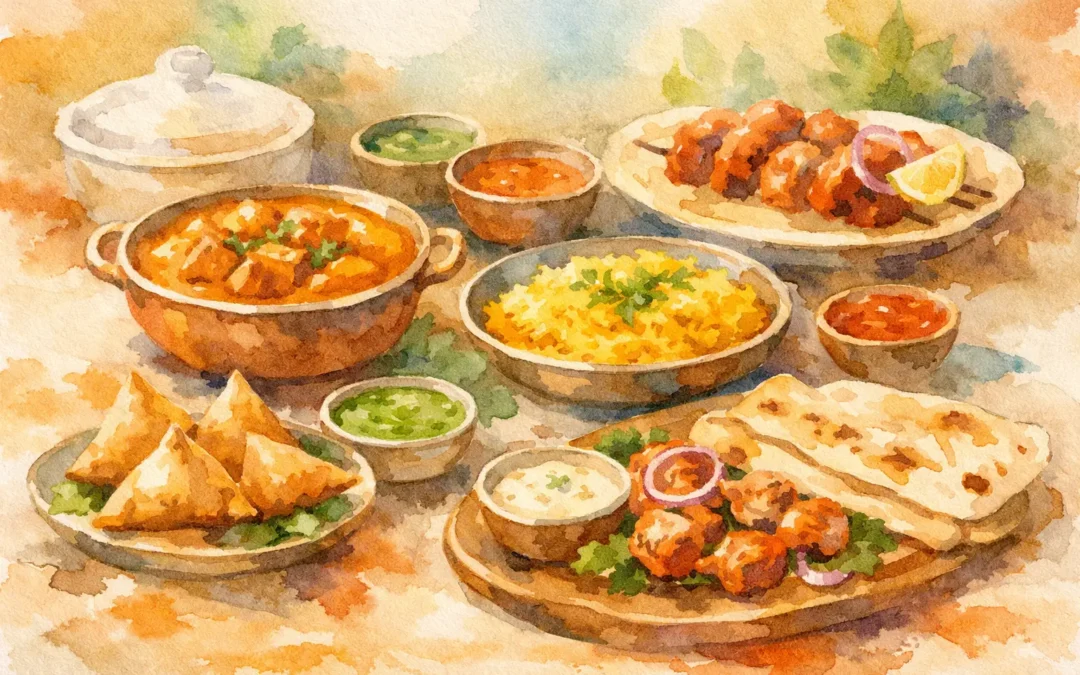
Staring at a long menu when everyone is hungry can turn a simple dinner into a slow decision. This Indian takeaway menu guide is here to make ordering easier, whether you want a quick midweek meal, a family feast, or a relaxed night in with proper Indian flavour.
A good takeaway menu should feel inviting, not confusing. The best way to read it is to think in parts rather than trying to judge every dish at once. Start with what kind of meal you want. If you fancy something rich and comforting, look at the curries. If you want variety and more texture on the table, mix street food, grills, breads and sides. Once you understand how the menu is built, ordering becomes much more straightforward.
How to read an Indian takeaway menu guide
Most Indian takeaway menus are arranged to help you build a balanced order. Starters and street food are there for lighter bites, sharers and first tastes. Mains usually include classic curries, regional dishes, tandoori or grilled options, and vegetarian choices. Then come rice, breads, and sides, which make the meal feel complete.
The first thing to decide is whether you are ordering for comfort, variety, or value. Comfort usually means one main per person with a rice or naan. Variety works well when sharing, because you can combine different sauces, dry dishes and snacks. Value often comes from choosing dishes that complement each other instead of ordering too many mains that all taste similar.
Heat level matters too, but spice is not the whole story. A dish can be full of authentic Indian spices without being especially hot. Some are warm and aromatic, others are creamy and mild, and some bring a deeper chilli kick. If you are unsure, it makes sense to choose one familiar curry and one dish that is a little more adventurous.
Choosing the right starter or street food
A strong start sets the tone for the whole meal. Street food and starters are ideal if you want more than just curry and rice, especially when ordering for two or more people. They add crunch, freshness and variety.
Lighter options such as samosas, pakoras or chaat-style dishes are great for sharing because they do not fill everyone up too quickly. They also work well if one person wants a proper feast and another wants something smaller. If you are ordering for a family, starters can bridge different tastes without committing to a full main.
If you are after a more substantial first course, grilled items often make a smart choice. They bring smoky flavour and a different texture from sauce-based dishes. This is especially useful if your mains are on the richer side, because the meal feels more balanced.
Understanding curry styles before you order
The heart of any Indian takeaway menu guide is knowing what separates one curry from another. Many people order the same dish every time, which is perfectly fair, but understanding the style helps if you want to try something new without risking disappointment.
Creamier dishes tend to be smooth, mellow and easy to enjoy. These are often a good fit for families, couples sharing, or anyone who prefers warmth over heat. They suit naan breads especially well and are a dependable choice for a relaxed evening meal.
Tomato-based and medium-spiced curries usually offer more tang and depth. They still feel approachable, but they have a little more edge. These are popular because they sit in the middle – enough spice to feel lively, but not so much that it overwhelms the food.
Hotter curries are best chosen when you genuinely enjoy chilli heat rather than simply wanting the boldest item on the menu. Strong spice can be excellent when balanced properly, but it should still let the other flavours come through. If you are ordering for a group, it is often better to have one hot dish on the table rather than making every main intense.
Dry or semi-dry dishes deserve attention too. They can be packed with flavour and often pair brilliantly with rice, salad or breads. If your order already includes two saucy curries, adding a drier dish can make the whole meal feel less repetitive.
Rice, naan and sides make the meal
People often focus on the mains and treat the rest as an afterthought, but rice, breads and sides are what turn a takeaway into a proper spread. They also help stretch the meal in a sensible way, which matters if you want good value.
Rice keeps things simple and dependable. Plain rice allows stronger curries to shine, while pilau or flavoured rice adds fragrance and a little extra richness. If you are ordering several mains to share, rice is usually the easiest base because it works with almost everything.
Naan brings softness and comfort, and it is ideal for scooping up thicker sauces. If you are ordering one rich curry between two people, naan can make the meal feel more generous without adding another main. It also gives children and lighter eaters something familiar alongside bolder flavours.
Sides can quietly improve an order. A lentil dish, chickpeas, spiced potatoes or cooling yoghurt-based side can add contrast and stop the meal feeling too heavy. This is especially useful if your mains are rich or creamy. The difference between a decent order and a really satisfying one is often in these smaller choices.
Ordering for one, two or a group
The right order depends on how many people are eating and what sort of evening it is. A solo takeaway should be easy and satisfying, not excessive. One main, one rice or naan, and perhaps a starter is usually enough. If you want leftovers for the next day, add a side rather than another full curry.
For two people, shared variety often works better than two completely separate orders. One rich dish and one lighter or spicier dish, plus rice and naan to share, gives you more contrast and better value. This also avoids the common problem of both dishes tasting too similar.
Family and group orders need a little more planning. Try to mix textures and heat levels so there is something for everyone. A balanced table might include a mild curry, a medium curry, one grilled or dry dish, rice, breads and a couple of starters or sides. That approach feels generous without becoming wasteful.
If you are ordering for a gathering or casual celebration, variety matters even more. Indian food is naturally good for sharing, and a menu with street food, regional dishes and classic curries gives guests more to enjoy than a row of identical mains. That is one reason local places such as Worthing Indian Cafe & Bar suit both quiet nights in and larger occasions.
How to choose well if you are new to Indian food
If you are new to Indian takeaway, the safest approach is not always the blandest one. It is better to choose dishes known for balance and flavour, then adjust from there next time. A mild curry, a medium-spiced curry, rice, naan and one starter is a reliable first order for two.
Pay attention to ingredients you already enjoy. If you like smoky food, look for grilled dishes. If you enjoy creamy sauces, choose a milder curry. If you prefer brighter flavours, go for tomato-based or tangier options. The menu becomes easier when you connect it to your own taste rather than worrying about getting the names perfect.
It also helps to avoid ordering four versions of the same thing. People sometimes choose all creamy dishes because they seem familiar, then find the meal lacks contrast. A better order mixes one comforting choice with one fresher, smokier or spicier option.
What makes a takeaway worth ordering again
A good Indian takeaway is not just about portion size or heat. Fresh daily ingredients, well-cooked meat and vegetables, and authentic Indian spices make a clear difference. You can taste when a sauce has depth rather than just weight, and when breads and sides have been prepared with care.
Reasonable price matters as well, but value is about more than cost alone. Fast service, dependable quality and food that travels well all count. A takeaway should arrive tasting like a proper meal, not a compromise for staying at home.
That is why it is worth learning the menu instead of ordering on autopilot. Once you know how to combine starters, mains, rice, breads and sides, you can order with confidence and get more enjoyment from every meal. The best takeaway is the one that feels easy to choose, generous on the table, and satisfying from the first bite to the last.
The next time you are deciding what to order, keep it simple: choose for balance, not just heat, mix a few different textures, and let fresh flavour lead the way.