
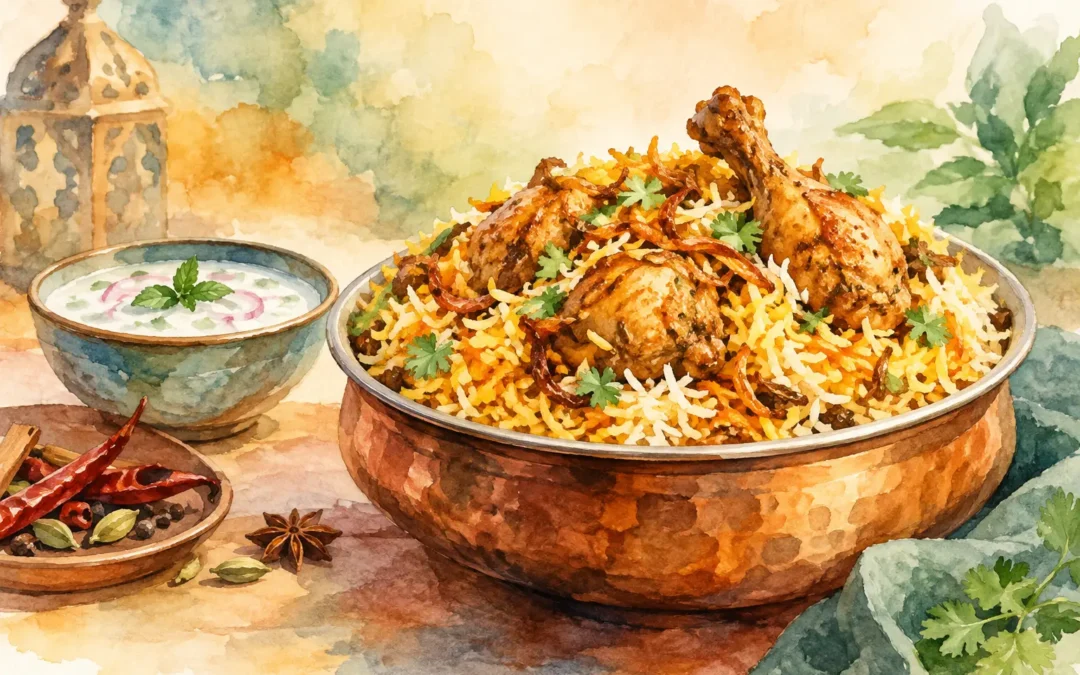
The first spoonful of biryani can be wonderfully aromatic: fluffy basmati rice, tender meat or vegetables, warm spices and the savoury depth of a slow-cooked masala. But is biryani spicy? Sometimes, yes – but it is not automatically a fiercely hot dish. A good biryani is built around flavour before heat, and the spice level depends on the recipe, region and kitchen preparing it.
For diners who enjoy Indian food but are unsure about chilli, biryani is often a reassuring choice. It can be fragrant, rich and boldly seasoned without leaving your mouth on fire. If you prefer more heat, it can usually be made hotter without losing the balance that makes the dish so special.
Is biryani spicy by default?
Biryani is a spiced rice dish, but “spiced” does not always mean “hot”. Traditional recipes use ingredients such as cumin, coriander, cloves, cinnamon, cardamom, bay leaf, saffron, ginger and garlic. These create warmth, perfume and depth. They are different from the sharp heat of fresh green chillies, chilli powder or dried red chillies.
The answer depends on the style of biryani. Some versions have a gentle, rounded warmth, while others are known for a more pronounced chilli kick. The masala may be mixed through the meat or vegetables, layered with rice, or served in a richer gravy-style base. That is why two biryanis can look similar but taste very different.
At a restaurant, the chef’s own recipe matters too. A kitchen may use fresh chillies sparingly to keep the main flavours clear, or prepare a punchier masala for guests who love proper heat. Asking about the dish before ordering is always sensible, especially if you are sharing with children or someone who usually chooses mild food.
What makes a biryani hot?
Chilli is the main source of heat in biryani. Fresh green chillies tend to give a brighter, quicker heat, while red chilli powder can bring a deeper warmth and a redder colour. Whole dried chillies may add smoky character as well as spice. The amount used is only part of the story: the type of chilli and the way it is cooked both affect how hot the final dish feels.
Other ingredients can make a biryani seem more intense without actually adding much chilli. Black pepper has a sharp warmth. Ginger can give a lively bite. Garam masala adds depth and fragrant warmth, particularly when it is added towards the end of cooking. Fried onions, yoghurt, tomatoes and slow-cooked meat juices then soften and round out those stronger flavours.
A biryani served with raita often tastes milder than the same biryani eaten on its own. Cool yoghurt, cucumber and herbs help settle the palate between mouthfuls. A side of plain yoghurt, salad or a lightly flavoured curry can also make a spicy biryani easier to enjoy.
Regional styles can change the answer
There is no single biryani recipe across India. It is a dish with many regional traditions, and the level of chilli changes accordingly.
Hyderabadi biryani is perhaps the style many people expect when they think of a bold, aromatic biryani. It often uses a well-seasoned marinade, herbs, fried onions and chillies, so it can have a noticeable warmth. It is deeply flavoured rather than simply hot, but diners sensitive to chilli may want to check the heat level first.
Lucknowi, or Awadhi, biryani is typically more delicate. Its focus is often on fragrant rice, subtle spices and tender meat, with less obvious chilli heat. It can be an excellent choice for anyone who wants the aroma and richness of biryani without a strong fiery finish.
Kolkata biryani is also generally milder in character. It is known for its light fragrance and, in many versions, the addition of potato alongside meat and rice. The spice profile can still be complex, but it is less likely to be dominated by chilli.
South Indian and coastal-inspired biryanis may use more green chillies, pepper, curry leaves or regional masalas. These can be brighter and hotter, although there is plenty of variation from one household and restaurant to another. The useful rule is simple: regional style gives a clue, but the kitchen’s recipe gives the real answer.
Flavourful does not have to mean fiery
The best biryani has contrast. You should notice the separate grains of rice, the savoury masala, the sweetness of fried onions, herbs such as mint and coriander, and the richness of meat, paneer or vegetables. Heat should support those flavours, not cover them up.
That balance is particularly important with chicken biryani and lamb biryani. Chicken takes on spice quickly, so too much chilli can overpower its lighter flavour. Lamb has a fuller richness and can carry more warming spices, but it still benefits from a measured hand. Vegetable biryani can be wonderfully aromatic and satisfying, yet it can feel hotter if there is less richness from meat or yoghurt to soften the chilli.
If a biryani tastes hot from the first mouthful to the last, it may be too spicy for your preference. If it builds gradually but still lets the saffron, cardamom, herbs and savoury masala come through, it is likely well balanced. Personal taste matters here. One person’s pleasant warmth is another person’s “please pass the raita”.
How to order biryani if you do not like much chilli
Be clear about what you enjoy. Saying “mild, please” is helpful, but it can be even better to ask whether the biryani itself is naturally hot or whether it can be prepared with less chilli. Some dishes are made in advance as part of a traditional recipe, while others can be adjusted more easily.
Choose a milder regional style when it is available, or ask for a gentle heat level. Order raita alongside it rather than waiting until the dish feels too hot. A plain naan or portion of plain rice can help too, although biryani already contains rice and is usually filling on its own.
If you are ordering for a family meal or group, choosing a mild biryani and adding extra chilli on the side is often the most practical option. It keeps the dish enjoyable for everyone, while guests who like extra heat can tailor their own portion. This is also a good approach for takeaway and delivery, when a shared meal may include different tastes.
How to order biryani if you enjoy heat
If you love chilli, tell the restaurant that you would like it hot rather than assuming every biryani will be fiery. A kitchen can often add fresh chillies, extra chilli or a hotter masala, but the aim should still be a balanced dish. More heat should not mean losing the fragrance of the rice or the character of the spices.
It is worth remembering that chilli added at the end can taste sharper than chilli cooked slowly into a marinade. If you want a rounded warmth rather than an aggressive hit, ask for a medium-hot level instead of the hottest possible version. You will get more of the full biryani experience in every bite.
Common questions about biryani heat
Is chicken biryani spicier than lamb biryani?
Not necessarily. The heat comes from the recipe, not the protein. Lamb biryani may taste richer and more deeply spiced, while chicken biryani can feel lighter, but either can be mild, medium or hot.
Is vegetable biryani mild?
It can be, but do not assume so. Vegetable biryani may contain the same masala and chillies as a meat version. Check with the restaurant if you need a mild dish.
Can raita make spicy biryani easier to eat?
Yes. Yoghurt cools the palate and complements the fragrant spices beautifully. It will not remove heat entirely, but it makes a noticeable difference and adds a fresh contrast to the rice.
A satisfying biryani should leave you wanting another spoonful, not reaching for a glass of water. Whether you prefer a gentle aromatic dish or a proper chilli kick, let the restaurant know your taste. At Worthing Indian Cafe & Bar, fresh daily ingredients and authentic Indian spices are there to be enjoyed at the heat level that suits your table.