
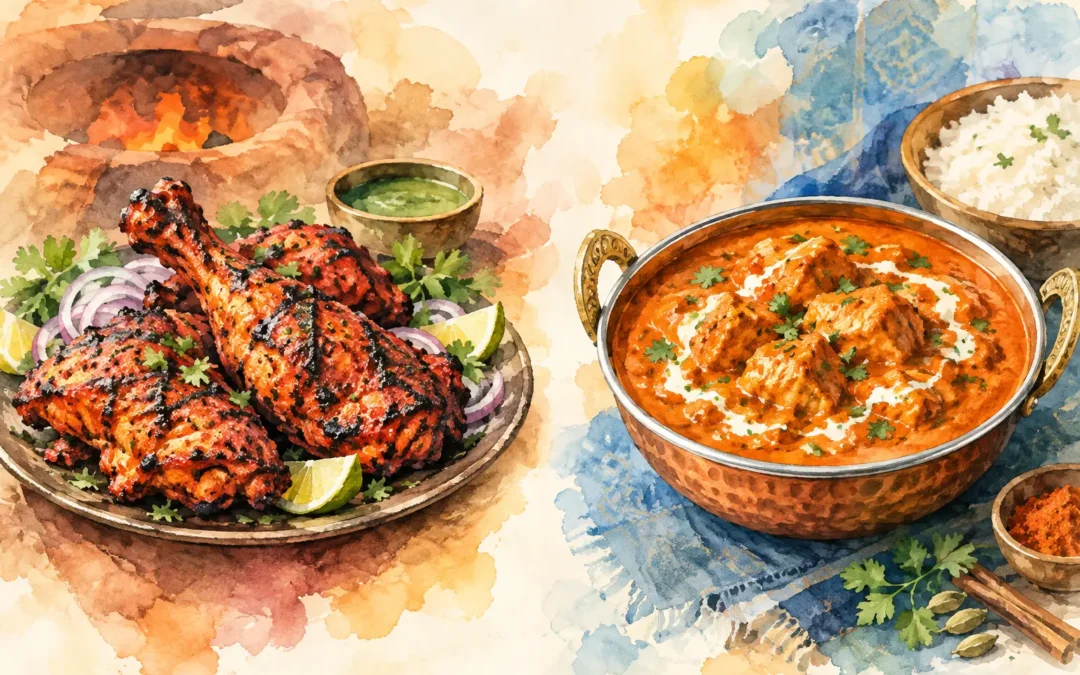
A smoky piece of chicken fresh from the tandoor and a bowl of rich, fragrant curry can both satisfy a craving for Indian food, but they offer very different meals. In the tandoori chicken versus tikka masala choice, the key difference is not simply the spice level. It is the cooking method, the cut of chicken, the presence of sauce and the kind of meal you want to enjoy.
Tandoori chicken is all about charred edges, yoghurt-marinated meat and the distinctive heat of a clay oven. Tikka masala centres on tender chicken pieces in a warmly spiced sauce, often paired with rice or naan to make the most of every spoonful. Both can be full of authentic Indian spices and fresh flavour, but one may suit your table better than the other.
Tandoori chicken versus tikka masala: the main difference
Tandoori chicken is chicken marinated with yoghurt, ginger, garlic, lemon and a blend of traditional spices, then cooked at high heat in a tandoor. The intense oven heat cooks the chicken quickly, creating lightly smoky, caramelised edges while helping the meat stay juicy. It is commonly served as a dry dish, with no heavy curry sauce coating it.
Chicken tikka masala starts with chicken tikka – usually boneless, bite-sized pieces of marinated chicken cooked in a tandoor or similar high-heat oven. Those pieces are then finished in a sauce. The sauce is typically tomato-led, gently creamy and aromatic with spices such as cumin, coriander, turmeric, garam masala and fenugreek. Every restaurant has its own balance, so the colour, richness and warmth can vary.
In simple terms, tandoori chicken is grilled or roasted chicken with its marinade taking centre stage. Tikka masala is a saucy curry made with cooked chicken tikka. If you like texture, smokiness and a lighter plate, tandoori chicken is often the natural choice. If you are after comfort, richness and something to scoop up with naan, tikka masala is likely to appeal more.
How the cooking method changes the flavour
The tandoor is central to the character of tandoori chicken. This traditional clay oven reaches very high temperatures, giving the chicken a roasted flavour and occasional char without making it dry. The yoghurt in the marinade helps tenderise the meat, while spices cling to the surface and become more fragrant as they cook.
Tandoori chicken may be served on the bone, especially in classic preparations. This can add depth of flavour and makes it a satisfying choice for diners who enjoy hands-on eating. You may find it served with fresh salad, onion, lemon and mint yoghurt, allowing the spice and smokiness of the chicken to remain the focus.
With tikka masala, the chicken still benefits from that roasted tandoor flavour, but it becomes part of a bigger picture once it enters the sauce. Tomatoes provide gentle tang, butter or cream can add a smooth finish, and the spice blend develops as it simmers. The result is softer, richer and more rounded than tandoori chicken alone.
Neither method is better. They create different experiences. A well-made tandoori dish depends on a fresh marinade and accurate cooking time. A good tikka masala depends on a sauce that tastes of spices and tomatoes rather than being overly sweet, heavy or bland.
Is tikka masala hotter than tandoori chicken?
Not necessarily. Many people assume tikka masala is mild and tandoori chicken is hot because tandoori dishes can look vividly red or orange. In reality, colour does not reliably tell you how much chilli a dish contains. Some marinades use paprika or mild chilli powder mainly for colour and warmth, while some tikka masala sauces are more generously spiced.
Tandoori chicken often has a sharper, more direct spice profile. You may notice ginger, garlic, citrus and toasted spices first, followed by a little heat. Tikka masala usually feels gentler because yoghurt, cream, butter or a rich tomato sauce can soften the chilli. However, a kitchen can make either dish mild, medium or hot to suit the diner.
If you are ordering for children, spice-sensitive guests or a mixed group, tikka masala is often an approachable curry choice. For people who enjoy bolder grilled flavour, tandoori chicken can be more exciting without automatically being fiercer. Asking for advice when ordering is always worthwhile, especially if you want a particular heat level.
Sauce, sides and the kind of meal you want
The presence of sauce changes how these dishes work with the rest of your order. Tikka masala is made for accompaniments. Steamed basmati rice absorbs the sauce beautifully, while plain naan, garlic naan or a roti lets you enjoy the last of the curry. It is an easy centrepiece for a relaxed dinner at home, a family meal or a casual dine-in evening.
Tandoori chicken is more versatile than people sometimes expect. It can be enjoyed as a starter to share, a lighter main with salad, or part of a larger spread with dal, vegetable sides and bread. Because it has no substantial sauce, it is a good option when you want the flavour of marinated, tandoor-cooked chicken without a rich curry.
For a table with several diners, the two dishes work particularly well together. Tikka masala brings sauce and gentle comfort; tandoori chicken adds smoky contrast and a firmer texture. Add rice, naan and a fresh side dish, and everyone has something different to enjoy.
A note on authenticity
Tandoori chicken has clear roots in the tandoor cooking traditions of the Indian subcontinent. Its combination of yoghurt marinade, spices and fierce oven heat remains a much-loved classic because the method itself creates so much flavour.
Chicken tikka masala has a more debated history. It is closely associated with British Indian restaurant culture, and many accounts connect its development to adapting grilled chicken tikka with a tomato-based sauce for local diners. That does not make it less worthy of the menu. It shows how Indian cooking has travelled, evolved and become part of Britain’s favourite meals out and takeaways.
Authenticity is not only about one fixed recipe. Fresh ingredients, balanced spices, careful preparation and respect for the dish matter just as much. A thoughtful tikka masala should still have warmth, savoury depth and character, while good tandoori chicken should taste of more than colouring and heat.
Which one should you order?
Choose tandoori chicken when you want smoky, marinated chicken with charred flavour and a less sauce-led meal. It is especially satisfying if you enjoy chicken on the bone, crisp salad, a squeeze of lemon and cooling mint yoghurt alongside.
Choose tikka masala when you want a comforting curry with tender boneless chicken and a smooth, spiced sauce. It is a dependable choice for sharing with rice and naan, and its balanced flavour makes it a popular option for a weekday takeaway or an easy restaurant meal.
At Worthing Indian Cafe & Bar, fresh daily ingredients and traditional spices help both tandoor dishes and classic curries earn their place on the table. The best choice comes down to your appetite: go for tandoori chicken when you want the fire of the oven, or tikka masala when only a generous, flavourful sauce will do.