
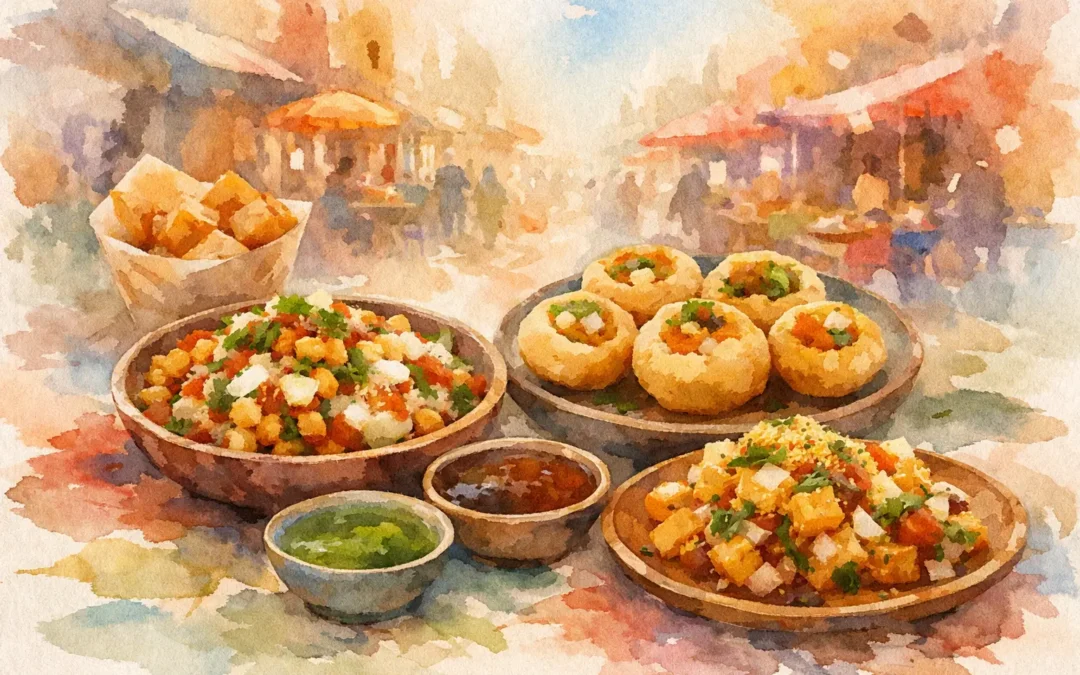
A crackly puri that gives way to cool yoghurt, spicy potato, tangy chutney and a burst of fresh coriander is hard to forget. So, what is chaat food? It is India’s wonderfully varied family of street-food snacks, known for bringing sweet, sour, spicy, creamy and crunchy flavours together in every bite.
Chaat is not one single recipe. It is a style of food built around contrast: crisp bases and soft fillings, chilled yoghurt and warming spices, sharp tamarind and sweet chutneys. It can be a light snack, a quick lunch, a sharing plate or the most talked-about part of a meal. For many people, it is also a taste of the lively markets, railway stations and roadside stalls found across India.
What is chaat food, exactly?
Chaat refers to a broad range of savoury Indian snacks, usually assembled just before serving. The word is often linked to the Hindi term for tasting or licking, which makes sense once you have tried it. Chaat is designed to be moreish. One mouthful leads quickly to another because every layer offers something different.
While recipes differ from place to place, chaat commonly combines fried or crisp pastry, potatoes, chickpeas, yoghurt, herbs, fresh onion, spice mixes and chutneys. The balance matters more than any one ingredient. A good chaat should be lively rather than heavy, with enough tang to wake up the palate and enough texture to keep it interesting.
It is easy to think of chaat as a starter, but that does not tell the full story. In India, it is everyday food: enjoyed between errands, after work, on family outings or whenever a fresh, flavour-packed snack is called for. Some versions are light and crunchy, while others are filling enough to replace a meal.
Where chaat comes from
Chaat is closely associated with North Indian street-food culture, particularly cities such as Delhi, Lucknow and Varanasi. Over time, it has travelled across the country and beyond, with every region adding its own ingredients, techniques and preferences.
In some places, chaat is extra spicy. In others, yoghurt is more generous or the chutneys lean sweeter. Mumbai is known for fast, filling snacks such as bhel puri and sev puri, while Kolkata has its own much-loved phuchka, a regional take on pani puri. This variety is part of the appeal. There is no single “correct” chaat, only a shared love of bold seasoning, freshness and contrast.
Street vendors often prepare each portion to order, which is why chaat feels so immediate. The crisp ingredients stay crisp, the herbs stay bright, and the chutneys are added at the last moment. That fresh assembly is central to the experience.
The flavours that make chaat so distinctive
A chaat plate can look busy, but the ingredients each have a job to do. Tamarind chutney brings a deep sweet-and-sour note. Green chutney, usually made with mint and coriander, adds freshness and a gentle heat. Yoghurt softens the spices and gives the dish a cool, creamy finish.
Then there is chaat masala. This aromatic seasoning often includes cumin, black salt, dried mango powder and other spices. It has a savoury, tart quality that makes even simple potatoes or chickpeas taste brighter. A squeeze of lemon, a sprinkle of pomegranate seeds or a handful of fresh coriander can add another lift.
Texture is just as important. You may find crisp sev, tiny strands made from gram flour; papdi, small crunchy wafers; puffed rice; fried puris; or a golden potato patty. These ingredients are not simply decoration. They create the crunch that sets chaat apart from a standard curry or side dish.
The result is food that can be fiery, cooling, sweet and sharp at the same time. If you prefer milder flavours, yoghurt and sweet tamarind chutney can take the edge off. If you like more heat, extra green chilli or spiced chutney will bring it forward. Chaat is flexible, but it should never be bland.
Popular types of Indian chaat
Pani puri or golgappa
Pani puri is one of the best-known chaat dishes. Small hollow puris are filled with potato, chickpeas or spiced sprouts, then filled with tangy, spiced water just before eating. The trick is to eat each one in a single bite before the puri softens.
It is light, exciting and often quite spicy. The flavoured water may contain mint, tamarind, cumin and chilli, creating a refreshing sharpness that is unlike most other Indian dishes.
Papdi chaat
Papdi chaat is a more relaxed, spoonable option. Crisp papdi wafers are topped with potatoes, chickpeas, yoghurt, chutneys, herbs and sev. It is creamy and crunchy at once, making it a great choice for anyone trying chaat for the first time.
Because the ingredients are layered rather than enclosed in a puri, it is easier to share at the table. It also offers a little of everything: cooling yoghurt, sweet tamarind, fresh herbs and satisfying crunch.
Aloo tikki chaat
Aloo tikki chaat starts with a warm, shallow-fried potato patty. It is often served with chickpeas, yoghurt, tamarind chutney, green chutney and a dusting of chaat masala. The warm, spiced tikki against cool yoghurt makes this one especially comforting.
This is a more substantial choice and works well when you want street-food flavour with a little more staying power. Depending on the recipe, it may be vegetarian and naturally gluten-free, although preparation and toppings always vary.
Bhel puri and sev puri
Bhel puri is a lighter, crunchy mixture of puffed rice, sev, onions, tomatoes, herbs, chutneys and spices. It is fresh, fast and full of texture. Sev puri uses crisp puris topped with similar ingredients, usually finished with a more generous amount of sev.
Both dishes are popular for their bright, tangy taste. They are best eaten soon after they are prepared, while the puffed rice and puris still have their crunch.
Dahi puri
Dahi puri is a cooler, creamier relative of pani puri. The crisp puris are filled with potato or chickpeas, then topped with yoghurt, chutneys and spices. “Dahi” means yoghurt, and it gives the dish a gentler, more rounded flavour.
For diners who enjoy spice but do not want too much heat, dahi puri can be an excellent introduction to the world of chaat.
How chaat is different from a curry
Indian food is often grouped too broadly, but chaat and curry offer very different experiences. A curry is generally a cooked dish with a sauce or gravy, served hot and enjoyed over a longer meal. Chaat is usually assembled quickly, built around snacks and served for immediate eating.
That does not make chaat less satisfying. It simply delivers flavour in another way. A curry develops depth through slow cooking, while chaat creates impact through fresh toppings, spice blends, chutneys and texture. Both belong on a varied Indian menu, especially when you want a meal that has more than one pace and flavour profile.
How to enjoy chaat at its best
Freshness is key. Chaat should be served soon after it is made so the crisp ingredients do not become soft. If you are sharing several dishes, start with chaat before moving on to richer curries, rice or breads. Its sharp, refreshing flavours prepare the palate beautifully.
It is also worth asking about spice levels and dietary needs. Many chaat dishes are vegetarian, and several can be adjusted, but yoghurt, wheat-based puris, gram flour and spice blends may be present. A good restaurant will be happy to help you choose something that suits you.
At Worthing Indian Cafe & Bar, chaat-style dishes are a brilliant way to begin a relaxed meal with friends or add something fresh and exciting to a familiar Indian takeaway order. The best version is made with quality ingredients, authentic Indian spices and the right balance of crunch, tang and warmth.
Next time you are choosing Indian food, make room for a chaat dish. It may be a quick snack by tradition, but its mix of fresh flavour and satisfying texture can turn an ordinary meal into something worth sharing.