
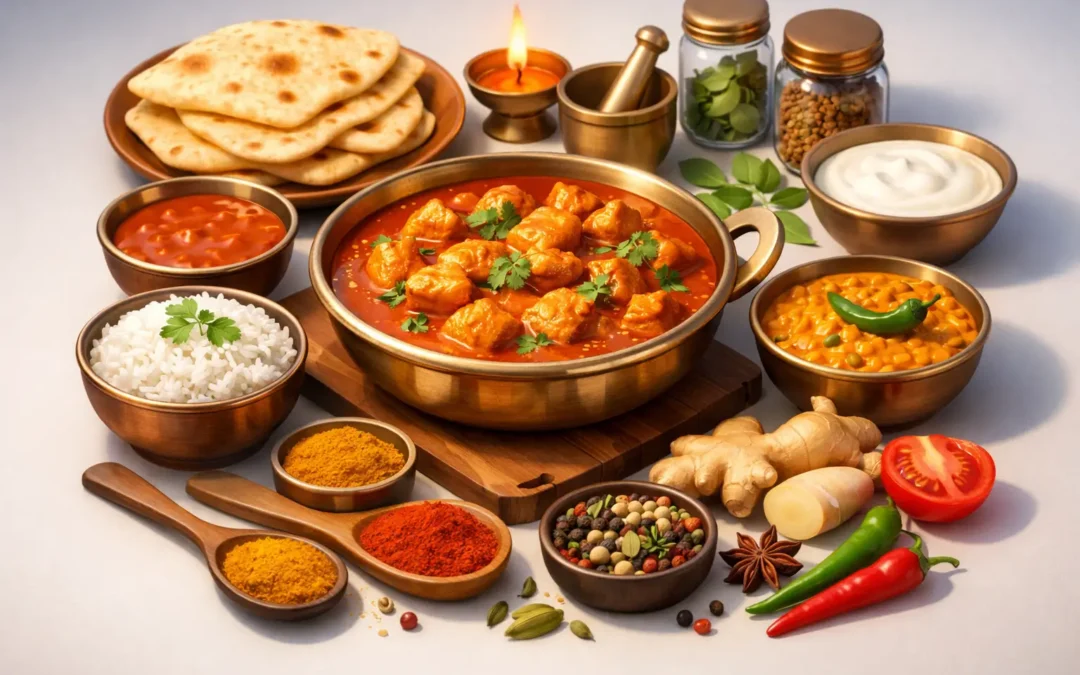
You can usually tell when an authentic Indian curry has been made properly from the first spoonful. The sauce tastes layered rather than heavy, the spices feel warm rather than harsh, and the whole dish has a balance that keeps you going back for another bite. Good curry is not about making everything hotter or richer. It is about getting freshness, spice and texture to work together in the right way.
For many local diners, curry sits in two parts of life at once. It is a reliable midweek takeaway when you want something satisfying after work, and it is also the kind of meal people choose when they want to sit down with family or friends and enjoy proper food. That is exactly why authenticity matters. If a curry is made with care, fresh daily ingredients and traditional spices, you taste the difference straight away.
What authentic Indian curry really means
Authenticity is often misunderstood. It does not mean there is only one correct recipe for every dish, and it certainly does not mean every curry should taste the same wherever you go. Indian cooking is regional, varied and shaped by home kitchens as much as restaurant tradition.
An authentic Indian curry is usually defined less by a strict rulebook and more by the way it is prepared. The ingredients matter. The spice blend matters. The cooking method matters. Just as importantly, the finished dish should reflect the style it comes from, whether that is a richer North Indian curry, a coastal dish with lighter heat, or a slow-cooked favourite with deeper spice.
That is why authenticity is not about gimmicks. It is about using proper spices, building flavour in stages and cooking in a way that respects the dish rather than rushing it into a one-note sauce.
Fresh ingredients make the biggest difference
If there is one thing that separates an average curry from a memorable one, it is freshness. Onions, tomatoes, ginger, garlic and green chillies form the base of many classic curries, but their quality changes the final result more than people realise. Freshly prepared ingredients bring natural sweetness, depth and brightness that older or pre-processed ingredients simply cannot match.
The same goes for proteins and vegetables. Chicken should stay tender, lamb should be cooked until it yields properly, and vegetables should keep their shape and character rather than disappearing into the sauce. A curry should feel like a complete dish, not just a sauce carrying whatever has been added to it.
This is one reason fresh daily cooking matters so much in a busy local restaurant. Customers want food that tastes lively and dependable, whether they are dining in, collecting on the way home or ordering for delivery. Consistency only comes when freshness is treated as standard, not as an extra.
Spice is about balance, not just heat
People often reduce Indian food to chilli, but that misses the point. Heat is only one part of the picture. In a properly made curry, spices work together to create depth. Cumin adds warmth, coriander brings citrusy lift, turmeric gives earthiness and colour, while spices such as cardamom, cinnamon, cloves or black pepper can add sweetness, fragrance or edge depending on the dish.
The balance of those spices is what makes a curry taste rounded. Too much chilli and the flavour becomes flat. Too much garam masala and the dish can feel muddy. Too little seasoning and the whole thing tastes dull. Good curry finds the middle ground where each ingredient supports the others.
This is also where experience shows. Spice should not mask the main ingredient. It should bring it forward. A chicken curry should still taste of chicken. A prawn curry should still feel fresh and delicate. A vegetarian curry should let lentils, paneer or vegetables keep their own identity.
Why sauces should never all taste the same
One of the quickest ways to spot poor-quality curry is when every dish seems to come from the same base sauce with a few last-minute changes. It might be convenient, but it strips away the detail that makes Indian cooking so enjoyable.
A jalfrezi should have a brighter, sharper edge than a korma. A madras should build heat differently from a rogan josh. A bhuna should feel thicker and more reduced, while a dopiaza should let onions play a leading role. These differences are not small technical details. They are the reason people return to the menu and order with confidence.
Of course, every kitchen has to work efficiently, especially when serving dine-in tables, takeaway orders and deliveries at the same time. But efficiency should never flatten the food. The best kitchens manage both. They keep service smooth while still making each curry taste like its own dish.
Regional character matters in authentic Indian curry
Indian cuisine is not one single style. Regional traditions shape ingredients, spice levels and cooking methods, which is why the idea of one universal curry has never been accurate.
North Indian dishes often lean into richer gravies, butter, cream, yoghurt and slow-cooked meats. In other regions, you will find lighter sauces, sharper spice profiles, mustard seeds, coconut, tamarind or curry leaves. Some curries are tomato-led, some are onion-led, and some rely more heavily on dry spices roasted for depth.
For diners, this variety is part of the appeal. It means there is a curry for different moods and occasions. Sometimes you want something comforting and creamy. Sometimes you want a sauce with more tang and bite. Sometimes you want a dry-style dish with bold spice and less richness. Authentic cooking keeps those distinctions clear rather than blending everything into a generic idea of curry.
The role of texture in a proper curry
Taste gets most of the attention, but texture matters just as much. A good curry should feel right in the mouth. The sauce might be silky, thick or lightly brothy depending on the dish, but it should always suit what is being served.
If the sauce is too thin, the flavour can feel weak. If it is too heavy, it can smother the ingredients. Onions should be cooked to the point that they enrich the curry, not left raw and sharp unless the dish calls for that contrast. Meat should be tender, not stringy. Paneer should hold its shape without turning rubbery.
This is where careful cooking really shows. Proper texture gives the curry structure and makes the meal more satisfying, whether you are having it with rice, naan or both.
Authenticity and value can sit together
There is a myth that authentic food must be expensive, complicated or reserved for special occasions. In reality, a well-run local restaurant can offer authentic Indian flavours at a reasonable price when it focuses on the basics that matter most – fresh ingredients, traditional spices, efficient service and dependable preparation.
That balance is exactly what many customers want. They are not looking for food that feels inaccessible. They want a proper curry they can trust on a Tuesday night, a relaxed meal out at the weekend, or a straightforward order for family and friends without compromising on flavour.
That is why approachable authenticity works so well. It respects the food and respects the customer at the same time.
How to choose a curry that suits your taste
If you are ordering for yourself or for a group, it helps to think beyond simply mild or hot. Creamy dishes are usually softer and richer, but that does not automatically make them better. Tomato-based curries tend to have more tang. Onion-rich sauces can feel sweeter and deeper. Dry or semi-dry dishes often give more direct spice and texture.
It also depends on the occasion. For a quiet night in, a comforting curry with rice and naan may be exactly right. For a group meal, a mix of sauces, sides and street food-style starters often gives everyone more variety. If you are feeding family or ordering for friends, choosing a range of spice levels usually works better than playing safe with everything.
At Worthing Indian Cafe & Bar, that mix of authenticity, freshness and everyday value is what makes curry easy to enjoy whether you are dining in, collecting after work or planning food for a gathering.
Why authentic Indian curry keeps people coming back
The real appeal of authentic Indian curry is not just flavour on the night. It is trust. You know what you are getting when the food is cooked properly. The spices taste balanced, the ingredients taste fresh and the dish feels complete from the first bite to the last.
That reliability matters. It turns a one-off order into a regular favourite. It makes dinner feel simple without feeling ordinary. And it gives people a meal that is full of character while still being easy to enjoy.
When curry is prepared with care, it does more than satisfy hunger. It gives you the kind of flavour that lifts an ordinary evening, makes sharing food feel easy and leaves you already thinking about what to order next time.