
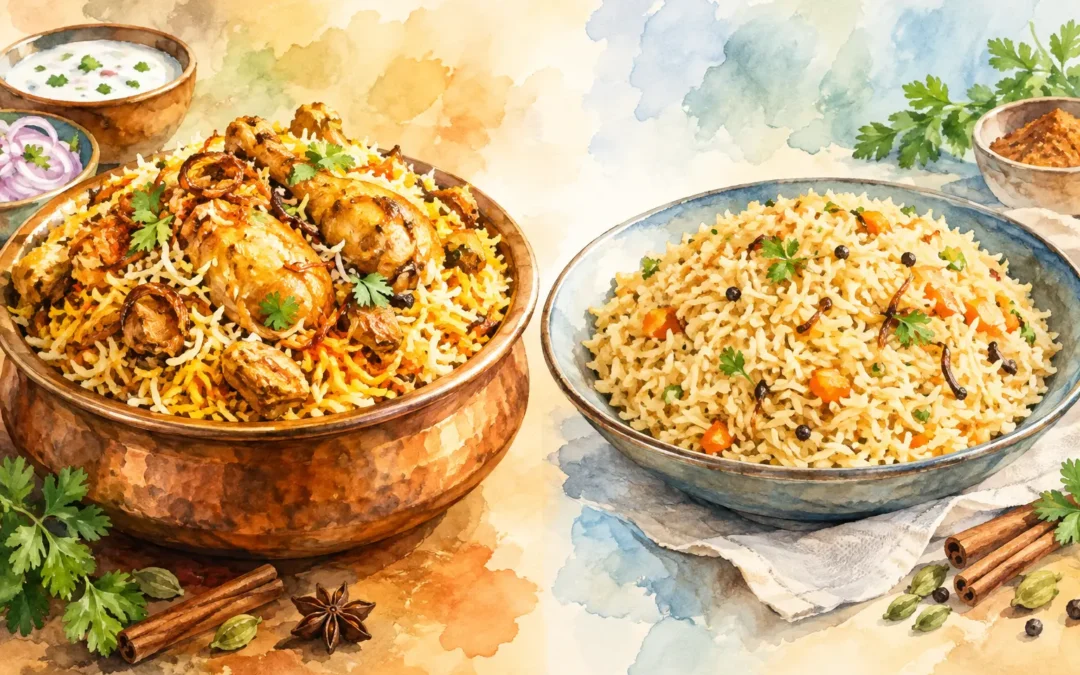
A generous spoonful of fragrant rice can completely change a curry night. Yet when choosing between biryani versus pilau rice, the decision is not simply about which one has more spice. These are two distinct dishes with different cooking methods, textures and roles on the table. One is designed to be a meal in itself; the other is a flavourful, dependable partner for your favourite curry.
At Worthing Indian Cafe & Bar, we believe good Indian food should feel special without being complicated. Knowing the difference helps you order with confidence, whether you are planning a relaxed dine-in meal, a quick takeaway or a feast for friends at home.
Biryani versus pilau rice: the essential difference
Biryani is a layered rice dish, usually made with basmati rice, aromatic spices and a main ingredient such as chicken, lamb, vegetables or paneer. It is carefully cooked so that the rice absorbs the flavours of the spiced filling while each grain remains separate. Depending on the regional style, biryani may include fried onions, saffron, fresh herbs, yoghurt, nuts or dried fruit.
Pilau rice, also known as pulao in many parts of India, is seasoned rice served as an accompaniment. It is typically cooked with basmati rice, whole spices and ingredients such as turmeric, cumin, cardamom, cloves and bay leaf. The result is lightly coloured, fragrant rice with a gentle savoury flavour that supports rather than competes with the main dish.
Put simply, biryani is the centrepiece. Pilau rice is the side that makes a curry even better.
How biryani gets its depth of flavour
A good biryani takes time because its character comes from building flavour in stages. The meat or vegetables are commonly marinated first, often with yoghurt, ginger, garlic and a carefully balanced spice blend. The rice is partly cooked separately, then layered with the filling before everything finishes cooking together.
This final stage is often called dum cooking. The pot is sealed or covered tightly so steam circulates inside, gently bringing the layers together. It is a simple idea, but it requires care. Too much moisture can make the rice soft and heavy; too little can leave parts of the dish dry. Done well, it creates tender meat or vegetables, aromatic rice and pockets of flavour throughout every serving.
Biryani spices are often warmer and more complex than those used in pilau rice. You may taste cardamom, cinnamon, cloves, cumin, coriander, black pepper and bay leaf, alongside the richness of caramelised onions and herbs. Saffron may add colour and a subtle floral aroma, though recipes differ widely across India and beyond.
Because it already contains a filling, biryani is substantial. A side of cooling raita, fresh salad or a tangy pickle is usually all it needs. It can certainly be served with curry, but a heavily sauced or intensely spiced curry can overwhelm the more delicate layers in the biryani itself.
Why no two biryanis taste exactly alike
Biryani has many regional interpretations. Some are fragrant and relatively mild, while others are hotter, richer or more herb-led. A chicken biryani may feel lighter than a lamb version, while a vegetable biryani can be wonderfully satisfying when it is made with fresh vegetables and well-seasoned rice.
This variety is part of the appeal. If you want a dish with plenty to discover in every forkful, biryani is a strong choice. It also travels well for takeaway, making it a practical option for a full meal at home.
What makes pilau rice a curry-house favourite
Pilau rice is more modest in appearance, but it has an important job. Its mild spice, fluffy texture and warm aroma make it an excellent match for saucy curries, grilled dishes and vegetable sides. It adds more interest than plain boiled rice without taking attention away from the dish you have chosen as your main.
The yellow colour often comes from turmeric, although some recipes use saffron or food colouring. The best pilau rice should never taste overly perfumed or artificial. Instead, it should have a clean basmati fragrance, separate grains and a light seasoning from whole spices.
Pilau rice is particularly useful when several dishes are being shared. A table with a creamy korma, a rich tikka masala, a lentil dish and a drier tandoori-style main benefits from a bowl of rice that works with all of them. It gives everyone an easy, satisfying base without turning the meal too heavy.
It is also the more flexible choice for families and groups with different spice preferences. Children or diners who prefer gentler flavours can enjoy pilau rice with a mild curry, while those wanting more heat can pair it with a madras, jalfrezi or spicy vegetable dish.
Texture, richness and portion size
The texture is one of the clearest differences in biryani versus pilau rice. Both should use long-grain basmati and both should be fluffy rather than sticky. However, biryani has more variation from bite to bite. You may get soft, spice-coated rice near the filling, crisp fried onions on top, juicy pieces of chicken or lamb, and the occasional burst of herb or saffron.
Pilau rice is more consistent. Each spoonful should be light, gently seasoned and ready to carry curry sauce. That consistency makes it especially satisfying alongside dishes with plenty of gravy.
Biryani is also richer and more filling. For one person, it is often a complete main course. Pilau rice is generally ordered to share or as an individual side, depending on the rest of the meal. If you are ordering several curries, starters and breads for the table, pilau rice keeps the balance right. If you want one hearty dish with minimal extras, choose biryani.
Which should you order with curry?
There is no fixed rule, but the type of curry matters. Pilau rice is usually the better match for curries with a generous sauce, such as korma, bhuna, rogan josh, tikka masala or dhal. The rice absorbs the sauce beautifully while its own spice remains gentle.
Biryani works best with lighter accompaniments. Raita is ideal because its cool yoghurt freshness balances the warmth of the spices. A crisp salad, pickle or a simple vegetable side can also add contrast without making the meal feel crowded.
If you cannot decide, consider what you want from the meal. Order pilau rice when the curry is the main event. Choose biryani when the rice dish itself is what you are craving.
A simple guide for takeaway orders
For a weekday curry night, pilau rice is an easy choice with your usual favourite curry. It is comforting, familiar and suitable for sharing. For a meal where you want something more complete, perhaps after a busy day or for a relaxed Friday evening, biryani offers satisfying depth in one dish.
For groups, it can work well to order both. One biryani gives the table a hearty rice-based main, while pilau rice ensures there is enough to enjoy with curries and sides. This is especially useful when guests have different tastes or when you are arranging food for a small celebration.
Is biryani spicier than pilau rice?
Not always, but biryani is usually more intensely flavoured. Its spices are layered through the rice and filling, so it has a fuller, more aromatic taste. Heat levels vary according to the recipe and the main ingredient, while pilau rice is generally mild.
A well-made biryani should not rely on chilli alone. The pleasure comes from the balance of warm spices, savoury ingredients, fragrant rice and freshness from herbs. Likewise, pilau rice should be aromatic rather than fiery, leaving room for the flavours of your curry to shine.
The right rice for the kind of meal you want
Biryani and pilau rice are both rooted in the same love of fragrant basmati, traditional spices and carefully prepared food. Their difference lies in purpose. Biryani brings layers, richness and enough flavour to stand alone. Pilau rice brings balance, versatility and the perfect base for a fresh, authentic curry.
For your next order, let the rest of the table guide you: choose biryani when you want the rice to take centre stage, and pilau rice when you want every spoonful of curry to go further.