
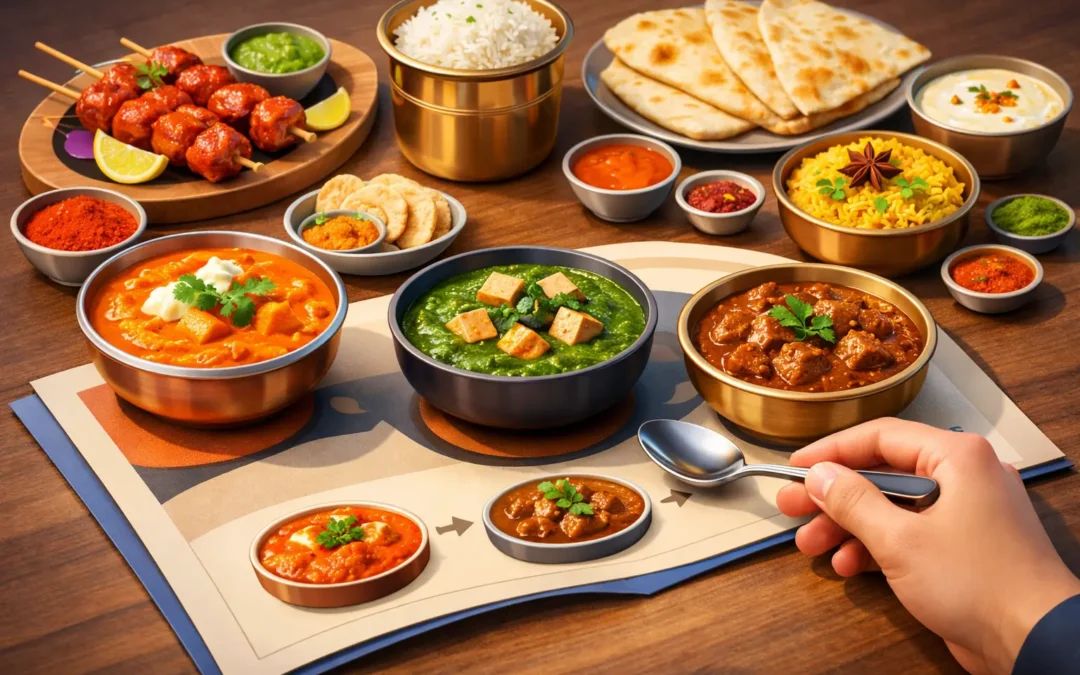
Standing in front of a full Indian menu can feel like choosing between ten dishes that all sound brilliant. If you have ever wondered how to choose Indian curry without playing it safe every time, the good news is that it is much easier once you know what actually changes from one curry to the next. Heat matters, of course, but so do texture, richness, sweetness, and the way different spices come through.
A good curry choice is not about ordering the hottest dish or picking the most familiar name. It is about matching the dish to your appetite, your mood, and how hungry you are. Some curries are light and fragrant, some are rich and comforting, and some are built around a deeper, slower heat that grows as you eat.
How to choose Indian curry by flavour, not just heat
The most common mistake is treating every curry as part of one simple spice scale. In reality, two medium-hot curries can taste completely different. One might be creamy and slightly sweet, while another could be tangy, tomato-led and packed with garlic.
If you usually ask for something mild, think about whether you want a gentle creamy sauce or a lighter dish where spice and herbs do more of the work. If you enjoy hotter food, ask yourself whether you want a clean chilli kick or a richer sauce with warmth that builds slowly. That small shift makes ordering much easier.
Korma, for example, is mild and smooth, often with a creamy texture and a softer spice profile. Tikka masala is also approachable for many diners, but it tends to be a little more tomato-led and rounded. Jalfrezi brings more bite, often with peppers and onions, while madras is known for a fuller, hotter finish. Bhuna sits differently again, usually thicker and more concentrated, with less sauce and a deeper spiced flavour.
Start with the sauce style you enjoy
If you are unsure where to begin, sauce style is often the best guide. People usually know more about what they enjoy than they realise. You may already prefer creamy sauces, lighter tomato-based dishes, or meals with a dry, rich finish.
If you like creamy and mellow
Choose dishes such as korma or butter-style curries. These tend to feel comforting and easy-going, with gentle spice and a smooth texture. They are a strong choice if you are new to Indian food, ordering for children, or simply want something relaxed after a long day.
The trade-off is that milder creamy curries let less chilli and sharp spice come forward. If you want more complexity without going too hot, a tikka masala can be a good middle ground.
If you like rich and balanced
Bhuna and dopiaza-style dishes often suit diners who want plenty of flavour without too much creaminess. A bhuna is usually thicker and more concentrated, while a dopiaza often highlights onions and savoury depth. These are good options when you want something hearty that still feels balanced.
If you like fresh, tangy flavours
Tomato-based and slightly sharper curries can feel lighter on the palate, even when they still carry good warmth. Jalfrezi is a well-known example, often cooked with onions, peppers and green chillies for a brighter finish. If you enjoy dishes that taste lively rather than heavy, this style is worth choosing.
If you want proper heat
Madras and vindaloo are the names many people know for spice. Madras usually offers strong heat with depth, while vindaloo is typically hotter and sharper. These dishes can be very satisfying if you enjoy chilli, but heat should not be the only reason to order them. If you want to taste layers of spice as well as the fire, a madras is often the more rounded choice.
Match the curry to your main ingredient
Once you know the sort of sauce you want, think about the ingredient at the centre of the dish. Chicken, lamb, prawns, paneer and vegetables all behave differently in a curry.
Chicken works well in almost anything because it takes on flavour easily and suits both creamy and spicier sauces. If you are undecided, it is usually the safest place to start.
Lamb is richer and deeper, so it pairs especially well with sauces that have body and warmth. Bhuna, rogan-style and other full-flavoured curries can suit lamb beautifully because the meat stands up well to stronger spice.
Prawns often shine in lighter, fresher curries where their flavour is not buried under heavy cream or too much chilli. That does not mean they cannot work in hotter dishes, but balance matters more.
Paneer and vegetables can go either way. In a creamy sauce they feel comforting and satisfying, while in a drier or more spiced curry they can taste brighter and more defined. If you want a vegetarian choice that still feels substantial, paneer in a medium curry is often a very reliable option.
Consider what you are eating it with
A curry never arrives on its own in real life. Rice, naan, chips, poppadoms and sides all change the experience. This matters more than many people think.
If you are planning naan and perhaps a starter as well, a rich curry can work nicely because the bread helps balance it. If you want pilau rice and a lighter meal, a sauce that is less creamy may feel better overall. Hotter curries also become more manageable with rice, yoghurt-based sides or a plain naan on the table.
This is where value matters too. The best order is not always the biggest or hottest curry on the menu. It is the one that gives you a satisfying meal when everything on the table works together.
How to choose Indian curry for different occasions
What suits a Friday takeaway may not be what you want for a quick midweek dinner. The right curry often depends on the occasion.
For a quiet evening at home, many people want something comforting and familiar. A korma, tikka masala or bhuna often fits the bill because the flavours are generous and dependable.
For a group meal, it makes sense to choose contrast rather than order four versions of the same dish. One mild curry, one medium, and one hotter option usually gives everyone something to enjoy. Add a vegetarian dish and a couple of sides, and the whole meal feels more complete.
For dine-in meals or relaxed weekends, it can be the right time to try something less familiar. If you usually stay with creamy curries, move towards a bhuna or jalfrezi. If you always order hot, try something with more aromatic spice and less chilli-led heat. You often find a new favourite by shifting one step, not five.
A simple way to order if you are unsure
If menus leave you torn between two or three dishes, narrow it down with three questions. Do you want creamy or not creamy? Mild, medium or hot? Chicken, lamb, prawns, paneer or vegetables?
That approach strips away the guesswork. Once you answer those, most of the menu starts making sense. If you want creamy, mild and chicken, you are in korma or tikka masala territory. If you want medium heat, rich texture and lamb, bhuna may be a better fit. If you want something hotter and brighter, jalfrezi or madras could be the answer.
At Worthing Indian Cafe & Bar, that is exactly how many customers find the right dish – not by memorising every curry name, but by choosing the flavour and style they actually fancy.
Common myths about choosing curry
One myth is that mild means bland. A well-made mild curry should still have depth, fragrance and warmth from authentic Indian spices. It is simply not driven by chilli heat.
Another is that hotter always means more authentic. It does not. Indian cooking is full of regional variation, and authenticity is about balance, ingredients and preparation, not just fire.
There is also a tendency to order the same curry forever once you find one you like. There is nothing wrong with that, especially if you know exactly what satisfies you. But if you want to branch out, the smart move is to order a neighbouring dish on the flavour spectrum rather than jumping to the hottest or most unfamiliar option.
The best curry is the one that suits your taste
Learning how to choose Indian curry really comes down to knowing your own palate. Think about sauce first, then spice level, then the main ingredient, and finally what else you are eating alongside it. That gives you a much better result than choosing by name alone.
If you keep it simple, you are far more likely to enjoy what arrives. And once you understand the difference between creamy, rich, tangy and hot, the menu stops feeling complicated and starts feeling full of good options.