
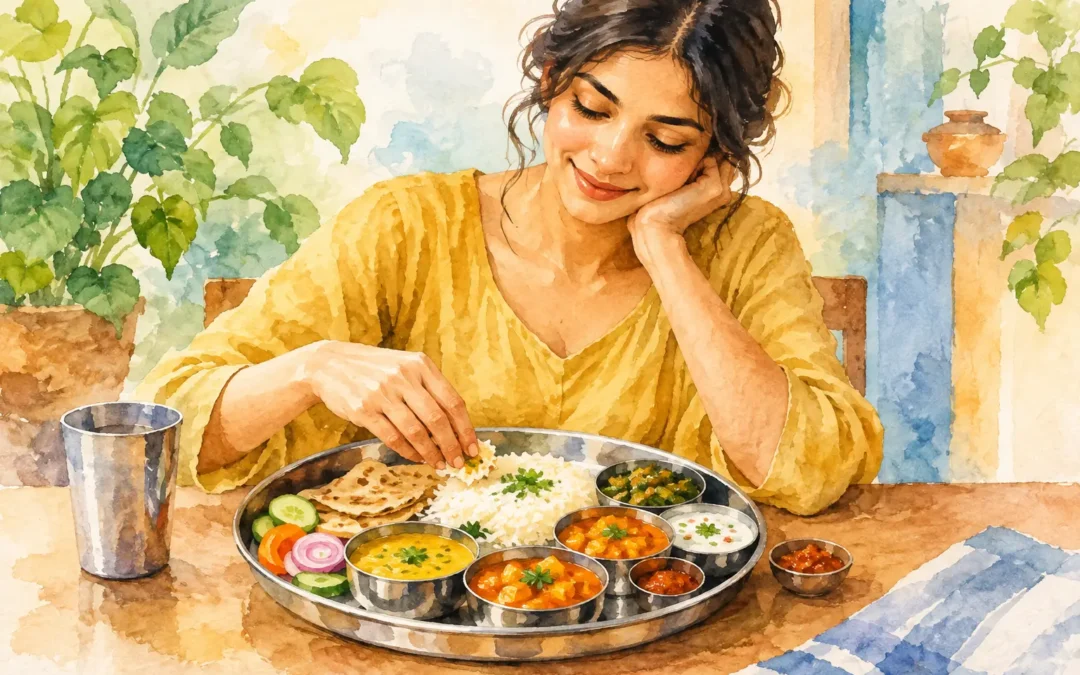
A thali arrives looking generous for good reason: it is designed to give you several flavours, textures and dishes in one satisfying meal. If you are wondering how to eat thali meals, the reassuring answer is that there is no test to pass. Start with what looks good, taste each bowl, and build each bite around the combinations you enjoy most.
A traditional thali is about balance. You may find a fragrant curry, lentils, vegetables, rice, freshly made bread, pickle, yoghurt and something sweet, all served together. Some dishes are comforting and mild, while others are rich, tangy or warmly spiced. The pleasure comes from moving between them rather than treating the meal as a set course.
What a thali meal is designed to offer
The word thali refers to the plate or tray, but it has also come to describe the complete meal served on it. The exact selection varies across India and between restaurants. A North Indian-style thali may include dal, a paneer or meat curry, roti, rice and raita. A South Indian thali might lean towards sambar, rasam, vegetable preparations, chutneys and rice.
That variety is the point. A rich curry can be softened with cooling yoghurt. Earthy dal pairs beautifully with rice. A sharp pickle adds a small burst of heat and acidity when a bite needs lifting. You do not need to mix everything at once. Think of the thali as a table of flavours on one plate, ready for you to combine as you go.
How to eat thali meals step by step
Begin by taking a small taste of each dish. This gives you a sense of the spice level and helps you decide what you want more of. If you have children, are new to Indian food, or simply prefer gentler flavours, start with the rice, dal and yoghurt-based sides before moving to the hotter dishes.
Next, choose your base. Rice works especially well with dal, saucier curries and rasam. Tear off a piece of roti, naan or chapati if it is included, then use it to scoop thicker curries and vegetable dishes. There is no need to rush through one bowl before trying another. Alternate between bites to keep the meal interesting.
A simple first combination could be rice with a spoonful of dal and a little curry. Try a separate bite of bread with paneer, chickpeas or a dry vegetable dish. Add only a tiny amount of pickle or chutney at first, as these are usually concentrated in flavour. A little can transform a mouthful; too much can hide the careful spices in the rest of the food.
Mix with care, not all at once
Mixing rice with dal or curry is completely natural, but it is best to do it in small portions. This lets you enjoy the individual dishes and keeps the flavours clear. If one curry is hotter than expected, mix it with more rice or add raita rather than abandoning it.
The same approach works with a vegetarian or non-vegetarian thali. There is no fixed order requiring you to eat the vegetable dish first, then the curry, then the dal. Follow your appetite. Many people begin with savoury dishes and save the sweet item for the end, but that is preference rather than a rule.
Use your hands or cutlery, whichever feels right
In many parts of India, thali meals are traditionally enjoyed with the right hand. It is a practical way to tear bread, gather rice and feel the texture of each bite. Use your fingertips to bring together a small amount of food, rather than your whole palm, and keep the portions manageable.
That said, cutlery is absolutely fine. A spoon is useful for dal, rice and saucy curries, while a fork can help with vegetables and bread. At a restaurant, choose the method that helps you relax and enjoy the food. Good hospitality matters more than following a ritual perfectly.
If you do eat with your hands, use the right hand for food and keep the left hand aside where possible. Wash your hands before and after the meal. These small points show consideration, especially when sharing dishes with friends or family.
Make the most of the sides
The smaller accompaniments on a thali are not decoration. Raita, salad, chutney, pickle and papad each have a job to do. Raita cools and softens heat, while crisp papad brings crunch to a softer meal. Fresh salad gives a clean contrast to richer curries.
Pickles can be spicy, salty and sharp, so use them sparingly. Take a pea-sized amount with rice or bread, then adjust on the next bite. Chutneys vary widely too: mint may feel fresh and cooling, tamarind can be sweet and tangy, and coconut chutney is often mellow and fragrant.
If there is a dessert, enjoy it after the savoury dishes or alongside a cup of chai. A small sweet finish is often enough after the range of flavours on the tray.
Find your ideal pace and spice level
A thali is best eaten at an unhurried pace. It is a full meal, and the dishes may be more filling than they first appear. Eat the fresher items while they are at their best, then return to the curries and rice as you settle into the meal. If you are sharing a thali-style spread, order enough bread and rice for the table rather than relying on one portion to stretch too far.
Do not feel pressure to finish every last spoonful if you are full. Equally, do ask for extra rice or bread if you have plenty of curry left. The right balance depends on the dishes chosen, your appetite and whether you are enjoying the thali as a weekday lunch or a relaxed evening meal.
When ordering, tell the team if you prefer mild food or have dietary requirements. Indian food offers plenty of choice, but heat, ingredients and preparation can differ from dish to dish. A clear conversation helps you find a thali that suits you, whether you are vegetarian, avoiding dairy, or looking for a more adventurous mix of regional flavours.
A thali is better when you stay curious
The best way to enjoy a thali is to try a little, notice what works, then make the next bite your own. Perhaps the dal becomes your comfort dish, the pickle your favourite surprise, or the fresh bread the thing you keep reaching for. Every thali has its own character, shaped by regional cooking, traditional spices and the care taken in the kitchen.
At Worthing Indian Cafe & Bar, we believe Indian food should feel authentic, fresh daily and easy to enjoy, whether you are sitting down with family or collecting dinner after work. Order a thali when you want variety on one plate, take your time with it, and let your own taste lead the way.