
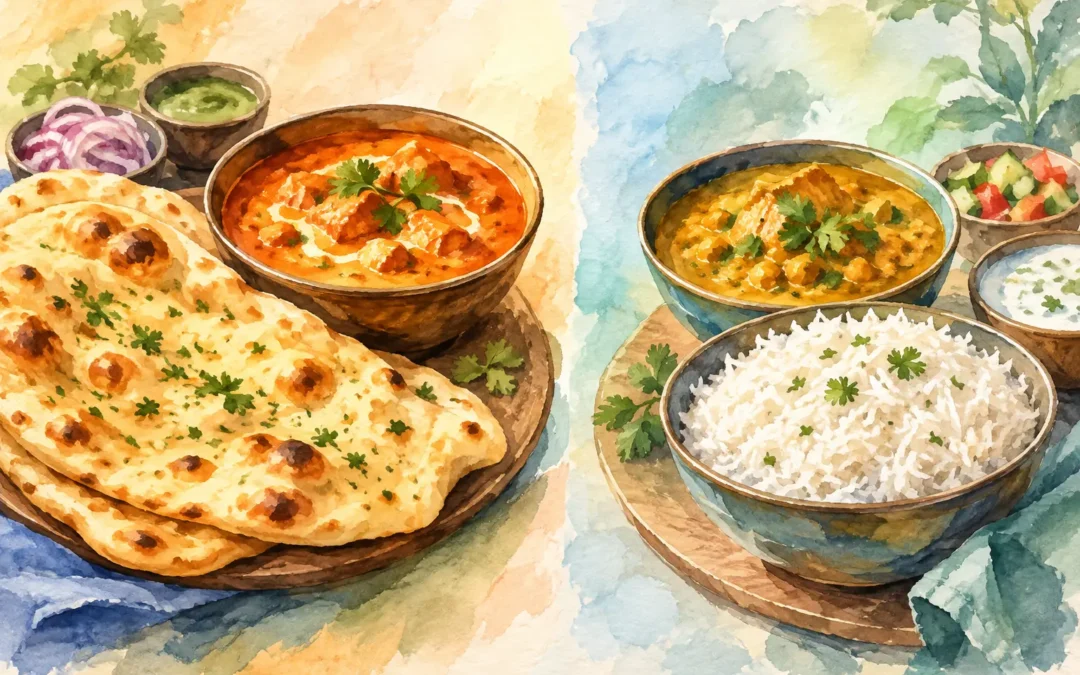
A rich, slow-cooked curry arrives at the table, fragrant with toasted spices and ready to be enjoyed. The only question is what should go alongside it. When it comes to naan bread vs rice meals, there is no single right answer. The best choice depends on the curry, your appetite, who you are sharing with and whether you are dining in or settling down with a takeaway at home.
Both naan and rice have an important place in Indian cooking. They do different jobs, bring different textures to the meal and can completely change how you enjoy the same dish. Here is how to choose with confidence.
Naan bread vs rice meals: the key difference
Naan is warm, soft and satisfying, with a lightly charred surface that works beautifully with saucy dishes. Traditionally cooked at high heat, it has a gentle chew and a fuller flavour than plain rice. It is made for tearing, scooping and sharing around the table.
Rice is lighter in texture and lets the flavours of a curry take centre stage. Long grains of basmati bring a delicate aroma, while pilau rice adds colour and gentle seasoning. Rice also spreads the sauce through every forkful, making it a natural choice for curries with plenty of gravy.
Put simply, naan makes a meal feel generous and sociable. Rice makes it feel balanced, fragrant and easy to eat. Neither is better in every situation, which is exactly why a good Indian meal often gives you a choice of both.
When naan is the best choice
Choose naan when the curry is thick, creamy or designed to be scooped. Dishes such as butter chicken, korma, tikka masala and paneer curries work especially well with a fresh naan. The bread catches every bit of sauce, so none of those carefully prepared spices are left behind on the plate.
Naan is also a strong choice for sharing. If a couple, family or group orders several curries, a basket of naan makes the table more relaxed and communal. Tear off a piece, try a little of each dish and find your favourite combination. It is one of the simple pleasures of Indian dining.
There are different naan styles for different tastes. Plain naan is a reliable all-rounder, while garlic naan adds a savoury lift to mild, creamy curries. Peshwari naan, with its sweet coconut and fruit filling, can offer a welcome contrast to a hotter dish. Keema naan is more substantial and suits diners looking for a heartier meal.
Because naan is richer and more filling, it can be ideal when you want a proper comfort-food supper. It is less practical, however, if you are ordering several starters, sides and a large main each. In that case, one naan to share may be all you need.
Naan and spicy curries
A plain or garlic naan can soften the heat of a bold curry without covering its flavour. The bread gives you a calmer bite between spoonfuls, particularly with dishes that feature chilli, black pepper or warming whole spices. For diners who enjoy heat but want to keep the meal comfortable, naan is often a helpful partner.
That said, sweet naan alongside a very sweet or creamy curry can make the meal feel heavy. A sharper dish, such as a tomato-led curry or a punchy tandoori main, usually provides better contrast.
When rice is the best choice
Rice is the natural partner for curries with lighter, looser sauces. Think of a classic madras, jalfrezi, dhansak or a lentil-based dish. The grains absorb the sauce and spices while keeping the meal from becoming too rich.
Basmati rice is especially good when you want to appreciate the curry itself. It has a subtle fragrance but does not compete with the flavours in the bowl. If you have ordered a dish with carefully balanced regional spices, rice gives those details room to come through.
Pilau rice brings more flavour to the plate, often with gentle turmeric, whole spices and a savoury aroma. It works well with a straightforward curry when you want the accompaniment to have a little more character. With a heavily spiced or very aromatic main, plain basmati may be the better match, as it keeps the overall meal balanced.
Rice can also feel like the easier option for a weekday takeaway. It travels well, is simple to portion and reheats more reliably if there are leftovers. For families ordering several dishes, separate portions of rice can make serving straightforward without filling the table with too much bread.
Rice and saucy dishes
If your favourite part of a curry is its sauce, rice is difficult to beat. Each spoonful carries a little sauce, a little rice and a consistent level of spice. This is particularly satisfying with dishes that have lentils, chickpeas or tender pieces of meat in a generous gravy.
Rice is also useful when you have ordered a selection of side dishes. A spoonful of rice can sit comfortably beside a vegetable curry, dal or raita, helping the flavours work together without making the meal overly filling.
Should you order naan and rice together?
Very often, yes. Ordering both is not excessive when the meal is being shared or when there are several curries on the table. Rice gives you a light base for saucy dishes, while naan is there for the thicker curries, the last delicious spoonfuls of sauce and the moments when you want a more indulgent bite.
A useful approach for two people is to choose one rice and one naan alongside two mains. That gives variety without creating too much food. For a family meal or a group order, add accompaniments according to the number of curries and starters rather than automatically ordering one of everything per person.
The choice also depends on what else is in the order. If you are starting with samosas, onion bhajis or mixed grills, rice may keep the main course feeling lighter. If you are having a simple curry and a side dish, naan can turn it into a more substantial meal.
How to match accompaniments to popular dishes
Creamy curries generally welcome naan. A chicken tikka masala, butter chicken or mild vegetable korma gains texture from soft, warm bread. Garlic naan is particularly good where the sauce is smooth and rich.
Hotter, tomato-based curries often suit basmati rice. A madras or jalfrezi has enough spice and depth to carry the meal, while the rice absorbs the sauce and gives each bite a clean finish. Pilau rice can be a good option when you want a slightly more fragrant accompaniment.
Tandoori dishes are flexible. Chicken tikka, lamb chops or paneer cooked in the tandoor can be enjoyed with naan for a satisfying wrap-like bite, or with rice and a curry sauce on the side. Add a fresh salad or cooling raita if you want contrast against the smoky char.
For vegetarian meals, the decision comes down to texture. Dal and chickpea dishes are excellent with rice, as the grains soak up the lentil-rich sauce. Paneer dishes and thicker mixed vegetable curries are often especially enjoyable with naan. There is plenty of room to mix and match.
Making the right choice for takeaway
A restaurant meal gives you the pleasure of naan at its freshest, straight from the kitchen while it is soft and warm. With takeaway, naan still makes a brilliant addition, particularly when eaten soon after collection or delivery. Keep it wrapped until serving so it stays warm, then tear and share it at the table.
Rice is the practical choice if dinner may be delayed, if you are feeding children at different times, or if you would like leftovers for the next day. Store any remaining food safely, cool it promptly and reheat until piping hot before serving.
At Worthing Indian Cafe & Bar, fresh daily ingredients, authentic Indian spices and dependable portions make either option easy to enjoy. Choose the accompaniment that fits your meal rather than treating it as an afterthought.
The best Indian meals are built around what you feel like eating. Pick naan when you want warmth, richness and something to share. Pick rice when you want fragrance, balance and a generous curry sauce in every bite. Or order both, gather everyone round and let the table decide.