
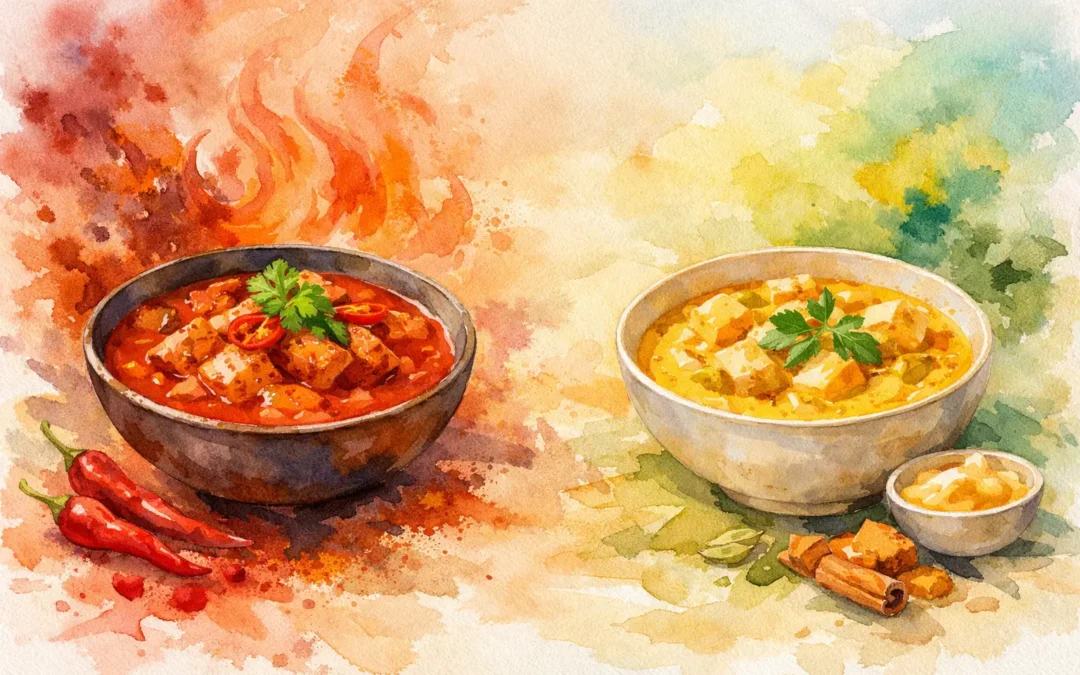
The first spoonful should make you want another, not send you searching for the nearest glass of water. Choosing spicy curry or mild curry is not simply a question of how much heat you can handle. It is about flavour, texture, appetite and the kind of meal you want to enjoy.
Indian food offers far more than a single scale from gentle to fiery. Fresh aromatics, toasted spices, slow-cooked onions, tomatoes, yoghurt, cream, herbs and chillies all play their part. A well-made curry should taste balanced at every spice level, whether you prefer a comforting mild dish or a curry with a proper chilli kick.
Spicy Curry or Mild Curry: The Difference Is Flavour
Heat comes mainly from chillies, but spice is much broader than heat alone. Cumin can taste warm and earthy, cardamom can be fragrant and slightly sweet, while coriander brings a fresh citrus note. Turmeric adds colour and a gentle earthiness. These ingredients create the character of a curry long before chilli enters the picture.
A mild curry does not mean a plain curry. Many mild dishes are rich with carefully layered spices, especially when cooked with fresh ginger, garlic, onions and tomatoes. Cream, yoghurt, coconut or ground nuts can soften sharper notes and create a smooth, satisfying sauce without hiding the traditional flavours.
A spicy curry, meanwhile, should not just be hot for the sake of it. The best hotter dishes allow the flavour of the meat, vegetables or paneer to come through, with chilli adding warmth and energy rather than overwhelming the whole plate. When the heat is balanced, it can make the savoury, tangy and aromatic elements taste even more vivid.
When a Mild Curry Is the Right Choice
Mild curries are a dependable choice when you want comfort, richness and plenty of flavour without a strong chilli finish. They work particularly well for a relaxed weekday meal, a family order with different tastes around the table, or anyone trying Indian cuisine for the first time.
Dishes such as korma-style curries, butter chicken and creamy paneer dishes are often chosen for their gentle warmth and fuller texture. They can be especially enjoyable with fragrant rice, naan or chapati, which help you make the most of every bit of sauce.
Mild food is also useful when you are ordering several dishes to share. A gentler curry can sit alongside a hotter dish, providing contrast and giving everyone at the table something they can enjoy. It is a simple way to make a mixed order feel generous rather than risky.
Do not assume that mild always means sweet. Some mild curries have a subtle sweetness from onions, coconut or cream, while others are savoury, tangy or delicately spiced. If you prefer less heat but do not want a creamy dish, ask for a recommendation based on the flavours you enjoy.
Choose mild if you want to taste every layer
A mild curry is often the better pick when you are in the mood to notice finer flavours. The freshness of coriander, the warmth of garam masala and the gentle sharpness of ginger can be easier to spot when chilli is kept lower. This makes mild dishes a good match for diners who value aroma and depth over intensity.
They are also easier to pair with starters, sides and drinks. If you have ordered spicy street food, a mild main can bring the meal back into balance. A cooling yoghurt-based side can help too, but it is usually more enjoyable to choose a heat level that suits you from the beginning.
When a Spicy Curry Hits the Spot
There are nights when a mild curry simply will not do. A hotter dish can feel warming, lively and deeply satisfying, particularly when you enjoy the slow build of chilli rather than an instant blast of heat. For many curry lovers, that warmth is part of the experience.
Classic hotter choices often feature green chillies, dried red chillies, black pepper or a stronger blend of ground spices. Vindaloo-style dishes are known for heat and tang, while madras-style curries commonly bring a bolder, warmer character. Jalfrezi-style dishes can offer a fresher heat, with peppers, onions and chillies adding texture as well as spice.
However, every kitchen has its own recipe and its own interpretation of heat. One restaurant’s medium can be another person’s hot. A good approach is to order within your usual comfort zone, especially if you have not tried a dish before, then go hotter on your next visit if you want more intensity.
Heat should support the dish, not defeat it
If your eyes are watering before you can taste the curry, the spice level may be working against the meal. There is no prize for choosing the hottest option when it stops you enjoying the food. A medium curry can often be the sweet spot: warm enough to feel exciting, but balanced enough to appreciate the sauce and ingredients.
Spicy curries pair well with plain basmati rice, naan and cooling accompaniments. These are not just ways to tame the heat. They also make the meal more rounded, helping you enjoy a bold curry at an easy pace.
How to Find Your Ideal Spice Level
Your ideal order depends on more than your usual tolerance for chilli. Think about what you have eaten earlier in the day, whether you are sharing, and what else is on the table. A hot curry after a rich starter can feel much stronger than the same dish on its own.
If you are uncertain, choose a medium dish or ask for the heat to be adjusted where possible. It is easier to add a little more warmth than to take it away. This is particularly helpful for takeaway and delivery, where you want your meal to arrive ready to enjoy without second guessing your choice.
It also helps to consider the main ingredient. Delicate vegetables, fish and paneer can suit gentler sauces that let their texture shine. Lamb and chicken often stand up well to deeper, stronger spice blends. That said, there are no fixed rules. The dish you will enjoy most is the right one.
For a group order, variety is usually the answer. Choose one mild curry, one medium option and one hotter dish, then add rice, breads and a few sides. It gives everyone a chance to try something different and makes the meal feel more like a proper shared occasion.
Fresh Ingredients Make Every Spice Level Better
Whether a curry is mild or hot, freshness matters. Freshly prepared onions, ginger, garlic, herbs and handpicked produce create a brighter, cleaner flavour. Traditional Indian spices need careful cooking too. When they are properly bloomed in the pan, they release aroma and depth instead of tasting dusty or harsh.
That attention to preparation is what makes a gentle curry feel full of character and a spicy curry feel rounded rather than aggressive. At Worthing Indian Cafe & Bar, dishes are prepared with fresh daily ingredients and authentic Indian spices, so there is plenty to enjoy at every level of heat.
A good curry should leave you satisfied, not challenged. If you enjoy creamy comfort, choose mild with confidence. If you want warmth that builds with every bite, go for a medium or spicy favourite. Order the flavour that suits your evening, share a few dishes when you can, and let your next curry be exactly as hot as you want it to be.