
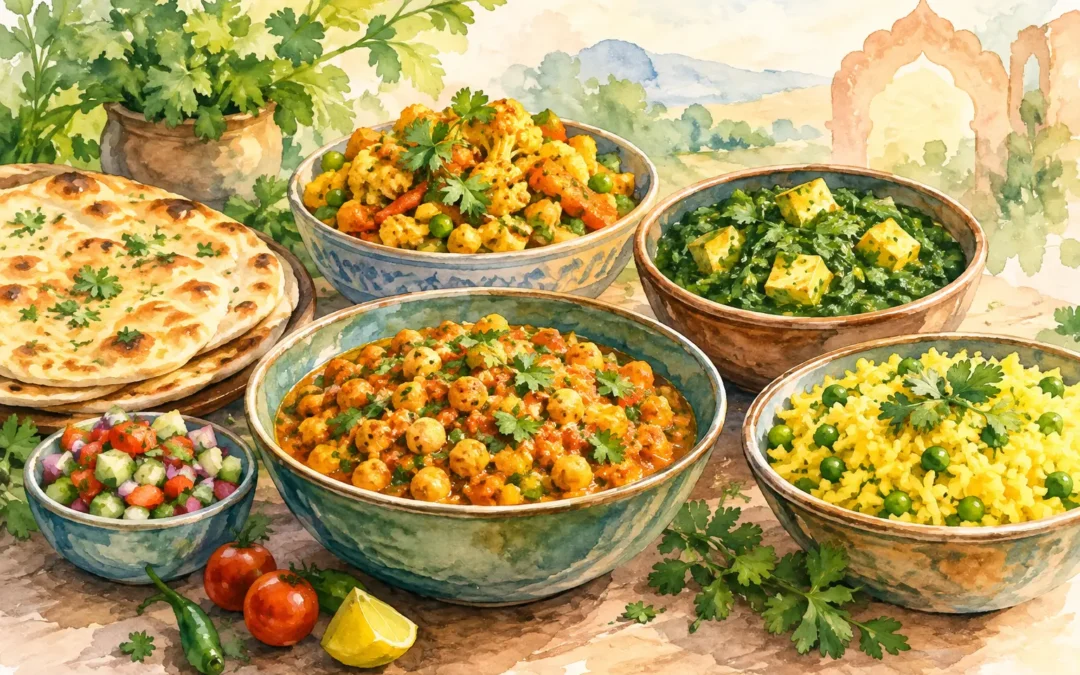
A great vegan meal should feel generous, not like a compromise. The best vegan Indian dishes do exactly that: warming spices, slow-cooked lentils, tender vegetables, bright chutneys and satisfying breads come together in food that is naturally full of character. Whether you are vegan every day, cooking for someone with dietary preferences, or simply choosing a lighter meal, Indian cuisine offers plenty to look forward to.
At its heart, Indian cooking makes brilliant use of vegetables, pulses, rice, herbs and spices. Many familiar recipes are already plant-based or can be made vegan with a few thoughtful changes. The key is not to remove flavour, but to build it properly with fresh ingredients, toasted spices and careful cooking.
Why vegan Indian dishes are so satisfying
Vegan food works especially well in Indian cuisine because pulses and vegetables are not treated as side dishes. Chickpeas, lentils, potatoes, aubergine, spinach, cauliflower and peas can all take centre stage. They provide texture and substance, while spice blends bring warmth, depth and aroma.
A good curry is also about balance. Tomatoes can add gentle sweetness and acidity; ginger and garlic bring a savoury edge; cumin, coriander and turmeric give warmth; fresh coriander, lemon and green chilli lift the finished dish. Coconut milk, ground cashews or blended lentils can create a rich texture without relying on cream or yoghurt.
That does not mean every Indian dish is automatically vegan. Ghee, butter, cream, paneer and yoghurt are common in some recipes, while naan may contain dairy or egg. It is always worth checking how a dish is prepared, particularly when ordering a takeaway or dining out. A restaurant that prepares food fresh daily can often advise on suitable choices or adjustments, but it depends on the recipe and kitchen process.
Vegan Indian dishes worth ordering or making
Chana masala
Chana masala is one of the most dependable vegan favourites. Chickpeas are simmered in a tangy, well-spiced tomato and onion sauce, often with cumin, coriander, ginger, garlic and a squeeze of lemon. It is hearty enough for dinner yet fresh enough not to feel heavy.
Serve it with steamed basmati rice, a vegan-friendly roti or chapati, and a crisp salad. For a more filling meal, add a side of aloo gobi or a spoonful of mixed pickle. The quality of the chickpeas matters here: they should be tender but still hold their shape, rather than disappearing into the sauce.
Dal tadka
Dal is comfort food in its most useful form. Yellow lentils, red lentils or a mixture of both are cooked until soft, then finished with a fragrant tadka – hot oil infused with spices such as cumin seeds, mustard seeds, garlic, dried chilli and curry leaves.
It may sound simple, but the final tempering makes all the difference. The spices bloom in the hot oil and release their aroma directly into the dal. A bowl of dal with rice is a satisfying weekday meal, while dal served alongside a vegetable curry creates a generous table for sharing.
Aloo gobi
Aloo gobi brings together potatoes and cauliflower with turmeric, cumin, tomatoes and warming spices. It can be dry and lightly spiced, or cooked with a little more sauce depending on the region and the kitchen. Either way, it proves that straightforward ingredients can deliver serious flavour.
This is a particularly good choice for people who prefer a milder curry. Ask for extra chilli if you enjoy more heat, or pair it with a cooling plant-based accompaniment where available. Because potatoes and cauliflower absorb spices beautifully, the dish remains flavourful without needing a rich sauce.
Baingan bharta
For something with a deeper, smokier character, baingan bharta is hard to beat. Aubergine is roasted until soft, then cooked with onions, tomatoes, ginger, garlic and traditional spices. The roasting gives it a savoury, almost charred depth that feels very different from a typical vegetable curry.
Texture is part of its appeal. It should be soft and spoonable, but not bland or watery. Enjoy it with rice or flatbread and something sharp on the side, such as lemon, onion salad or a fresh chutney. If you usually think aubergine is not for you, this may be the dish that changes your mind.
Vegetable jalfrezi
A vegetable jalfrezi is a lively option when you want colour, crunch and a little more heat. Peppers, onions and mixed vegetables are cooked quickly in a tomato-based sauce with green chilli and fragrant spices. Unlike richer curries, a good jalfrezi keeps the vegetables distinct rather than cooking them down completely.
It is a practical choice for a group because it sits well beside lentil dishes, rice and breads. Heat levels vary, so it is sensible to ask if you are unsure. A well-made jalfrezi should be spicy and vibrant, not simply hot for the sake of it.
Rajma and other bean curries
Rajma, a kidney bean curry, is a much-loved North Indian comfort dish. The beans are slow-cooked in a warmly spiced tomato and onion gravy until the sauce thickens and the flavours settle together. It is often served with rice, creating an everyday meal that is simple, filling and deeply satisfying.
Other bean-based dishes follow the same principle. Black-eyed beans, black chickpeas and whole lentils all bring their own flavour and texture. They are ideal for anyone looking for a meal with more plant protein and fibre, but their real appeal is how comforting they taste.
Choosing vegan sides without missing out
The sides can turn a good vegan curry into a proper feast. Plain basmati rice is usually a safe and versatile starting point, though it is worth confirming that no butter or ghee has been used. Vegetable rice can be a good alternative if it is prepared separately from meat dishes and made without dairy.
For breads, chapati or roti may be suitable, while naan often contains yoghurt, milk, ghee or egg. Poppadoms are frequently vegan, but recipes and frying methods vary. Chutneys, pickles and salads can add welcome contrast, although yoghurt-based raita is not vegan.
A balanced order might include one lentil dish, one vegetable curry, rice, a suitable bread and a fresh side. This creates variety without ordering more than you need, and it works especially well for couples, families and small groups sharing a relaxed meal at home.
What to ask when ordering vegan Indian food
Clear questions make ordering easier and help the kitchen guide you towards the right dishes. Ask whether the sauce contains cream, yoghurt, butter or ghee; whether the bread includes dairy or egg; and whether your chosen dish can be prepared without animal ingredients. If you have an allergy as well as a vegan preference, say so clearly, as dietary suitability and allergen controls are not the same thing.
At Worthing Indian Cafe & Bar, the focus on fresh daily ingredients and authentic Indian spices means flavour comes first, whether you are choosing a vegetable curry for the table or a quick takeaway after work. Availability and preparation can vary, so checking when you order is the best way to enjoy your meal with confidence.
Make every bite count
The most memorable vegan Indian meals are not defined by what is left out. They are defined by fragrant spices, properly cooked vegetables and sauces with real depth. Choose a dish that suits your appetite, add rice or bread you can enjoy, and leave room for something bright and spicy on the side. A thoughtful vegan order can be just as comforting on a quiet weeknight as it is generous enough to share.