
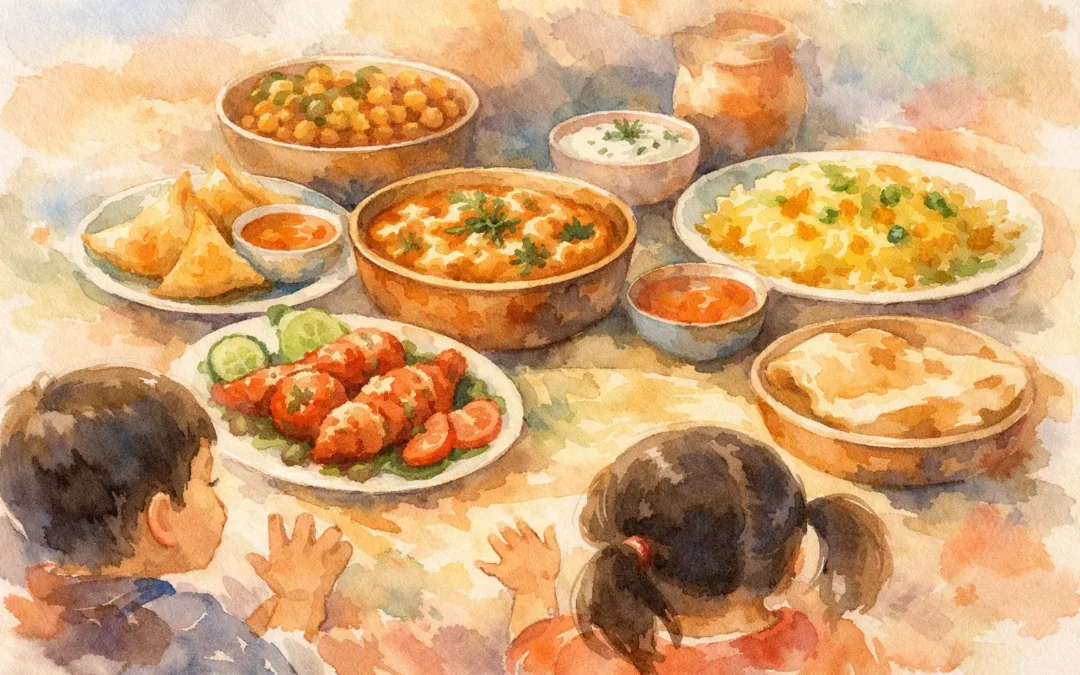
A family meal works best when everyone can enjoy their own plate without compromise. If you are wondering Which Indian dishes suit children, the answer is usually not one single recipe. It is a choice of familiar textures, gentle spice, fresh ingredients and a few dishes that let children try something new at their own pace.
Indian food can be full of colour, warmth and flavour without being hot. A mild curry, soft naan and fragrant rice can feel as comforting to a child as any familiar family favourite. The key is ordering with confidence, asking for a suitable spice level and building a table that has something for every appetite.
Which Indian Dishes Suit Children Best?
For many children, creamy, lightly spiced curries are the easiest introduction. Chicken korma is a popular choice because its sauce is mild, gently sweet and rich with nuts or coconut, depending on the recipe. It has flavour from traditional spices but little of the chilli heat that can put young diners off.
Butter chicken is another reliable family option. Tender pieces of chicken are served in a smooth tomato, butter and cream-based sauce that is comforting rather than fiery. Its familiar tomato flavour often makes it a good next step for children who are not yet keen on trying more aromatic curries.
A mild chicken curry can also suit children well, particularly when it is cooked to order with less chilli. It tends to offer a little more spice character than korma or butter chicken, so it is useful for children beginning to explore Indian flavours without moving straight to a hot dish.
Vegetarian choices deserve a place on the family table too. Dal, made from lentils, is soft, nourishing and easy to eat with rice or naan. A mild vegetable curry can work beautifully for children who enjoy peas, potatoes, cauliflower or other familiar vegetables, although the best choice depends on the vegetables they already like at home.
Tandoori Favourites for Children Who Prefer Simple Food
Not every child wants a sauce, and that is where tandoori dishes are especially useful. Tandoori chicken is marinated in yoghurt and authentic Indian spices before being cooked at high heat, giving it a smoky, lightly charred finish. When prepared mildly, it offers plenty of taste without a heavy sauce.
Chicken tikka is often an even easier choice. These are boneless, bite-sized pieces of marinated chicken, making them convenient for younger diners and ideal for sharing. Serve them with plain rice, a naan and a mild yoghurt dip, and children can combine each element as they like.
Tandoori food is also a practical option for families choosing takeaway. The chicken remains flavourful after the journey home, while the separate rice, breads and dips mean each person can create their own plate. If your child is wary of visible herbs or sauce, simple grilled pieces of chicken can feel far less daunting than a bowl of curry.
Always ask whether the dish can be made mild. A tandoori marinade naturally includes spices, but heat levels can vary between recipes and restaurants. Mild should still mean well-seasoned, fresh and satisfying, not plain.
Rice, Naan and Sides Make the Difference
The supporting dishes are often what turn a new meal into a family success. Plain basmati rice is a gentle base for curries and helps soften stronger flavours. Pilau rice is fragrant and colourful, but it can be more aromatic, so plain rice is usually the safest choice for a first visit.
Fresh naan is particularly helpful for children. Its soft texture makes it easy to tear, dip and share, while a plain naan lets them enjoy curry sauce in small amounts. Peshwari naan, with its sweeter filling, may appeal to some children, though it is best shared as part of the meal rather than treated as the main event.
Poppadoms can make the table feel fun, but younger children may find them sharp or hard to manage. A cooling yoghurt-based side can be a better companion for mild curries, especially if a child accidentally tries a spicier mouthful. Chips can also be a reassuring side for particularly selective eaters, though adding rice, naan or dal gives the meal more variety.
A simple approach is to order one mild curry, one tandoori dish, rice and naan for the table. Sharing removes pressure. Children can start with bread and chicken tikka, then decide whether they want to try a spoonful of sauce.
Indian Street Food: Good Choices and a Little Care
Indian street food brings exciting textures and flavours, but some dishes are better for older children or more adventurous young eaters. Samosas can be popular because of their crisp pastry and familiar potato filling. They are best served warm but not too hot, with any chutneys kept separate as they may be spicy or tangy.
Onion bhajis can be a good sharing starter for children who enjoy crunchy food, although the onion flavour and fried texture are not for everyone. Mild paneer dishes can be an excellent vegetarian alternative. Paneer is a soft Indian cheese with a gentle flavour, and children who like halloumi or mild cheese often respond well to it.
Chaat and dishes with sharp tamarind, fresh chillies or crisp toppings are full of character, but they can be busy in both flavour and texture. There is nothing wrong with waiting until a child is ready for them. Introducing Indian food gradually is more likely to build genuine enthusiasm than insisting they finish something unfamiliar.
How to Order Indian Food for Children
When ordering for children, be clear about spice preference rather than relying on a dish name alone. Ask for a mild preparation and mention if your child is very sensitive to chilli. Restaurants are used to helping families choose dishes that are enjoyable, not overwhelming.
Portion size matters too. A child may not need a full curry if the family is sharing starters, breads and rice. Ordering a few dishes for the centre of the table is often better value and gives everyone more choice. For takeaway, unpack curries, rice and breads separately at home so children can see what they are trying and choose their own portions.
Allergies and dietary requirements need particular care. Korma and other creamy curries may contain dairy, nuts or coconut, while naan often contains gluten and dairy. Always tell the restaurant about any allergy before ordering and check which dishes can be safely prepared. It is better to ask directly than make an assumption based on how a dish looks or tastes.
A gentle first family order
For a child trying Indian cuisine for the first time, chicken korma or butter chicken with plain basmati rice and plain naan is a reassuring place to begin. Add chicken tikka if they prefer food without sauce, and include a mild vegetable or dal dish so the table has variety.
For children already happy with those flavours, a mild chicken curry, paneer dish or lightly spiced tandoori option is a natural next choice. Over time, they may enjoy more aromatic dishes, different regional recipes and street-food favourites. Taste develops through relaxed meals, not through a race to the hottest curry.
At Worthing Indian Cafe & Bar, fresh daily ingredients and traditional spices are used to make authentic food feel welcoming for the whole family. Whether you are sitting down for an easy evening out or choosing a convenient takeaway, a mild, well-balanced order can make Indian food a regular family favourite. Start with the dishes that feel familiar, keep the heat gentle, and leave room on the table for the next delicious discovery.