
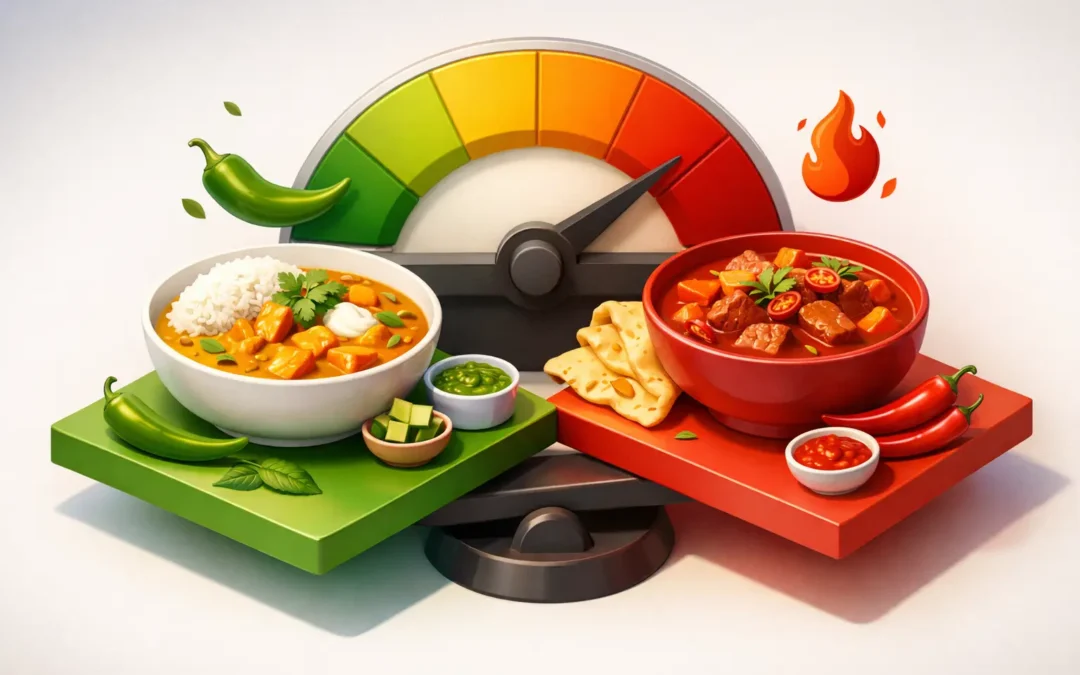
If you have ever looked at an Indian menu and wondered which curry is less spicy, you are not alone. It is one of the most common questions we hear from guests who want plenty of flavour without too much heat. The good news is that Indian food is not all about chilli. A well-made curry can be rich, fragrant, creamy and deeply satisfying while still being mild enough for families, first-time curry eaters, or anyone who simply prefers a gentler dish.
The first thing to know is that spice and flavour are not the same. Heat usually comes from fresh chilli, dried chilli or chilli powder. Flavour comes from the wider blend of spices and ingredients used in the cooking, such as cumin, coriander, turmeric, cinnamon, cardamom, ginger, garlic, onion, cream, yoghurt and tomatoes. That is why a mild curry can still taste full, balanced and authentic.
Which curry is less spicy on most menus?
In most Indian restaurants, the curries usually seen as less spicy are korma, pasanda and butter chicken. These dishes tend to be milder because they use cream, butter, coconut, ground nuts or yoghurt to soften the heat and create a smoother sauce.
Korma is often the safest choice if you want very little chilli. It is usually made with a creamy sauce and a gentle mix of spices, giving you sweetness, warmth and richness rather than a fiery kick. Chicken korma is often the go-to choice for people trying Indian food for the first time, and it is also popular with children and anyone who wants an easy, comforting meal.
Pasanda is another mild option. It is typically creamy and slightly sweet, with almonds or a nut-based sauce adding body and softness. If you want something mellow but still full of flavour, pasanda is a strong choice.
Butter chicken is also widely regarded as mild. The sauce is smooth, tomato-based and enriched with butter and cream, so it tends to be rounded and gentle rather than hot. It still has depth from the spices, but it is rarely the dish that catches people out.
If you are comparing these three, korma is usually the mildest, butter chicken is mild with a little more savoury depth, and pasanda sits comfortably in the same low-heat range depending on the recipe.
Mild does not mean bland
This is where many people hesitate. They worry that ordering the least spicy curry means getting something plain. In reality, a good mild curry should still taste layered and freshly cooked. You should notice sweetness from onions, richness from cream or coconut, and the warm aroma of traditional spices.
That matters because authentic Indian cooking is built on balance. Chilli is only one part of the picture. In many regional dishes, the aim is not maximum heat but a proper blend of savoury, tangy, creamy and aromatic notes. A milder dish can be every bit as satisfying as a hotter one when the ingredients are fresh and the spices are used well.
Curries that are usually medium rather than mild
Some dishes sit in the middle. They are not the hottest items on the menu, but they are not the best choice if you are very sensitive to chilli.
Tikka masala is a good example. Many people assume it is always mild, and often it is fairly gentle, but recipes vary. Some versions lean creamy and sweet, while others bring more tomato sharpness and a touch more chilli. If you like a little warmth without going too far, tikka masala can work well. If you want the safest option, korma or butter chicken is usually better.
Rogan josh can also surprise people. It has a rich tomato and onion base with plenty of flavour, but the heat level depends on how it is prepared. Some versions are mellow and warming, while others are noticeably spicier.
Jalfrezi, madras and vindaloo are the dishes most people should avoid if they are asking which curry is less spicy. These are usually made to deliver more chilli heat and a sharper, bolder kick.
What actually makes one curry less spicy than another?
The answer is not just the name of the dish. It also depends on how the curry is cooked. Cream, yoghurt, coconut milk, butter and ground nuts can all reduce the impact of chilli and create a softer sauce. Tomato and onion bases can go either way, depending on how much chilli is added. Fresh herbs and whole spices may add aroma without necessarily adding heat.
Protein matters as well. Chicken and paneer often pair well with mild sauces because they carry flavour without overpowering it. Prawn dishes can sometimes feel sharper on the palate, and lamb curries are often matched with stronger spices, though that is not a rule in every kitchen.
Then there is the restaurant itself. One chef’s mild can be another chef’s medium. That is why it always helps to ask. A good restaurant will happily guide you towards a dish that suits your taste rather than leaving you to guess.
Which curry is less spicy for first-time diners?
If you are new to Indian food, start with korma or butter chicken. These dishes are familiar, comforting and easy to enjoy, especially if you are unsure how much heat you can handle. They also pair well with rice and naan, which makes for a balanced meal that feels satisfying rather than overwhelming.
For families ordering a shared takeaway, choosing one or two mild curries alongside a medium dish is often the best approach. It gives everyone options without making the whole meal too fiery. A mild curry can also act as a steady favourite on the table while more adventurous diners try something hotter.
If you are ordering for a group or planning a relaxed meal out, mild curries are often the safest crowd-pleasers. They suit a wide range of tastes and still deliver the authentic spice character people expect from Indian cooking.
How to order a less spicy curry with confidence
A simple question at the time of ordering can make all the difference. Tell the restaurant that you enjoy flavour but prefer low heat. That is much more helpful than just saying you do not like spicy food, because it gives the kitchen a clearer idea of what you want.
It is also worth asking whether the dish can be made milder. Many curries can be adjusted, although some traditional recipes are built around a certain spice profile. There is always a balance to strike. Taking all the chilli out of a dish may change its character, but making a medium curry slightly gentler is often very achievable.
If you are especially sensitive to heat, order cooling sides too. Plain rice, pilau rice, naan, or a yoghurt-based accompaniment can soften the effect of spices and make the meal more comfortable. Drinks can help as well, but dairy and yoghurt usually calm chilli better than water.
Good mild curry choices for different tastes
If you like creamy sauces, korma is usually the natural pick. If you want something silky with tomato richness, butter chicken makes sense. If you enjoy a nutty, smooth sauce, pasanda is well worth a try. If you want a touch more depth without stepping into hot curry territory, tikka masala may be the middle ground.
For vegetarians, a mild paneer curry or vegetable korma can be just as satisfying as any meat dish. The sauce matters more than the filling when it comes to heat. That means you do not have to compromise if you want a meat-free option that still feels comforting and full of flavour.
At Worthing Indian Cafe & Bar, that is exactly how we think about curry. Fresh daily ingredients, authentic Indian spices and balanced cooking matter just as much in mild dishes as they do in hotter ones.
The best choice depends on your version of spicy
There is no single answer that suits everyone. For some people, less spicy means no noticeable chilli at all. For others, it means a light warmth that builds slowly without becoming too intense. That is why menu names help, but your own taste matters more.
If you rarely eat chilli, start at the gentlest end with korma. If you enjoy a bit of warmth and want more savoury depth, butter chicken or tikka masala may suit you better. If you are ordering from somewhere new, asking for advice is always the smartest move.
A good curry should leave you wanting another mouthful, not reaching for a glass of water in a panic. If you are choosing with that in mind, mild Indian curries offer plenty to enjoy. Start gentle, find what suits your palate, and you will quickly see that less spicy can still mean full of character, freshness and proper comfort.